Quick Answer
A website redesign is the right choice when your existing website has a solid technical foundation but needs improvements in design, user experience, messaging, or conversions. A completely new website is the better investment when your current website no longer supports your business goals, has major technical limitations, or requires a new information architecture. The right decision depends on business strategy, not simply the age of the website.
TL;DR / Key Takeaways
- Redesign your website if the structure is sound but the user experience, branding, or conversions need improvement.
- Build a new website when your business has changed significantly or your current platform limits future growth.
- A strategic redesign can preserve existing SEO authority while improving performance and lead generation.
- A complete rebuild is often the smarter long-term investment when outdated technology, poor architecture, or scalability issues hold your business back.
- In 2026, AI search platforms evaluate website structure, technical performance, and content clarity as much as visual design.
- The best decision is based on business objectives, not whether the website simply “looks old.”
Choosing between a website rebuild vs new website is one of the most overlooked business decisions going into 2026.
Most business owners don’t wake up wanting a new website. They reach this point because something feels off:
- Leads have slowed down
- Website looks dated compared to competitors
- Mobile experience feels weak
- Content no longer reflects what the business actually does
The problem is not whether something needs to change – it’s what kind of change makes business sense.
In 2026, choosing wrongly can waste months of effort and budget. Choosing correctly can quietly fix conversion problems, improve trust, and support growth without disruption.
This article breaks down how to decide between website rebuild vs new website, using real-world business logic and examples across industries – not theory or design trends. Learn how strategic decisions are handled under Web Design Services.
Why This Decision Is Different in 2026
A few years ago, the choice between redesigning a website and building a new one was mostly cosmetic. Businesses refreshed their sites when they looked outdated or didn’t match the latest design trends. Functionality mattered, but expectations were lower and margins for error were wider.
That context no longer exists.
In 2026, a website is no longer just a digital presence. It is a decision-support system. Every change you make or avoid making – now directly affects how prospects evaluate risk, credibility, and fit before they ever speak to your team. For instance, in regulated sectors, a failure to implement HIPAA-compliant patient booking systems acts as an immediate red flag, signaling a potential lapse in data security that sophisticated prospects are no longer willing to ignore.
This is what makes the website redesign vs new website decision fundamentally different today. See how structure and trust work in Business & Corporate Website Design.
Websites Are Now Evaluated Before Conversations Begin
In 2026, most buyers arrive at your website with intent.
They might come from:
- A referral who said, “Check their site”
- An AI summary that mentioned your business
- A shared internal link in a procurement or leadership discussion
- A shortlist compiled before a single call is made
By the time a buyer lands on your site, they are not browsing. They are validating.
This shifts the role of the website from “first impression” to confirmation point. A weak structure, unclear messaging, or outdated experience no longer feels like a missed opportunity – it feels like a warning sign.
Modern decision-makers often evaluate your business long before contacting your team. Understanding how global buyers evaluate business websites can help you identify the trust signals, messaging, and user experience improvements that influence purchasing decisions across markets like the US, UK, and Australia.
Trust Is Built Faster, but Lost Even Faster
Buyers in 2026 are more sophisticated. They make judgments quickly, often subconsciously.
Small friction points now have outsized impact:
- Confusing navigation
- Generic or outdated content
- Slow mobile experience
- Vague service explanations
What once felt “good enough” now creates hesitation. And hesitation almost always benefits your competitor.
This raises the stakes of choosing the wrong solution. A redesign that only improves visuals may still fail to address deeper trust leaks. A full rebuild may feel expensive, but it can eliminate those leaks entirely.
Websites Must Now Support Longer and More Complex Buying Cycles
Buying cycles have grown more layered.
Even for relatively simple services, decisions often involve:
- Multiple stakeholders
- Internal approvals
- Budget scrutiny
- Risk assessment
Your website is frequently revisited over days or weeks, not minutes.
This is where the website redesign vs new website choice matters. A site that hasn’t been structurally planned for repeat evaluation may look acceptable on the first visit, but fall apart on the second or third. Clarity, consistency, and flow are now essential.
AI and Indirect Discovery Have Changed Evaluation Standards
In 2026, many prospects encounter your business indirectly first.
They read:
- AI-generated summaries
- Quoted snippets
- Extracted service descriptions
This means visitors often arrive with partial context and higher expectations. They are looking to confirm what they have already read – not discover from scratch.
If your website structure or messaging doesn’t align with that expectation, confidence drops.
This makes strategic coherence more important than visual appeal alone. Whether you redesign or rebuild, your website must now hold up under indirect scrutiny.
The Cost of “Wrong Enough” Has Increased
In the past, a mediocre website was survivable.
In 2026, it is quietly expensive.
A site doesn’t need to be broken to lose business. It just needs to be slightly misaligned:
- With how you currently sell
- With who you now serve
- With what buyers expect to see
This is why many businesses feel something is wrong but can’t pinpoint it. Traffic still exists. Enquiries still happen. But the right opportunities don’t move forward.
Choosing the wrong path – redesign when a rebuild is needed or rebuild when redesign would suffice -often locks in this misalignment for years.
Websites Are Now Growth Infrastructure, Not Marketing Assets
Finally, the biggest shift in 2026 is how successful businesses view their websites.
They are no longer:
- Design projects
- One-time expenses
- “Marketing tasks”
They are core growth infrastructure.
That means:
- Structure matters as much as visuals
- Scalability matters as much as speed
- Flexibility matters as much as cost
The decision between a website redesign and a new website is no longer about aesthetics or preference. It’s about whether your website can support where the business is going next. Professional redesign strategies are often implemented by experienced corporate website designers who understand how design, user journey, and content structure influence conversion rates.
Why This Changes the Decision Entirely
In 2026, asking “Should we redesign or rebuild?” is incomplete.
The better question is:
“Will this website still support our business two years from now without workarounds or compromises?”
When the answer is uncertain, redesign often isn’t enough.
When the foundation is strong, rebuilding may be unnecessary.
Understanding this shift is what makes the decision different in 2026 and what separates strategic website investments from costly resets.
What “Website Redesign or Rebuild” Actually Means in 2026
A business website redesign focuses on improving what already exists.
This may include:
- Updating layout and UI
- Improving mobile responsiveness
- Reworking messaging and page structure
- Optimising conversion elements (CTAs, forms, trust sections)
- Speed and performance fixes
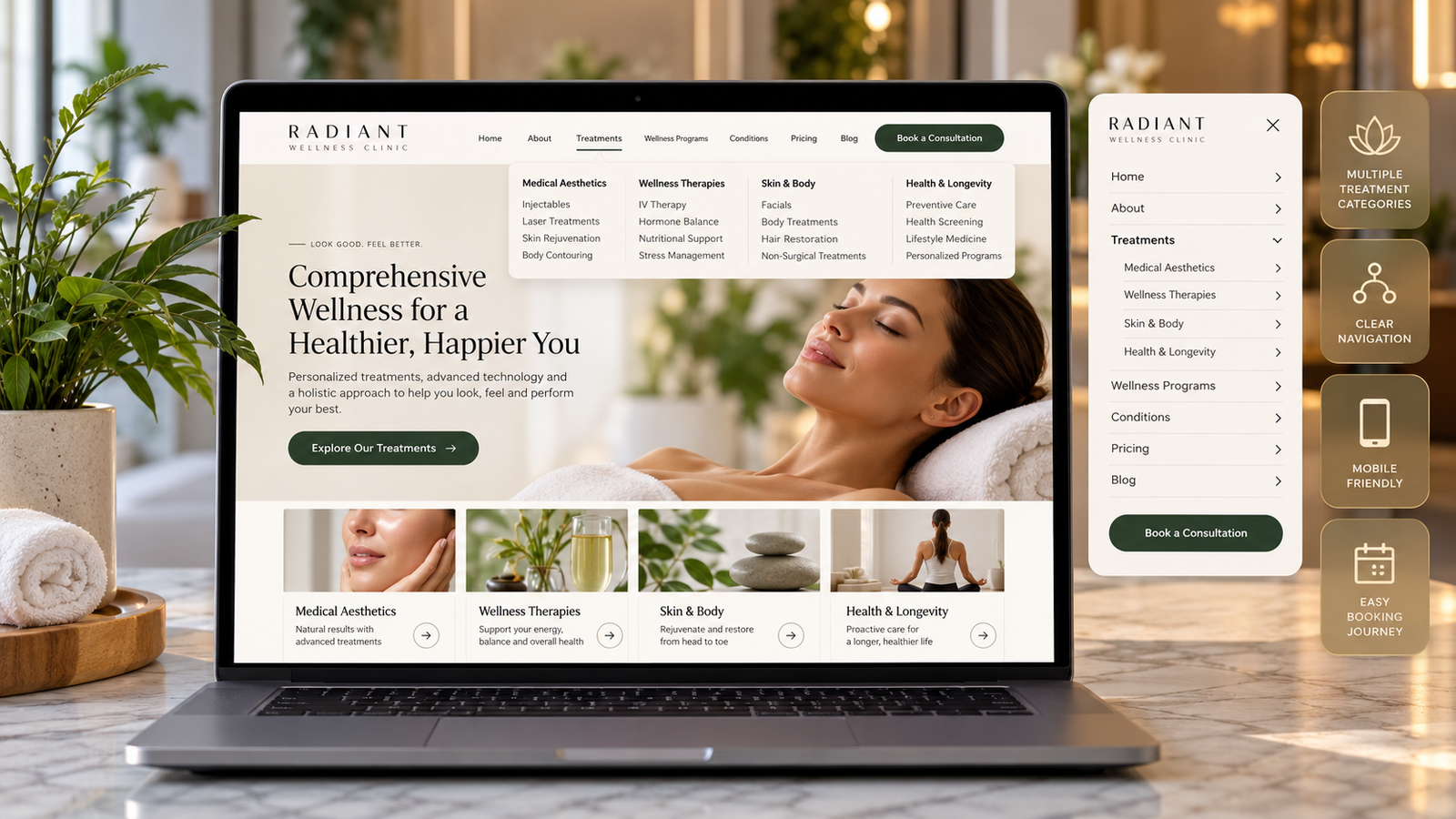
Review how conversion clarity is handled on a Doctor / Dental / Clinic website page.
Importantly, redesign assumes:
- The core structure is usable
- URLs don’t need complete replacement
- SEO equity can be preserved
A redesign improves effectiveness without starting from zero.
What “New Website” Really Means
A new website is not just a visual refresh. It’s a rebuild from the ground up.
This typically involves:
- New information architecture
- New page structure and flows
- Fresh content strategy
- New CMS setup (or major version upgrade)
- Clean URL planning and redirects
Choosing a new website implies:
- The current site no longer supports business goals
- Technical debt is holding performance back
- Positioning has changed significantly
This route offers freedom but requires more planning.
The Real Question Businesses Should Ask
Instead of asking:
“Should I redesign or rebuild?”
Ask:
“Is my current website structurally aligned with how my business operates in 2026?”
That single question clarifies most confusion.
When Should You Redesign Your Website?
A redesign makes sense when the foundation is solid but the results are slipping. The clearest triggers:
- Traffic is flat or declining despite consistent content publishing
- Mobile experience lags – most visitors are on phones, but your conversions come from desktop
- Your business has outgrown the messaging – services, positioning, or pricing changed but the site didn’t
- Conversion rate dropped while traffic held steady
- The design looks dated next to competitors – visitors judge credibility in seconds
- Small changes have become expensive – if every edit needs a developer fight with the theme, the foundation itself is the problem (that’s when rebuild beats redesign – see the decision framework above)
An outdated appearance alone does not prove that a website needs replacing. Run this 30-minute website trust audit first to identify whether customers are actually losing confidence because of weak identity, proof, mobile UX, enquiry friction or inconsistencies.
If the underlying website is still fit for purpose, compare a website maintenance retainer with pay-as-you-go support before committing to a full rebuild.
When a Website Redesign Makes More Sense
Let’s look at scenarios where website redesign vs new website clearly leans toward redesign.
1. Your Core Services Haven’t Changed Much
If your business still offers:
- Similar services
- Similar client types
- Similar buying journey
…then a redesign is usually the smarter move.
Example: Professional Services
An accounting or consulting firm offering the same core services for years may only need:
- Clearer service pages
- Better trust positioning
- Improved mobile UX
A redesign improves conversion without rewriting the business story.
A redesign can improve far more than the visual appearance of your website. Refreshing your messaging, restructuring service pages, and answering the questions your ideal clients are already asking can significantly improve conversions without starting from scratch. Our article on website content strategy for corporate firms explains how stronger content helps attract high-value clients and supports better business outcomes.
2. Your Website Structure Is Logical (But Dated)
If:
- Pages are organised logically
- Navigation makes sense
- URLs are readable
…but the design feels old or cluttered, redesign works well.
This is common in:
- B2B companies
- Manufacturers
- Clinics with older websites
Here, visual polish + messaging clarity delivers strong ROI.
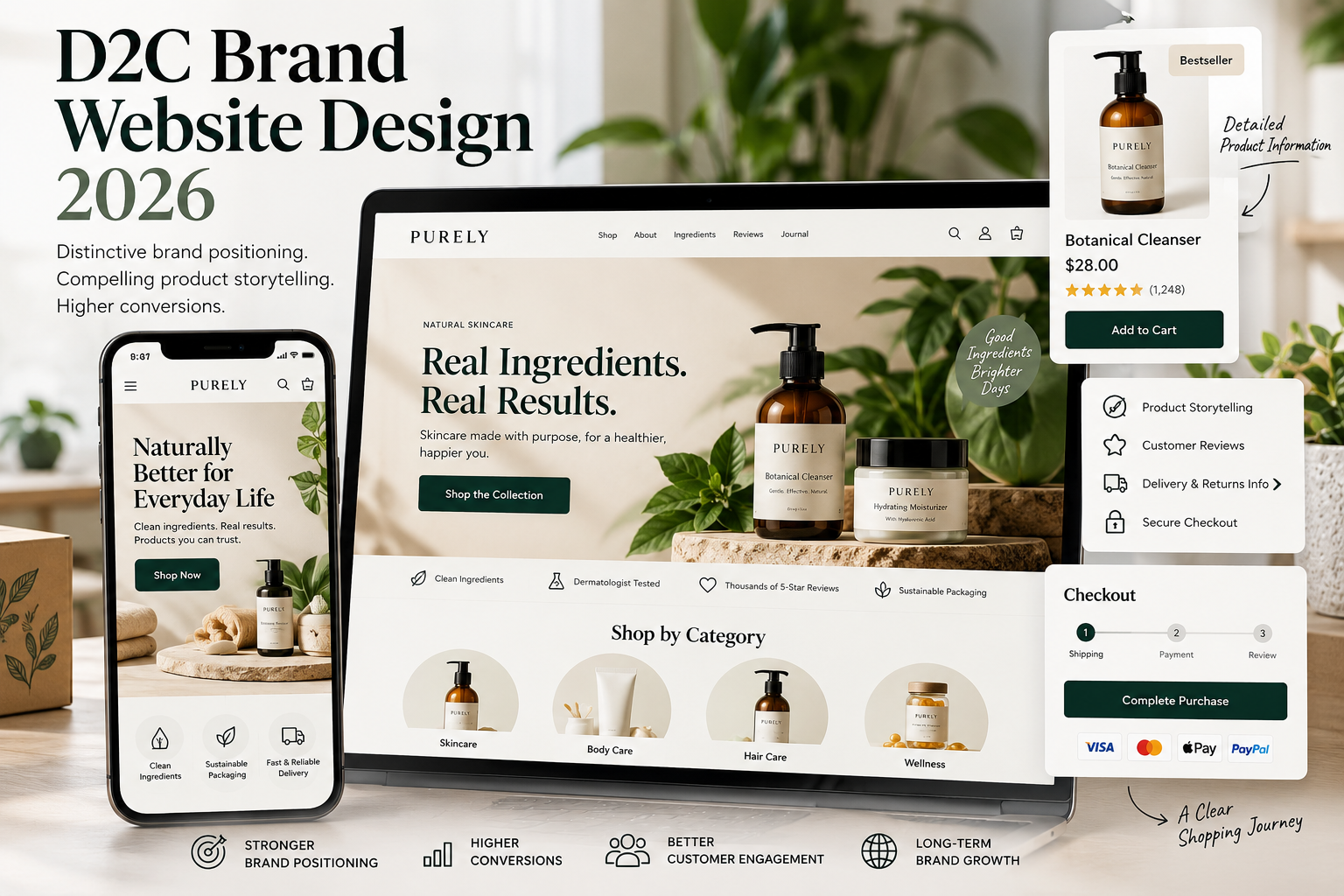
For industrial brands, a redesign is often about moving from a digital brochure to a lead-gen machine. You can see how I structure these in my guide to manufacturing company website design.
3. SEO Performance Exists and Should Be Preserved
If your site already:
- Ranks for important queries
- Has backlinks and authority
- Brings steady organic traffic
A full rebuild risks losing momentum if not handled carefully. For example: When we handle a medical clinic website redesign, our primary focus is migrating existing SEO authority so that your ‘doctor near me’ rankings remain uninterrupted.
A business website redesign allows:
- Gradual optimisation
- Content improvement
- Conversion upgrades
…without resetting SEO signals.
4. The Problem Is Conversion, Not Identity
Many businesses think they need a new website when the real problem is:
- Confusing CTAs
- Weak trust elements
- Poor page flow
In such cases, redesign fixes how users move not what the business is.
Expert Insight From Kanika Gupta
Founder, KG Web Designer
“Many businesses assume an outdated design automatically means they need a brand-new website. In our experience, that’s rarely the first question to ask. We begin by evaluating the existing website’s architecture, SEO value, content quality, and conversion potential. Sometimes a focused redesign produces exceptional results. Other times, rebuilding from the ground up creates a stronger foundation for the next five years of growth. The objective isn’t to redesign or rebuild—it’s to choose the option that delivers the highest long-term return on investment.”
When a New Website Is the Better Choice
Now let’s flip the situation. There are moments when redesigning is like repainting a cracked wall.
1. Your Business Direction Has Changed
If you have:
- Shifted target audience
- Moved into premium offerings
- Added or removed major services
Then old structure will fight your new positioning.
Example: Agency or SaaS Evolution
An agency that started as “everything for everyone” but now focuses on one niche will struggle with old layouts.
A new website lets you:
- Re-architect content
- Reframe messaging
- Guide users differently
Trying to force this through redesign creates friction.
2. Your Website Is Technically Limiting Growth
Common technical red flags:
- Outdated CMS or themes
- Poor speed scores despite optimisation
- Plugin overload
- Security risks
In these cases, redesign won’t fix the root issue.
A new website removes technical debt completely.
3. Your Website Was Never Strategically Planned
Many business websites were built quickly:
- By non-specialist developers
- Using generic templates
- Without conversion thinking
If the site never had strategy, redesigning design alone won’t help.
This is often seen in:
- Early-stage startups
- Clinics or hospitals that rushed online presence
- Family-run businesses that “just needed a site”
A new website is more cost-effective long-term.
4. Content Has Become Unmanageable
If:
- Pages contradict each other
- Services are duplicated
- Navigation feels bloated
It signals structural decay.
Rebuilding simplifies and resets clarity.
Industry Examples: Redesign vs New Website Decisions
Healthcare / Clinic Websites
- Redesign works when services stay similar but patient trust is low
- New website works when a clinic expands into multi-specialty or premium care
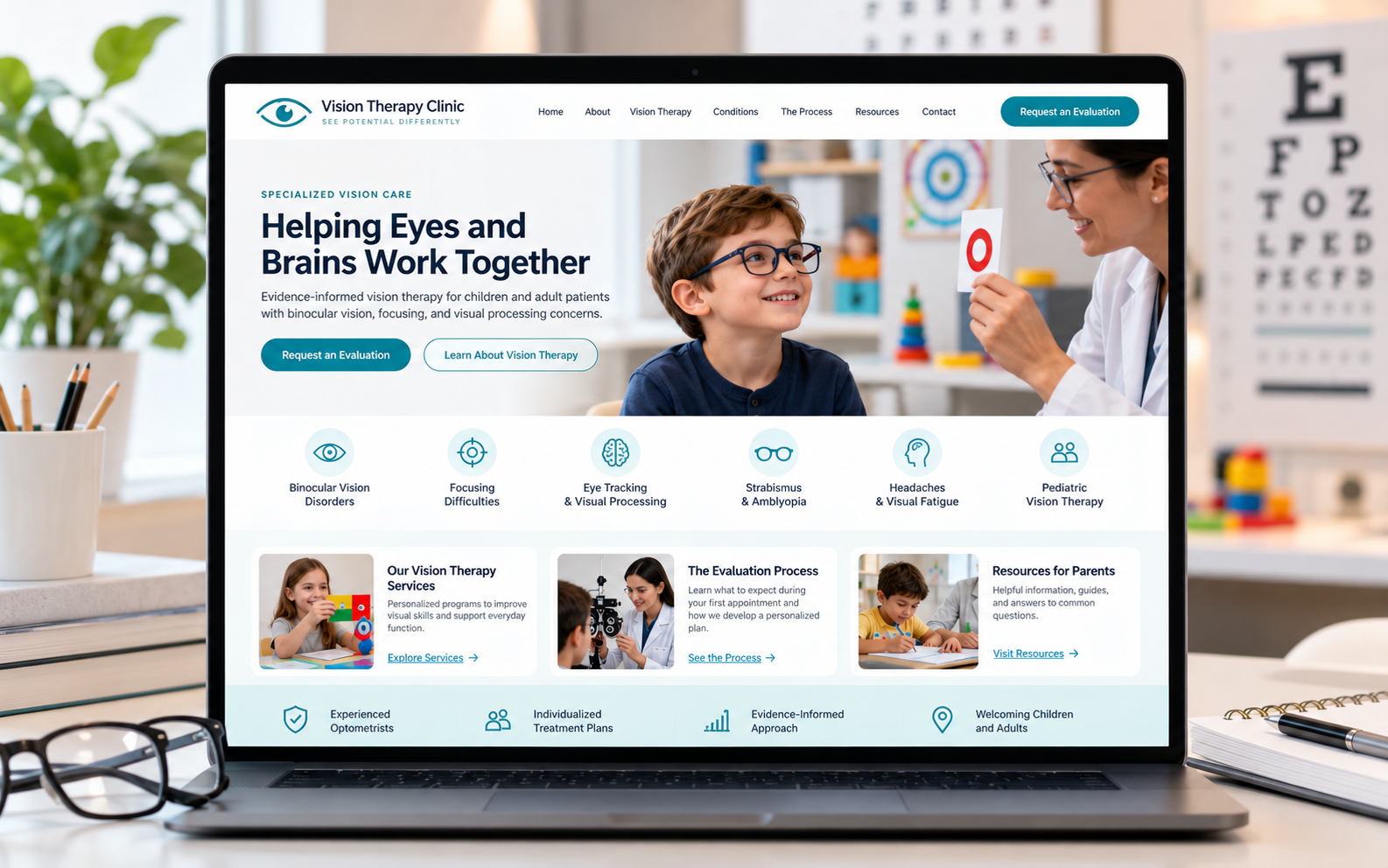
In 2026, many clinics benefit from a fresh trust-first structure. For example, see how we apply this logic to optometrist and eye clinic website design to ensure the technical foundation supports patient booking cycles.
Corporate & B2B Businesses
- Redesign suits established brands refreshing credibility
- New website suits companies repositioning for a different market or scale
Here, clarity and authority matter more than visual novelty.
E-commerce & Product Brands
- Redesign is ideal for UX and checkout optimisation
- New website is better when product range, branding, or platform changes
A new platform often triggers a full rebuild.
Service Professionals (Consultants, Lawyers, Doctors)
- Redesign improves trust and conversion flow
- New website is needed when shifting niche or pricing model
In these industries, messaging accuracy is critical.
Cost Perspective: Website Redesign Cost in 2026
One of the biggest drivers of this decision is budget.
While exact numbers vary, trends are clear.
Website Redesign Cost 2026 (Typical)
Redesigns generally cost:
- Less than full builds
- Less in content rewriting
- Less in development hours
They offer strong ROI when foundation is solid.
However, redesign and new-build quotations are not always directly comparable because the scope may include different levels of strategy, content, SEO, migration and development. Our website redesign and new-build cost comparison explains realistic pricing ranges and shows how to compare quotations based on equivalent deliverables.
New Website Investment (What You’re Really Paying For)
A new website costs more because you’re funding:
- Strategy + architecture
- Fresh content
- Technical setup
- SEO migration planning
It’s not “expensive design” it’s strategic rebuilding.
Businesses often regret choosing redesign when a new website was needed not the other way around.
Website Redesign vs New Website: Comparison Table
| Decision Factor | Redesign | New Website |
| Core business unchanged | ✅ | ❌ |
| Major repositioning | ❌ | ✅ |
| Existing SEO value | ✅ | ⚠️ |
| Technical limitations | ❌ | ✅ |
| Faster turnaround needed | ✅ | ❌ |
| Long-term scalability | ⚠️ | ✅ |
This table alone resolves many internal debates.
A Practical Website Redesign Checklist
Before you decide between a redesign and a new website, this checklist helps you evaluate whether your current website foundation is strong enough to improve or whether it’s holding your business back.
The goal isn’t perfection.
The goal is alignment with how your business sells and is evaluated in 2026.
Answer each section honestly.
Business Alignment Check
Start with the most important question: does the website still reflect your business today?
Ask yourself:
- Does the website clearly reflect our current services, not legacy ones?
- Does it speak to the type of clients we now want, not who we served years ago?
- Is our positioning consistent with how we describe ourselves in sales conversations?
Red flag:
If your sales team (or you) frequently say, “Ignore the website we do more than that,” redesign alone may not be enough.
Structure & Navigation Clarity
A redesign works best when the core structure already makes sense.
Check:
- Can a new visitor understand what we do in 10–15 seconds?
- Is navigation intuitive without internal explanations?
- Are important pages reachable within 2 clicks?
Red flag:
If visitors need a walkthrough to understand your site, the structure may need rebuilding.
Service Page Effectiveness
Your service pages do most of the trust-building work.
Review your key services:
- Does each service have a dedicated page, not just a list?
- Do pages explain outcomes, not just offerings?
- Is it clear who the service is for and not for?
Red flag:
If most services are grouped into one page, redesign will only improve visuals – not clarity.
Conversion Path & CTA Logic
In 2026, conversion is a journey – not a button.
Evaluate:
- Is the next step obvious at any point on the site?
- Do CTAs feel contextual, not forced?
- Is there a clear explanation of what happens after contact?
Red flag:
If your main CTA is everywhere but conversions are weak, the issue is structural, not visual.
Trust & Credibility Signals
Trust isn’t a section – it’s a layer across the site.
Check whether your website includes:
- Proof (testimonials, case summaries, logos, industries)
- Context (why those clients chose you)
- Authority (experience, expertise, process)
Red flag:
If proof exists but is buried or generic, redesign can fix placement – not meaning.
Mobile & Performance Reality Check
Mobile experience is no longer optional.
Test:
- Does the site load comfortably within 3 seconds on mobile?
- Are buttons easy to tap?
- Is content readable without zooming?
Red flag:
If mobile usability is poor even after optimisation, a new technical build may be more efficient.
SEO & Content Stability
SEO equity matters – but only if the foundation supports it.
Ask:
- Do we already rank for meaningful queries?
- Are URLs logical and clean?
- Is existing content still accurate?
Red flag:
If rankings are weak and content structure is messy, redesigning won’t magically fix performance.
Scalability Over the Next 2–3 Years
Think beyond today.
Consider:
- Can we add new services easily?
- Can content grow without clutter?
- Can the site adapt if our positioning shifts slightly?
Red flag:
If every change feels complicated, your site isn’t designed for growth.
How to Interpret Your Answers
Use this guide:
- ✅ Mostly YES → A website redesign is likely sufficient
- ⚠️ Mixed answers → Redesign with strategic restructuring
- ❌ Several NOs → A new website will save time and cost long-term
This checklist doesn’t replace professional evaluation but it prevents emotion-based decisions, which are the most expensive kind.
Common Mistakes Businesses Make in This Decision
- Choosing redesign because it’s cheaper, not because it fits
- Choosing a new website without clarity on strategy
- Letting aesthetics drive decisions
- Ignoring SEO implications
- Trying to “decide fast” instead of deciding right
These mistakes often lead to redoing the website again within a year.
FAQs
1. Is a website redesign or a new website better for SEO in 2026?
If your current site has strong rankings but looks dated, a redesign is safer to preserve SEO authority. However, if your technical foundation (like old WordPress themes or slow code) is the reason for poor rankings, a new website built on a performance-first framework is the better long-term investment.
2. How much does a professional website redesign cost compared to a new build?
A redesign typically costs 40-60% of a full build because the content and structure already exist. However, if the redesign requires fixing “bad code” or outdated plugins, the costs can align with a new build. Always prioritize a technical audit before choosing.
3. How long does it take to see results after a website redesign?
With 2026 indexing speeds, you can see performance improvements (Core Web Vitals) within 7–14 days. Significant SEO ranking shifts usually take 3–6 weeks as Google re-crawls and re-evaluates the improved user experience and trust signals.
4. Can I keep my current content if I move to a new website?
Yes, but you shouldn’t keep all of it. A new build is the perfect time to “prune” low-performing pages and update your core service pages (like clinic or doctor service pages) to match modern patient expectations and AI search patterns.
5. What is the biggest risk of starting a new website from scratch?
The biggest risk is broken links (404 errors) and loss of “domain age” trust. To avoid this, an expert developer must implement a strict 301 redirect map, ensuring every old URL points to a relevant new one so your Google rankings don’t drop
6. Will redesigning my website hurt my Google rankings?
A website redesign will not hurt your Google rankings if done correctly. The key is to preserve all existing URLs, implement 301 redirects for any pages that change address, and maintain your core on-page content during the transition. In fact, a redesign that improves page speed, mobile usability, and Core Web Vitals typically results in a rankings improvement within 3–6 weeks. The risk only arises when URLs are changed without redirects or when content is removed without a content migration plan.
7. When should I redesign my website instead of building a new one?
Redesign your website when your core structure and URL architecture are sound but the visual design, user experience, or conversion rate needs improvement. The redesign route is ideal if your site ranks reasonably well in Google, has an established domain age, and your content only needs refreshing rather than replacing. Choose a new build instead if your platform is outdated, your site loads slowly due to legacy code, or your current structure cannot support the features your business now requires.
8. What is the difference between a website redesign and a website rebuild?
A website redesign changes the visual design, layout, and user experience of your existing site without altering its underlying platform or URL structure. A website rebuild means starting from scratch — new platform, new codebase, new architecture — and is used when the existing site has fundamental technical limitations that a visual update cannot fix. A redesign is faster and lower-risk; a rebuild is more expensive but gives you a stronger, future-proof foundation. Most businesses need a redesign; a rebuild is reserved for sites with serious technical debt.
9. How long does a website redesign project take from start to launch?
A website redesign typically takes 4 to 8 weeks from kickoff to launch. A small 5–10 page business site redesign can be completed in 3–4 weeks, while a larger site with multiple service pages, custom functionality, and content migration takes 6–10 weeks. The single biggest factor affecting timeline is how quickly the client provides feedback, approvals, and content. At KG Web Designer, most redesign projects are delivered within 4–6 weeks using a structured review process that keeps the project on schedule.
Final Decision Framework
Choose website redesign if:
- Your business model is stable
- Structure still works
- Conversion is the main issue
Choose new website if:
- Positioning has shifted
- Technology is holding you back
- Growth demands scalability
In 2026, the right choice is the one that reduces friction between what your business does and what your website communicates.
If unsure, reviewing your situation via the Contact page often clarifies options faster than guessing
Still Unsure if You Need a Redesign or a Rebuild?
Don’t guess with your 2026 growth. Get a Professional Website Audit. I’ll analyze your current structure, speed, and conversion gaps to give you a clear roadmap.
Closing Thought
The debate isn’t really website redesign vs new website.
It’s about alignment.
A website should quietly support how decisions are made, how trust is built, and how business grows without forcing visitors to work harder than necessary.
When that alignment breaks, change is needed.
The type of change should always be strategic.