Quick Answer
A strong corporate website content strategy helps premium businesses attract better-fit clients by combining strategic messaging, buyer psychology, trust-focused UX, and authority positioning. High-value clients are not looking for more information. They are looking for confidence, clarity, specialization, and measurable business outcomes.
TL;DR
Most corporate websites fail because they focus on the company instead of the client’s future.
Premium decision-makers expect:
- strategic positioning
- trust-focused messaging
- sophisticated UX
- clear differentiation
- authority-driven communication
Your website should reduce uncertainty, qualify leads, and establish expertise before a strategy call ever happens.
If your messaging feels generic, your business becomes interchangeable.
Key Takeaways
- Premium clients evaluate positioning before services
- Messaging directly impacts lead quality
- Generic copy reduces perceived value
- Strategic clarity improves conversions
- UX and messaging must work together
- Strong positioning increases pricing power
- Trust-focused content shortens sales cycles
- High-performing websites guide buyers psychologically
Why Most Corporate Websites Fail to Attract Premium Clients
A founder in New York lands on your website.
A consulting executive in London reviews your service pages.
A SaaS business owner in Sydney compares your company against competitors.
They are not asking:
“What services do you offer?”
They are asking:
“Does this company understand businesses like mine?”
That distinction changes everything.
Most corporate websites fail because the messaging is too broad, too generic, and too internally focused.
The homepage talks about:
- innovation
- excellence
- tailored solutions
- years of experience
But none of those phrases create meaningful differentiation anymore.
This is why corporate website content strategy has become one of the strongest conversion drivers for premium businesses in 2026.
The best-performing websites do not simply describe services.
They strategically position expertise.
The Real Cost of Weak Website Messaging
Weak messaging does not just reduce conversions.
It reduces perceived value.
When websites fail to communicate:
- specialization
- operational understanding
- business outcomes
- strategic thinking
they attract lower-quality inquiries.
This often leads to:
- longer sales cycles
- price-sensitive leads
- weaker trust positioning
- inconsistent conversions
In strategy calls with consulting firms, MedTech companies, FinTech businesses, and professional service brands, I consistently notice the same issue:
The company itself is highly capable.
But the website sounds exactly like every competitor.
That creates a positioning problem, not a visibility problem.
Is Your Consulting Website Attracting the Wrong Leads?
If your website looks polished but still brings low-quality enquiries, the problem is usually structure, clarity, and trust. See how a conversion-focused consultant website design can help you filter better-fit clients before the first call.
Explore Consultant Website Design →Why High-Value Clients Read Websites Differently
Premium buyers are selective because the stakes are higher.
A healthcare founder in New York evaluating a strategic partner, a FinTech consultant in London comparing agencies, or a corporate brand in Sydney reviewing service providers is assessing risk before making contact.
This is where website content for high-value clients becomes essential.
Sophisticated buyers evaluate:
- communication quality
- operational maturity
- expertise depth
- strategic confidence
- trustworthiness
They are not impressed by exaggerated marketing language.
They are reassured by clarity.
The strongest corporate websites feel like they were written by experienced advisors who understand business psychology, not generic marketers trying to fill space.
Authority isn’t built through visual design alone. Prospective clients look for evidence that your firm has the experience and expertise to solve complex business problems. Although written for accounting firms, our article What CA Firms Must Include on Their Website to Win Trust in 2026 demonstrates how professional service firms can strengthen authority through expert positioning, thought leadership, trust signals, and transparent communication that reassures decision-makers.
Why Does a High-Traffic Website Still Produce Low-Quality Leads?
Many businesses assume traffic automatically creates authority.
It does not.
A website can generate thousands of visitors every month and still fail to attract qualified decision-makers because the messaging hierarchy is positioned incorrectly.
In my experience, the issue is rarely visibility alone.
The deeper problem is usually message structure.
Most corporate websites spend too much time discussing:
- company history
- internal processes
- generic capabilities
- broad service lists
while saying very little about the client’s actual business transformation.
A premium website should not feel like a company brochure.
It should feel like a strategic roadmap.
Most websites act as a mirror for the company.
High-performing websites act as a window into the client’s future.
That distinction changes conversion quality dramatically.
For example, a MedTech founder in New York and a FinTech consultancy in London are both asking the same subconscious question:
“What changes operationally, financially, or strategically after working with this business?”
If the website cannot answer that clearly, trust weakens immediately.
This is where visual structure also becomes critical.
Research from the Nielsen Norman Group continues to show that users scan websites using predictable patterns, especially the F-pattern in B2B environments.
Decision-makers scan:
- headlines first
- left-side hierarchy second
- proof elements third
- CTA areas last
That means:
- authority signals
- client outcomes
- differentiation
- credibility indicators
must appear early and clearly.
A website that hides trust below the fold quietly loses premium buyers.
That is also why the choice of website partner matters. If your firm is considering a redesign, our guide on how to choose a consultant website designer who understands leads, authority and AI search provides a practical framework for evaluating whether a designer understands positioning, authority, buyer psychology, conversion strategy, and search visibility rather than focusing only on visual presentation. For professional firms targeting high-value clients, that distinction can affect the quality of inquiries the website attracts.
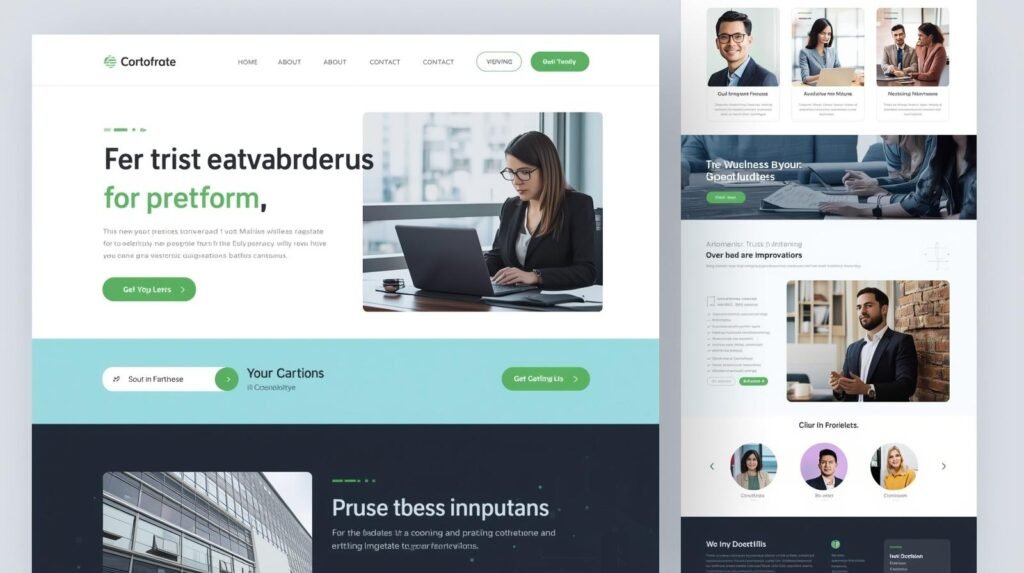
corporate website content strategy: Positioning Your Expertise Correctly
A premium corporate website content strategy is not about publishing more content.
It is about sequencing the right message strategically.
The strongest corporate websites guide visitors through four psychological stages:
- Initial trust
- Problem recognition
- Strategic confidence
- Conversion readiness
Most businesses fail because they try to sell services before establishing authority.
High-performing websites position the business as:
- specialized
- commercially intelligent
- strategically aware
- operationally mature
before discussing deliverables.
That subtle shift dramatically improves lead quality.
What Premium Clients Actually Want to Read
Most corporate websites sound interchangeable.
Premium buyers are tired of:
- buzzwords
- vague promises
- templated positioning
- generic corporate language
Sophisticated decision-makers want specificity.
Instead of:
“We help businesses grow.”
They want:
“We help healthcare brands improve conversion rates through trust-focused UX and strategic positioning.”
Specificity creates authority.
Generic messaging creates invisibility.
This is where B2B website messaging strategy becomes a major competitive advantage.
The Most Important Messaging Shift in 2026
Corporate websites no longer function like digital brochures.
They now function like pre-sales environments.
The website must:
- build trust
- answer objections
- qualify leads
- reinforce expertise
- reduce hesitation
before a strategy call ever happens.
This is especially important for:
- consulting firms
- SaaS businesses
- healthcare companies
- premium ecommerce brands
- professional services firms
because buyers now research extensively before making contact.
Your content should feel like strategic guidance, not promotional copy.
Strong content can improve positioning, but it is still important to understand what happens after that content brings a visitor to the website. If your site is attracting relevant visitors but those visitors are not becoming serious enquiries, this guide to diagnosing a consulting website that gets traffic but no leads breaks the problem down into traffic quality, relevance, proof, trust, and conversion.
Real Client Result: When Messaging Changed, So Did Lead Quality
A consulting firm targeting mid-market healthcare businesses approached us because they were generating traffic but attracting low-quality inquiries.
The issue was not SEO.
It was positioning.
Their previous messaging relied heavily on:
- “Innovative Solutions”
- “Trusted Excellence”
- “Customized Services”
Nothing differentiated them.
We restructured the website around:
- operational expertise
- buyer pain points
- industry-specific messaging
- measurable outcomes
- trust-focused UX
Within a few months:
- consultation quality improved significantly
- inquiry relevance increased
- sales calls became shorter because trust was already established before meetings
The traffic itself did not change dramatically.
The perception changed.
And perception affects conversion quality more than most businesses realize.
Logic-Based Case Studies Convert Better Than Hype Testimonials
Premium buyers do not trust exaggerated marketing language.
They trust logical business outcomes.
This is why sophisticated B2B websites are moving away from vague testimonials like:
- “Amazing service”
- “Great experience”
- “Highly recommended”
and toward structured case-study storytelling.
Decision-makers want to understand:
- the business problem
- the strategic issue
- the positioning change
- the measurable outcome
For example:
Instead of:
“Traffic improved significantly.”
A stronger case study would say:
“A FinTech consulting firm targeting enterprise healthcare clients reduced low-quality inquiries after repositioning their messaging around compliance strategy and operational clarity rather than generic growth claims.”
That level of specificity creates authority.
It also strengthens GEO performance because AI-driven search systems increasingly prioritize:
- measurable outcomes
- entity relevance
- business context
- strategic clarity
Need a Website That Builds Trust Before the Sales Call?
Decision-makers scan for relevance, proof, and clarity in seconds. If your current website hides results or uses vague messaging, you are likely losing shortlist opportunities. See how professional services website design helps consultants turn authority into qualified enquiries.
See Professional Services Website Design →Why Generic Copywriting Quietly Kills Conversions
Most businesses underestimate how quickly sophisticated buyers recognize generic messaging.
Phrases like:
- “customer-centric”
- “results-driven”
- “innovative solutions”
have become almost invisible online.
Premium clients scan websites looking for:
- expertise
- strategic thinking
- operational understanding
- business intelligence
This is why corporate website copywriting best practices now revolve around clarity and precision rather than persuasive hype.
The best websites communicate:
- who they help
- what business problems they solve
- how outcomes improve
- why their approach is different
without sounding overly promotional.
The Psychology of Trust in Corporate Website Content
High-value buyers are risk-conscious.
Before making contact, they subconsciously evaluate:
- professionalism
- communication quality
- operational maturity
- strategic clarity
- confidence
Every sentence on your website either strengthens trust or weakens it.
Weak messaging creates uncertainty.
Strong messaging creates reassurance.
This is why tone matters so heavily in premium positioning.
Sophisticated businesses do not need louder messaging.
They need clearer messaging.
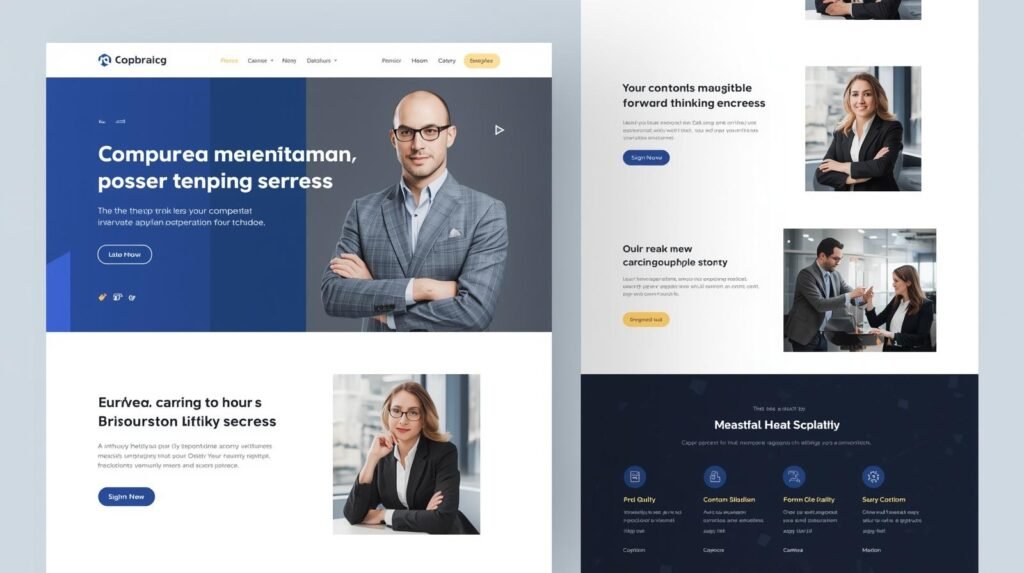
Why UX and Content Strategy Must Work Together
Content alone does not convert.
UX and messaging must support each other.
A website with strong messaging but weak structure still creates friction.
The strongest websites align:
- content hierarchy
- visual hierarchy
- navigation flow
- buyer psychology
- conversion structure
together.
This is why high-performing corporate websites often follow strategic visual scanning behavior.
Decision-makers do not read every word sequentially.
They scan:
- headlines
- proof sections
- outcomes
- trust indicators
- CTA positioning
This is one reason why cluttered websites reduce premium conversions even when the content itself is strong.
High-value buyers evaluate more than persuasive copy. They also look for consistency between the company, its claims, people, evidence and customer journey. My Trust Alignment Test provides a five-layer framework for identifying where that confidence may break.
What Makes High-Converting Corporate Websites Different
We explored this further in our guide on what makes a high-converting business website in 2026, including the structural and psychological patterns that influence whether premium buyers trust a business online.
Understanding these trust patterns helps businesses identify where their current website may be quietly reducing inquiry quality.
The Revenue Impact of Better Positioning
Strong messaging improves business economics.
When positioning becomes clearer:
- lead quality improves
- trust develops faster
- pricing resistance decreases
- conversion rates increase
- sales cycles shorten
This is where professional services website strategy becomes directly connected to revenue growth.
A premium website should:
- attract aligned buyers
- filter out poor-fit leads
- establish expertise before consultation calls happen
Most businesses focus only on traffic.
High-performing businesses focus on qualified traffic.
Why Most Corporate Websites Feel Forgettable
Many businesses fail because they try to appeal to everyone.
As a result:
- messaging becomes generic
- differentiation disappears
- positioning weakens
Premium buyers remember clarity.
Not buzzwords.
Strong positioning communicates:
- specialization
- strategic confidence
- operational maturity
- market understanding
within seconds.
This matters heavily in competitive markets like:
- New York
- London
- Sydney
where buyers compare multiple providers before making inquiries.
Mid-Article Insight: Lead Generation Starts Before the CTA
Many businesses believe lead generation begins at the contact form.
It starts much earlier.
Conversion begins when visitors first feel:
- understood
- reassured
- strategically aligned
We explored this in more depth in our guide on corporate website lead generation strategy in 2026, including the UX and messaging patterns that influence whether visitors become qualified inquiries.
The strongest websites create trust progressively throughout the browsing experience instead of relying on aggressive CTAs at the end.
Why Premium Clients Avoid Generic Websites
Sophisticated buyers associate generic websites with operational mediocrity.
If the messaging feels templated or vague, they assume:
- the service experience may also feel generic
- strategic thinking may be limited
- differentiation may be weak
This is why website content that attracts premium clients requires strategic nuance.
Premium buyers expect:
- thoughtful positioning
- intelligent messaging
- strategic clarity
- emotional confidence
not exaggerated marketing language.
Premium Positioning Requires Strategic Exclusion
One of the strongest trust signals for premium buyers is selective positioning.
High-value clients become skeptical when businesses try to appeal to everyone.
Premium brands grow faster when they communicate who they are not for.
For example:
- businesses looking for quick template websites
- brands prioritizing low-cost execution over strategic positioning
- companies unwilling to invest in UX, trust-building, and conversion strategy
are usually not aligned with premium growth objectives.
Sophisticated buyers respect strategic clarity.
It signals confidence.
Research from Gartner continues to show that B2B buyers increasingly prioritize:
- expertise
- specialization
- reduced decision-making risk
over generalized service providers.
The goal is not maximum traffic.
The goal is maximum alignment.
Ready to Turn Your Consulting Website Into a Client-Filtering System?
If your website is attracting traffic but not the right enquiries, it is time to improve the messaging, trust signals, and conversion flow. I help consultants build websites that support premium positioning and better-fit leads.
Why Premium Positioning Creates Pricing Power
Strong messaging also creates pricing power.
When your website positions expertise clearly, premium clients focus less on cost and more on:
- strategic value
- operational confidence
- long-term outcomes
- business transformation
That shift changes the quality of conversations your business attracts.
Businesses with weak positioning often compete on price.
Businesses with strong positioning compete on expertise.
Technical SEO and GEO Matter More Than Ever
Modern websites must perform effectively for:
- users
- search engines
- AI-driven discovery systems
Strong corporate websites prioritize:
- fast load speed
- structured content hierarchy
- schema markup
- mobile optimization
- accessibility standards
- Core Web Vitals performance
AI-driven search systems increasingly evaluate:
- trust signals
- expertise structure
- entity relationships
- clarity of positioning
when surfacing content.
That means your content strategy must work for both humans and machines simultaneously.
Why Overseas Clients Expect Stronger Digital Positioning
Businesses across the US, UK, Australia, Canada, Singapore, and UAE often compare multiple providers before making contact.
They evaluate:
- professionalism
- communication quality
- strategic thinking
- operational maturity
before booking consultations.
This is why messaging quality matters even more for international businesses competing in premium markets.
We work fully remotely with businesses across these regions, helping brands improve positioning, UX, messaging, and inquiry quality through conversion-focused website strategy.
Conclusion: Strong Messaging Creates Stronger Clients
A website does not attract premium clients simply because it looks modern.
It attracts premium clients because the messaging creates confidence.
That is why corporate website content strategy directly affects:
- inquiry quality
- perceived expertise
- conversion rates
- pricing power
- long-term business growth
The strongest businesses are not always the loudest.
They are the clearest.
When your website communicates expertise with confidence, sophistication, and strategic clarity, premium clients begin trusting your business before the first conversation even happens.
Ready to Position Your Business More Strategically?
If your website traffic is growing but inquiry quality remains inconsistent, the issue may not be visibility.
It may be positioning.
We help premium businesses create conversion-focused websites that combine:
- strategic messaging
- UX psychology
- trust positioning
- SEO structure
- premium branding
Available across US, UK, and AU time zones. Fully remote. No commitment required.
FAQs
Why do most corporate websites fail to attract premium clients?
Most corporate websites fail because the messaging is too generic. Premium buyers expect strategic clarity, specialization, and operational confidence. If the content sounds interchangeable with competitors, the business becomes forgettable and inquiry quality drops significantly.
What makes website messaging feel premium?
Premium messaging feels intelligent, calm, specific, and strategically focused. It communicates expertise without exaggerated claims and focuses on client outcomes rather than generic company achievements or marketing buzzwords.
How does content strategy improve conversion rates?
Strong content strategy reduces uncertainty before consultation calls happen. It helps buyers understand the business, trust the expertise, and feel confident about initiating contact. This improves lead quality and shortens sales cycles significantly.
Why is UX important for corporate website conversions?
Even strong messaging fails when websites create friction. UX affects readability, trust perception, navigation flow, and emotional confidence. Premium clients expect websites to feel structured, intuitive, and strategically organized.
How do you manage projects with overseas clients across different time zones?
We work fully remotely with businesses across the US, UK, Australia, Canada, Singapore, and UAE using structured communication systems designed for international collaboration. Strategy calls, approvals, and feedback workflows are organized around your business hours to ensure smooth communication and efficient project delivery.
Corporate Website Design Services

Written by
Kanika Gupta – Website Designer & Conversion Strategist
Founder of KG Web Designer, Kanika helps businesses build high-converting, SEO-driven websites that attract the right audience and turn visitors into qualified leads.
She works with clients across India, US, UK, AustraliaCanada, specializing in WordPress, Elementor, Shopify, B2B websites, Corporate, professional, aesthetic clinics, and conversion-focused design systems.