Quick Answer
Patient reviews directly influence whether visitors trust your clinic enough to schedule an appointment. In 2026, strategic testimonial placement improves emotional reassurance, strengthens GEO visibility, and enhances eye clinic website design by reducing psychological hesitation before patients ever contact the clinic.
TL;DR
Most eye clinic websites fail to convert because trust signals appear too late in the patient journey.
High-converting clinics improve appointment bookings through:
- strategically positioned reviews
- service-specific testimonials
- video social proof
- mobile-first healthcare UX
- trust-focused layouts
- emotionally reassuring patient journeys
The clinics winning in 2026 understand that patients trust other patients before they trust marketing copy.
Key Takeaways
Emotional Trust Drives Healthcare Decisions
Patients evaluate reassurance, credibility, and safety emotionally before booking appointments.
Service-Specific Testimonials Convert Better
Procedure-matched reviews increase relatability and reduce hesitation significantly.
Mobile Trust UX Is Critical
Most healthcare browsing happens on mobile devices, making testimonial visibility operationally important.
GEO Optimization Now Matters
Review-rich healthcare websites with strong trust architecture perform better in AI-driven search environments.
Why Patient Reviews Influence Healthcare Decisions So Strongly
A patient researching LASIK surgery in New York is not simply comparing treatment options.
They are evaluating emotional safety.
A parent searching for pediatric eye care in London wants reassurance before trusting a clinic with their child’s long-term vision care.
A medical tourist considering premium cataract surgery in Dubai or Singapore is silently evaluating:
- doctor credibility
- treatment consistency
- patient satisfaction
- operational professionalism
- post-treatment support
- cross-border communication clarity
before scheduling a consultation.
According to the 2025 Software Advice healthcare survey, nearly 84% of patients trust online medical reviews as much as personal recommendations when evaluating healthcare providers. Clinics with stronger review visibility consistently improve patient engagement and consultation confidence because testimonials reduce psychological uncertainty before contact ever happens.
Modern patients now evaluate multiple layers of digital trust simultaneously before contacting an eye clinic.
That evaluation process includes:
- visible ophthalmologist credentials and fellowship affiliations
- procedure-specific patient success stories
- treatment outcome consistency
- operational professionalism across mobile UX
- emotional reassurance signals during vulnerable treatment research
- HIPAA or GDPR-aligned patient data confidence
- transparent consultation expectations
- authentic patient imagery instead of stock healthcare photography
This entire evaluation process happens subconsciously within seconds.
That means healthcare websites are no longer functioning as informational brochures.
They are functioning as digital trust ecosystems.
Patient reviews can help visitors assess a practice’s communication and care experience, but they are only one part of building confidence before a surgical consultation. Patients also need clear procedure information, accessible educational resources, relevant surgeon credentials, and straightforward contact options. Our article on ophthalmology website design and surgical patient journeys explains how a specialized website can complement trust signals by answering the questions patients may have before contacting a surgical eye practice.

Are Patients Leaving Your Eye Clinic Website Without Booking?
If your website isn’t converting visitors into appointments, the problem is usually trust, clarity, and booking flow. Discover how a conversion-focused optometrist website can increase patient enquiries.
Why Most Eye Clinic Websites Fail to Build Trust Quickly
Many clinics weaken their overall website design for eye care clinics because patient reviews are treated like secondary content blocks instead of strategically integrated trust signals throughout the patient journey.
Most clinics:
- isolate testimonials on hidden pages
- use generic “great clinic” reviews
- overwhelm visitors with cluttered layouts
- fail to connect testimonials to treatments
- display fake-looking stock photography
- bury review credibility beneath promotional content
The result is hesitation.
Patients may believe the clinic is medically capable, yet still feel emotionally uncertain enough to postpone contacting the practice.
Strong testimonial architecture improves:
- emotional reassurance
- consultation confidence
- treatment trust
- perceived doctor authority
- patient readiness
simultaneously.
High-performing eye clinics do not wait until the booking page to establish trust.
They build reassurance progressively across the entire browsing experience.
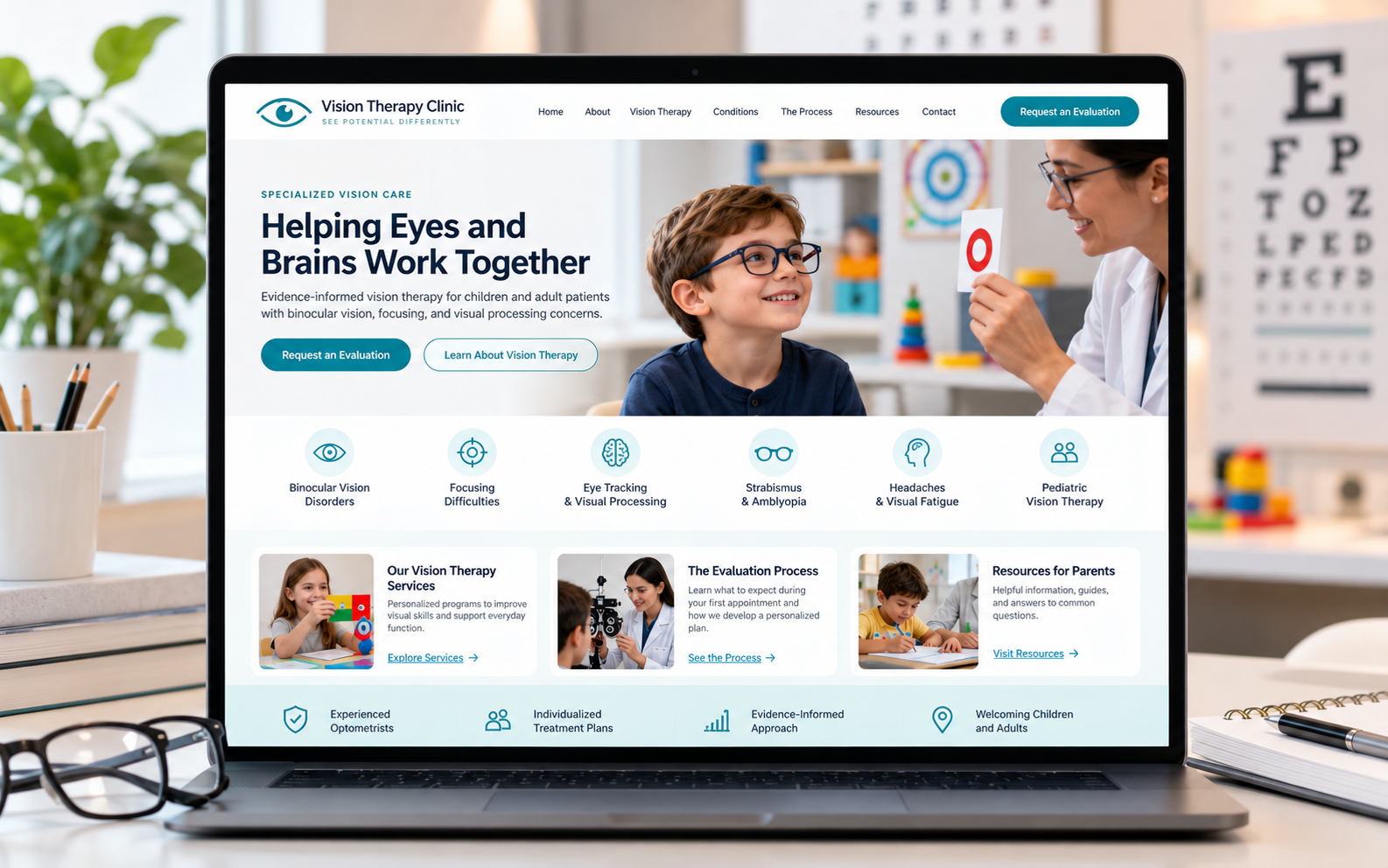
Trust becomes especially important when parents are evaluating a clinic for a child who may need specialized vision care. Beyond patient reviews, families often look for clear explanations of the evaluation process, clinician qualifications, and the services available. A specialized vision therapy clinic website should bring these details together so parents can understand the practice’s approach and make an informed decision about requesting an evaluation.
The Psychology Behind Reviews and Patient Conversion Behavior
Healthcare decisions involve vulnerability.
Patients are not purchasing products casually.
They are trusting someone with:
- surgical outcomes
- long-term vision quality
- physical safety
- emotional comfort
- recovery expectations
That changes conversion psychology entirely.
When patients encounter:
- authentic testimonials
- relatable recovery stories
- emotionally reassuring outcomes
- visible treatment success
- real patient experiences
their anxiety decreases dramatically.
This is why eye care website trust signals directly influence healthcare conversion behavior.
Patients emotionally trust peer experiences faster than they trust polished marketing copy.
A relatable review from a LASIK patient describing improved confidence while driving at night often creates stronger emotional momentum than multiple paragraphs explaining surgical technology.
Turn Patient Trust Into More Appointments
Patients don’t just compare clinics — they compare clarity, professionalism, and ease of booking. A well-designed eye clinic website builds confidence before they even call.
What Patients Evaluate Before Booking an Eye Appointment
| Patient Concern | What Builds Trust Instantly | What Reduces Trust Immediately |
|---|---|---|
| Treatment Safety | Real patient outcomes and procedure-specific reviews | Generic promotional claims |
| Doctor Credibility | Visible credentials, awards, and specialist expertise | Missing doctor profiles |
| Emotional Reassurance | Authentic patient stories and video testimonials | Overly clinical language |
| Website Professionalism | Clean healthcare UX and fast mobile experience | Cluttered layouts and poor navigation |
| Consultation Confidence | Clear next steps and booking transparency | Hidden pricing or unclear CTAs |
| International Trust | Virtual consultation workflows and secure systems | Lack of cross-border process clarity |
This visual trust framework matters enormously because modern patients evaluate healthcare websites emotionally before they evaluate them logically.
Why High-Converting Eye Clinics Integrate Reviews Across the Entire Website
Strong healthcare UX does not isolate reviews onto one “Testimonials” page.
Premium clinics strategically distribute:
- patient stories
- review snippets
- treatment success proof
- doctor reassurance
- emotional trust cues
throughout the patient journey.
This includes:
- homepage trust sections
- procedure landing pages
- doctor profile pages
- consultation booking areas
- mobile CTA sections
because reassurance must happen progressively.
Strong healthcare websites reduce anxiety layer by layer instead of relying on a single trust page to convince visitors.
That distinction dramatically improves consultation readiness.
7 Advanced Review Strategies That Increase Patient Bookings
1. Place Trust Signals Above the Fold
Patients should encounter reassurance immediately after landing on the website.
Strong eye clinic websites surface:
- Google review ratings
- verified patient satisfaction
- review counts
- procedure success indicators
within seconds.
For example:
“4.9/5 Stars From 1,200+ Verified Patient Reviews”
creates significantly stronger emotional reassurance than vague trust-focused marketing headlines.
2. Match Testimonials to Specific Procedures
Generic praise creates weak emotional relevance.
Patients considering:
- LASIK
- cataract surgery
- dry eye therapy
- retina treatments
- glaucoma procedures
want reassurance from patients who experienced those exact treatment journeys.
A LASIK prospect wants to hear about:
- visual recovery
- comfort levels
- confidence improvements
- healing expectations
from another LASIK patient specifically.
That dramatically improves emotional relatability.
3. Use Authentic Patient Photography
Stock healthcare imagery weakens trust almost instantly.
Premium clinics increasingly prioritize:
- original patient photography
- consultation imagery
- real treatment environments
- genuine doctor-patient interaction visuals
because visual realism improves emotional reassurance dramatically faster than artificial marketing imagery.
In 2026, patients are becoming increasingly skeptical of overly polished healthcare marketing due to growing awareness of AI-generated imagery and manipulated advertising visuals.
Authenticity now functions as a major conversion differentiator.
4. Prioritize Mobile Review Visibility
Most healthcare browsing now happens on mobile devices.
That means testimonials must remain:
- highly readable
- visually compressed
- thumb-friendly
- emotionally scannable
without slowing page speed or overwhelming smaller screens.
Strong mobile testimonial UX directly affects:
- patient engagement
- booking confidence
- CTA interaction
- consultation readiness
especially among younger healthcare audiences.
5. Use Video Testimonials Strategically
Video testimonials create stronger emotional trust because patients can:
- hear confidence
- observe authenticity
- evaluate emotional comfort
- connect psychologically faster
Premium eye clinics increasingly use:
- recovery interviews
- patient success walkthroughs
- post-treatment reflections
- doctor-patient interactions
to strengthen emotional reassurance significantly.
Video reviews feel substantially more believable than generic text testimonials.
6. Position Reviews Near Consultation CTAs
The highest emotional friction occurs immediately before booking.
Patients begin silently questioning:
- treatment safety
- provider quality
- appointment risk
- consultation value
at the exact moment they consider clicking:
- “Book Appointment”
- “Schedule Consultation”
- “Request Assessment”
Strong healthcare UX strategically positions testimonials beside:
- booking forms
- CTA buttons
- appointment widgets
- consultation sections
to reduce hesitation during high-friction decision moments.
7. Build Trust for International and Medical Tourism Patients
One of the largest trust gaps on many healthcare websites is cross-border reassurance.
International patients often worry about:
- travel coordination
- treatment logistics
- doctor qualifications
- virtual consultations
- payment transparency
- recovery expectations
- post-treatment communication
Premium clinics address these concerns directly through:
- secure telehealth consultations
- international patient workflows
- visible certifications and fellowships
- virtual screening systems
- airport proximity guidance
- recovery coordination transparency
Leading eye clinics in 2026 are also integrating interactive pre-consultation tools directly into the patient journey, including:
- “Am I a Candidate for LASIK?” assessments
- virtual screening workflows
- treatment recommendation quizzes
- insurance eligibility systems
- telehealth evaluation tools
These interactive systems improve:
- engagement duration
- patient confidence
- qualification quality
- consultation readiness
simultaneously.
Why GEO and AI Search Engines Prioritize Review-Rich Healthcare Websites
Modern Generative Engine Optimization depends heavily on structured trust architecture.
AI-driven search systems increasingly prioritize:
- review-rich content
- medical authority signals
- verified patient sentiment
- entity-based healthcare trust
when selecting which clinics to surface prominently.
That means review structure now affects:
- discoverability
- AI visibility
- patient trust
- consultation inquiries
- search impressions
simultaneously.
Clinics should now implement:
- MedicalBusiness Schema
- Physician Schema
- Review Schema
- FAQ Schema
to improve machine-readable trust recognition.
This is one of the most overlooked healthcare SEO opportunities currently available.
Ready to Get More Patient Bookings From Your Website?
If your current website is not converting visitors into appointments, it’s time to fix the experience. I help optometrists and eye clinics build websites that drive real patient enquiries.
Why Service Positioning and Testimonials Must Work Together
Many clinics separate:
- treatment information
- emotional reassurance
- patient trust
- consultation confidence
instead of integrating them strategically.
Premium eye clinics align:
- patient stories
- doctor authority
- procedure explanations
- treatment outcomes
within the same UX flow.
Our guide on how top eye clinics showcase services online for more patient bookings explains how strategic service presentation improves patient engagement, emotional trust, and consultation readiness simultaneously.
Why Website Structure Influences Patient Trust More Than Clinics Realize
Trust alone is not enough.
Patients also need:
- booking clarity
- visual simplicity
- emotional comfort
- operational transparency
throughout the website experience.
Poor healthcare UX creates:
- confusion
- hesitation
- anxiety
- distrust
before patients ever reach the appointment form.
This is why premium clinics increasingly invest in:
- trust-focused navigation
- simplified appointment UX
- mobile-first healthcare layouts
- strategically structured service architecture
to improve patient conversion behavior.
Our breakdown on how to structure an eye clinic website for maximum appointment bookings explores how premium healthcare UX directly affects consultation confidence and booking performance.
Real Client-Style Insight: How Better Review Positioning Increased Consultation Inquiries
A London-based eye clinic approached us because website traffic remained strong, yet appointment inquiries were underperforming significantly.
The issue was not visibility.
It was emotional sequencing.
Their previous website:
- buried reviews deep within secondary pages
- used weak generic testimonials
- lacked procedure-specific trust signals
- displayed poor mobile testimonial visibility
- created emotional gaps before booking actions
Patients reached consultation pages without feeling sufficiently reassured.
We restructured:
- testimonial hierarchy
- homepage trust positioning
- service-specific review integration
- mobile testimonial visibility
- CTA trust placement
Within weeks:
- patient engagement improved
- consultation inquiries strengthened
- mobile interaction rates increased
- booking confidence improved significantly
Traffic remained relatively stable.
But emotional reassurance improved dramatically.
That changed conversion performance.
“Healthcare conversions happen emotionally before they happen operationally. Patients book appointments when they feel reassured, not simply informed.”
— Kanika Gupta, Senior Conversion UX Strategist
Why Premium Healthcare UX Outperforms Aggressive Marketing Tactics
Weak healthcare websites often rely heavily on:
- aggressive CTAs
- cluttered layouts
- excessive promotions
- overwhelming messaging
to force conversions.
Premium healthcare brands focus instead on:
- emotional reassurance
- calm UX
- visual clarity
- strategic trust
- patient comfort
because healthcare decisions require emotional safety first.
Strong healthcare UX should feel:
- calming
- trustworthy
- visually organized
- emotionally reassuring
- operationally transparent
before patients ever contact the clinic.
Why Testimonials Are One of the Strongest Trust Assets in Modern Eye Care
Modern patients trust:
- peer experiences
- emotional outcomes
- relatable recovery stories
more than polished marketing language.
Improving eye clinic website credibility now depends heavily on:
- authentic patient stories
- emotional trust positioning
- testimonial architecture
- doctor reassurance
- review visibility
especially for premium clinics competing internationally.
Clinics across:
- New York
- London
- Sydney
- Dubai
- Singapore
now compete heavily on digital trust experience, not just clinical expertise.
Conclusion: Better Trust Positioning Creates More Patient Bookings
The strongest healthcare websites do not simply explain treatments.
They strategically build emotional reassurance throughout the patient journey.
That is why modern eye clinic website design services now focus heavily on:
- strategic testimonial placement
- patient trust and credibility signals
- Google review visibility
- mobile-first eye care website UX
- emotionally reassuring patient journeys
- conversion-focused ophthalmology website layouts
before patients ever schedule consultations.
Patients book appointments when websites feel emotionally trustworthy, not merely medically informative.
Is Your Eye Clinic Website Building Enough Patient Trust?
If your eye clinic website generates visibility but struggles to convert high-value local or international patients consistently, the issue may not be your medical expertise.
It may be your digital trust architecture.
Today’s patients evaluate:
- emotional reassurance
- operational professionalism
- mobile experience quality
- review credibility
- international accessibility
- consultation clarity
before they ever contact your clinic.
We help premium eye care brands create:
- conversion-focused healthcare websites
- patient reassurance systems
- trust-driven UX
- mobile-first booking experiences
- premium healthcare branding
designed specifically for modern patient psychology and international trust expectations.
Available across US, UK, and AU time zones. Fully remote. No commitment required.
Still Not Getting Enough Enquiries From Your Website?
If your website is attracting visitors but not converting them into leads or bookings, the problem is usually in how your services are presented and how users experience your site. Let’s identify what’s holding it back.
Ready to Increase Your Patient Bookings?
If your website is getting traffic but not bookings/appointments, the issue is not visibility.
It’s structure, trust, and UX.
FAQs
Why are patient reviews important for eye clinic websites?
Patient reviews reduce hesitation and improve emotional trust. Strong testimonials help patients feel reassured about treatment quality, doctor credibility, and appointment confidence before contacting the clinic.
What types of reviews improve healthcare website conversions most?
The highest-converting healthcare reviews are:
- service-specific
- emotionally relatable
- visually authentic
- outcome-focused
- strategically positioned near booking CTAs
Video testimonials also improve trust significantly.
How do reviews influence patient booking behavior?
Patients often evaluate trust emotionally before scheduling consultations. Positive reviews reduce uncertainty, strengthen perceived credibility, and increase patient confidence during the healthcare decision-making process.
Why should eye clinics integrate reviews throughout the website?
Strategic review placement improves trust progressively across the patient journey. Testimonials placed on homepages, service pages, doctor profiles, and booking sections improve engagement and appointment readiness significantly.
Do you work with eye clinics internationally?
Yes. We work fully remotely with eye clinics across the US, UK, Australia, Canada, Singapore, and UAE, helping clinics improve patient trust, healthcare UX, appointment conversions, and premium digital positioning through conversion-focused website strategy.