Quick Answer
The optimal eye clinic website structure consists of 6 core pillars:
- Outcome-driven headlines
- Intent-based service pages
- Strong social proof
- Frictionless booking (real-time scheduling systems)
- Mobile-first user experience
- Local SEO + compliance integration
When these elements are aligned, patient trust increases and bookings follow.
TL;DR
Patients don’t browse eye clinic websites they evaluate them.
To increase bookings, your website must:
- Clearly explain services and outcomes
- Build trust instantly through proof
- Remove friction from booking
- Work seamlessly on mobile
- Align with local search and compliance expectations
If any of these are missing, patients hesitate and bookings drop.
Key Takeaways
- Website structure impacts bookings more than design aesthetics
- Patients decide within seconds whether to trust your clinic
- Accessibility and compliance are now critical trust factors
- Booking must be fast, visible, and frictionless
- Local SEO and system integrations improve discoverability
- A well-structured site filters serious patients automatically
Introduction: Why Most Eye Clinic Websites Fail to Convert
Most eye clinic owners I speak with say the same thing:
“We’re getting website traffic, but not enough bookings.”
And it’s rarely a marketing issue.
It’s a structure issue.
A patient in New York searches for “eye exam near me,” lands on your website, and leaves without booking.
A parent in London checks your services but doesn’t feel confident enough to proceed.
A working professional in Sydney visits your site on mobile but can’t find a clear booking option.
That’s not a visibility problem it’s a conversion problem.
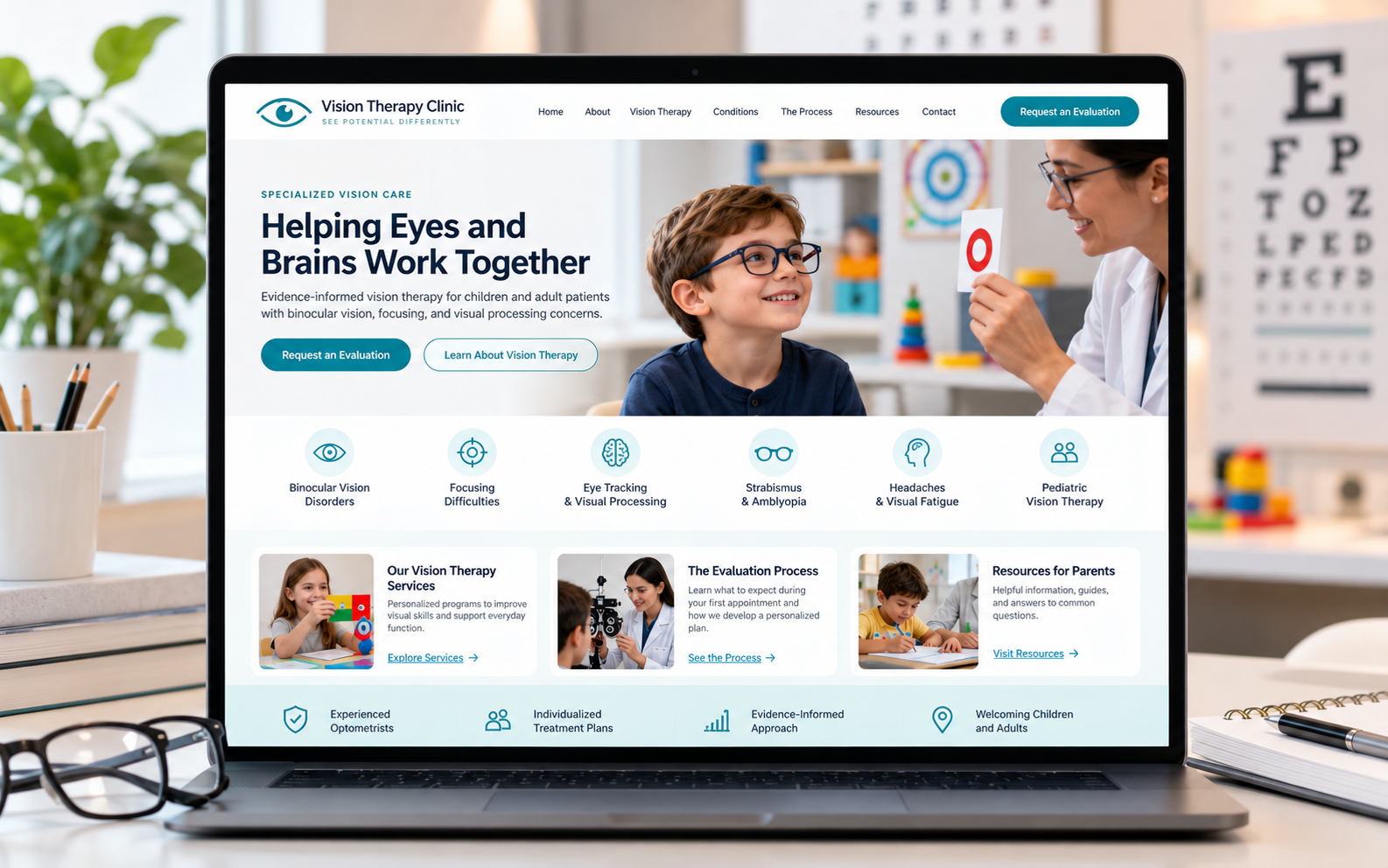
This is where eye clinic website design becomes critical. Your website isn’t just an online presence. It’s your primary patient acquisition system.

Are Patients Leaving Your Eye Clinic Website Without Booking?
If your website isn’t converting visitors into appointments, the problem is usually trust, clarity, and booking flow. Discover how a conversion-focused optometrist website can increase patient enquiries.
The Patient Decision Journey: What Happens Before Booking
Patients don’t land on your site ready to book.
They move through a structured decision process:
- Do I trust this clinic?
- Do they offer the service I need?
- Is booking easy and convenient?
This is the foundation of eye clinic website for appointment bookings.
If your website doesn’t support this journey clearly, patients hesitate and hesitation leads to drop-offs.
Vision Care Website Design: Structuring for Conversion, Not Just Information
A strong eye clinic website design is not about adding more pages.
It’s about structuring the experience around how patients think and decide.
High-performing clinic websites follow a clear flow:
- Clarity – What services are offered?
- Trust – Can I rely on this clinic?
- Relevance – Do they treat my condition?
- Action – How quickly can I book?
If your site fails at any of these stages, bookings drop.
Structure is not a design choice it’s a business decision.
Turn Patient Trust Into More Appointments
Patients don’t just compare clinics — they compare clarity, professionalism, and ease of booking. A well-designed eye clinic website builds confidence before they even call.
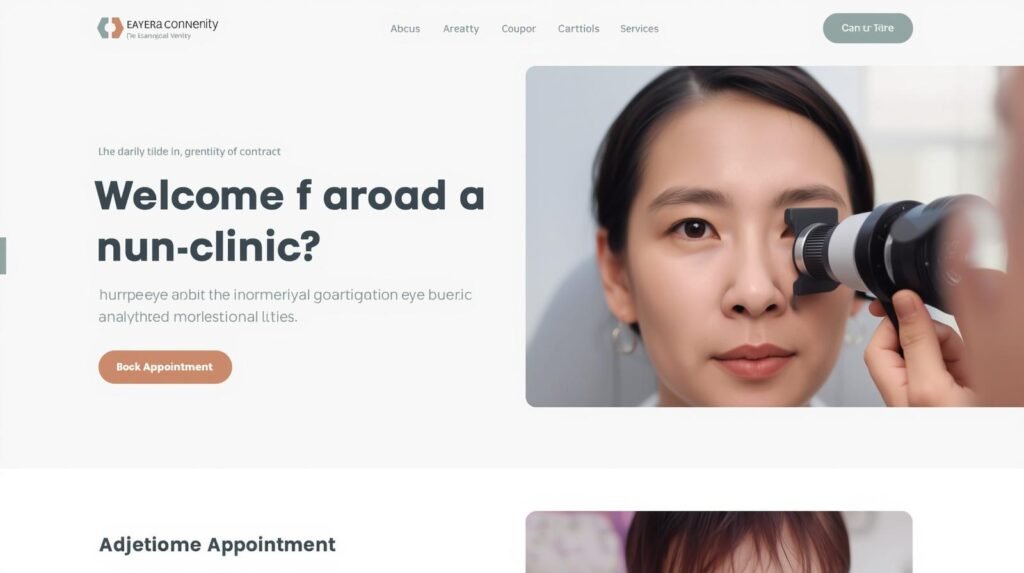
The 6 Essential Sections Every High-Converting Eye Clinic Website Needs
1. A Clear, Outcome-Focused Homepage
Your homepage is not a brochure.
It’s a decision gateway.
Patients should instantly understand:
- What you specialize in
- Who you help
- Why they should trust you
Avoid generic messaging.
Instead, use outcome-driven positioning such as:
“Advanced Eye Exams & Same-Day Appointments in Central London”
This aligns directly with website structure for eye clinic leads.
2. Service Pages That Match Patient Intent
Patients don’t search for “eye care.”
They search for:
- Dry eye treatment
- Myopia management
- Contact lens exams
Each service needs its own dedicated page.
This is one of the most overlooked ophthalmology website design best practices.
Service pages should:
- Explain the condition
- Outline treatment
- Include proof and outcomes
This reduces uncertainty and increases confidence.
3. Trust Signals That Remove Doubt
Healthcare decisions are emotional.
Patients need reassurance before booking.
Your website must include:
- Patient reviews
- Doctor credentials
- Real clinic imagery
- Certifications and affiliations
These are essential for eye care website conversion optimization.
Without trust signals, patients hesitate.
4. A Frictionless Booking Experience
Booking should feel effortless.
Not hidden. Not complicated.
This is where healthcare website design for patient appointments becomes critical.
High-converting clinics:
- Use real-time booking tools like Zocdoc, Jane, or Acuity
- Show available time slots instantly
- Reduce form fields to essentials
Every extra step reduces conversions.
5. Mobile-First Navigation
Most patients visit your website on mobile.
If your site isn’t optimized:
- Buttons are difficult to tap
- Text is hard to read
- Booking feels frustrating
This directly impacts your ability to improve eye clinic online bookings.
Mobile UX is now a conversion factor not just a design feature.
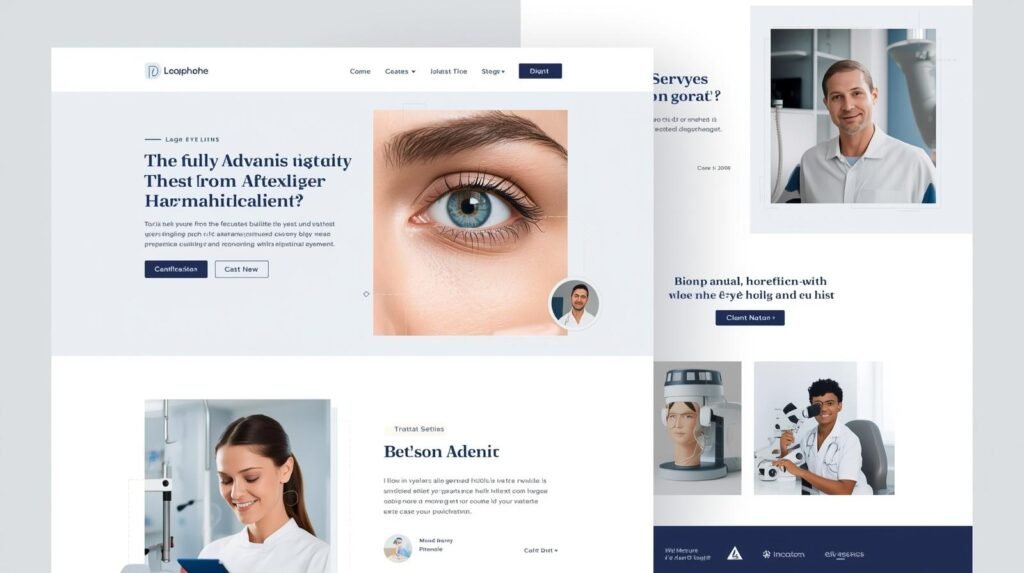
Accessibility: Designing for Your Patients
An eye clinic website must be accessible by design.
You are serving patients who may already have visual impairments. If your website is difficult to read or navigate, you are creating friction before they even step into your clinic.
Modern websites should follow WCAG 2.1 accessibility standards, including:
- High contrast text
- Scalable fonts
- Screen-reader compatibility
- Clear navigation structure
In my experience, this is one of the most overlooked conversion factors.
An inaccessible website doesn’t just affect usability it reduces trust instantly.
For eye clinics, accessibility is part of patient care.
6. Local SEO and Location Clarity
Patients search locally.
Your website must clearly show:
- Clinic location
- Service areas
- Google reviews
- Directions
This ensures visibility for “eye clinic near me” searches.
Compliance, Integrations & Local Ecosystem Signals
High-performing eye clinic websites don’t operate in isolation.
They integrate into the healthcare ecosystem of their region.
This includes:
- Google Business Profile optimization
- Integration with booking systems (Zocdoc, Jane, Acuity)
- Compliance with:
- HIPAA (US)
- GDPR (UK/EU)
- AHPRA (Australia)
These are not just technical requirements.
They are trust signals for both patients and search engines.
Ready to Get More Patient Bookings From Your Website?
If your current website is not converting visitors into appointments, it’s time to fix the experience. I help optometrists and eye clinics build websites that drive real patient enquiries.
Comparison: Informational Website vs Conversion-Focused Website
| Feature | Informational Website | Conversion-Focused Website |
|---|---|---|
| Goal | Provide info | Drive bookings |
| Structure | Generic | Patient-focused |
| Trust | Minimal | Prominent |
| Booking | Hidden | Immediate |
| UX | Static | Guided |
If your existing website already has a reasonable structure but still produces fewer appointments than expected, a full redesign may not be the first answer. Our practical guide on deciding between an eye clinic website redesign and better booking UX explains how to assess SEO equity, service architecture, mobile usability, trust signals, and booking friction before committing to a larger rebuild.
Common Website Mistakes That Cost You Patient Bookings
| Mistake | What Happens | Fix |
| Generic messaging | Patients don’t connect | Use outcome-driven headlines |
| Hidden booking button | Drop-offs increase | Place CTA above the fold |
| No visible reviews | Low trust | Add testimonials strategically |
| Long forms | Booking friction | Simplify fields |
| Poor mobile UX | High bounce rate | Optimize for mobile |
The Psychology Behind Patient Bookings
Patients don’t just evaluate services.
They evaluate trust.
They ask:
- Will I be taken care of?
- Is this clinic credible?
- Is booking easy?
Your website must answer these instantly
A well-structured website helps patients navigate your services, but visibility is what brings them to your website in the first place. Search rankings are heavily influenced by how well your pages answer patient questions, demonstrate expertise, and satisfy search intent. Our guide on How Eye Clinics Can Rank #1 on Google SERP explains how local SEO, treatment-focused content, technical optimization, and patient trust signals work together to increase organic visibility and attract more qualified appointment enquiries before patients even compare competing clinics.
Real Client Result: From Traffic to Bookings
An optometry clinic in Sydney approached us with:
- High traffic
- Low appointment bookings
The issue wasn’t demand.
It was structure.
Before:
- Generic homepage
- Hidden booking button
- Weak service pages
After restructuring:
- Clear positioning
- Visible booking system
- Strong trust signals
Using the conversion formula:
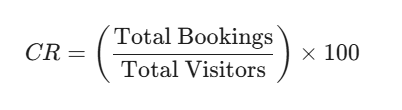
The clinic saw a 42% increase in conversion rate within 60 days.
This is the impact of strategic eye clinic website design.
How UX Directly Impacts Patient Conversions
Conversion is not visual it’s behavioral.
Every scroll, click, and interaction influences whether a patient books or leaves.
We’ve explored this in depth in our breakdown of how UX impacts patient bookings and clinic growth:
Why Structure Matters More Than Design Trends
Many clinics focus on aesthetics.
Colors. Animations. Visual styles.
But patients don’t book because a website looks good.
They book because:
- The process feels easy
- The clinic feels trustworthy
- The information is clear
Structure drives outcomes.
The Cost of Poor Website Structure
A poorly structured website leads to:
- Missed bookings
- Wasted marketing spend
- Poor patient experience
You end up paying for traffic that doesn’t convert.
Not Ready to Book a Call Yet?
If you’re still evaluating whether your website is the real issue, that’s completely valid.
Most clinic owners don’t want to jump on a call until they’re sure there’s a genuine gap and in many cases, that gap isn’t obvious at first glance.
Your website might look professional.
It might even be getting traffic.
But small structural issues like unclear messaging, hidden booking options, or missing trust signals can quietly reduce patient bookings every single day.
That’s exactly what we break down in detail here:
Read the blog Why Modern Eye Clinics Need Conversion-Focused Website Design for Vision Clinics That Drive More Patient Bookings.
Inside that guide, you’ll see:
- Why most clinic websites act like brochures instead of booking systems
- The exact structural mistakes that cause patients to leave
- How modern clinics are redesigning their websites to increase appointments
- What high-performing eye clinic websites do differently
This gives you a clear, objective way to assess your own website before making any decision.
Because the goal isn’t just to redesign your site.
It’s to understand whether your current website is actually helping your clinic grow or quietly holding it back.
Conclusion: Your Website Is Your Digital Front Desk
Your website is your first interaction with a patient.
Before they call or visit, they’ve already decided whether they trust you.
That decision happens in seconds.
That’s why optometrist website design is not optional it’s essential for growth.
Clinics that consistently increase bookings are not always the largest.
They are the ones that:
- Communicate clearly
- Build trust quickly
- Make booking effortless
We work fully remotely with eye clinics across the US, UK, Australia, and Canada aligning every website with your patient expectations and local market.
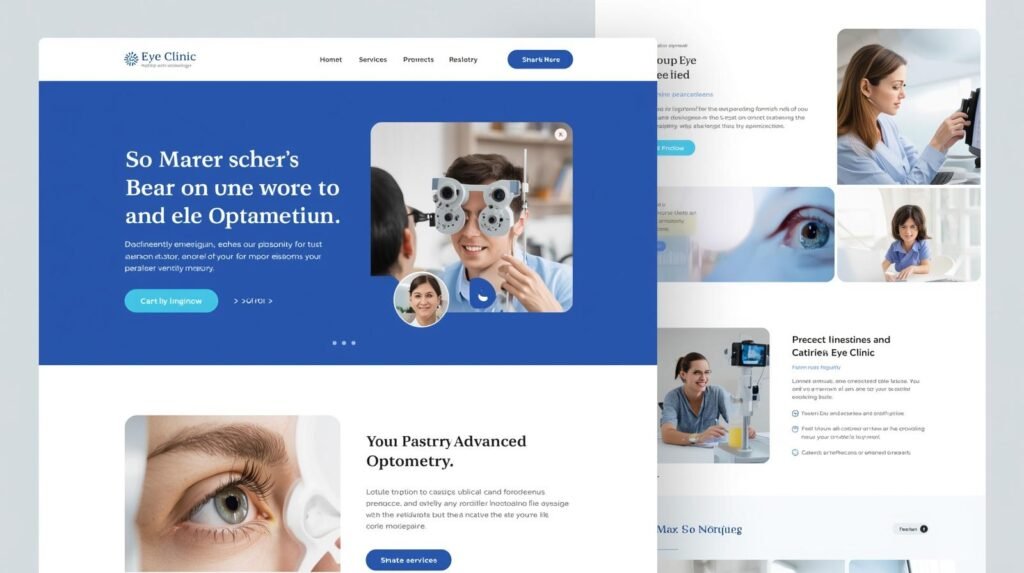
Still Not Getting Enough Enquiries From Your Website?
If your website is attracting visitors but not converting them into leads or bookings, the problem is usually in how your services are presented and how users experience your site. Let’s identify what’s holding it back.
Ready to Increase Your Patient Bookings?
If your website is getting traffic but not bookings/appointments, the issue is not visibility.
It’s structure, trust, and UX.
FAQs
What makes an eye clinic website high-converting?
A high-converting eye clinic website clearly communicates services, builds trust through proof, and offers a seamless booking experience. It removes friction and aligns with how patients make healthcare decisions.
Why are patients not booking appointments through my website?
Most websites fail due to unclear messaging, hidden booking options, and lack of trust signals. Patients leave when they don’t feel confident or when booking feels complicated.
How important is accessibility for eye clinic websites?
Accessibility is critical. Eye clinic websites must be WCAG compliant to ensure usability for visually impaired users. It also builds trust and improves overall user experience.
Do you work with clinics outside your country?
Yes. We work fully remotely with eye clinics across the US, UK, Australia, and Canada, ensuring alignment with your local market and patient expectations.
How do you ensure compliance with healthcare regulations?
We design websites aligned with regional standards like HIPAA, GDPR, and AHPRA, ensuring patient data security and regulatory compliance.