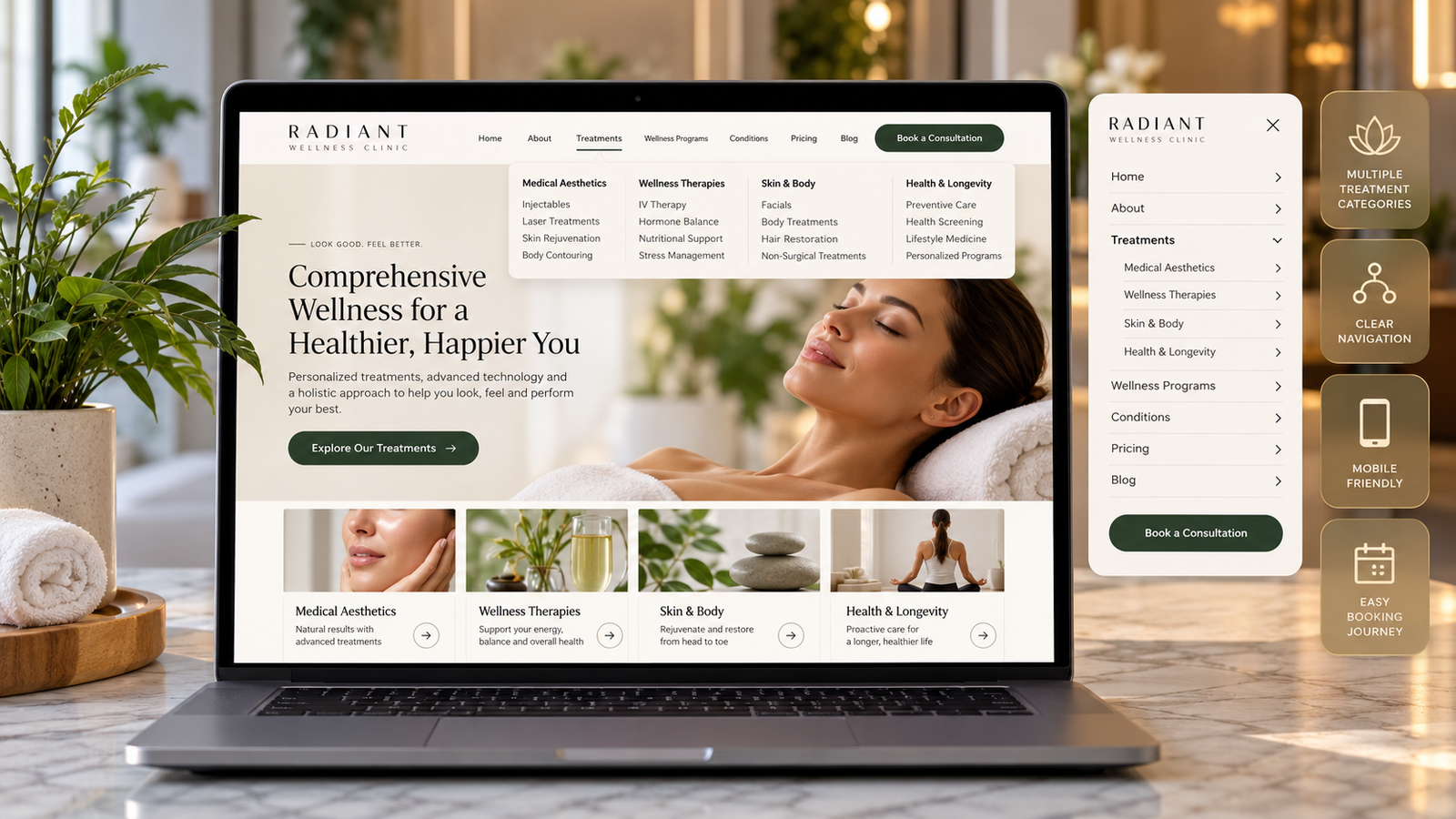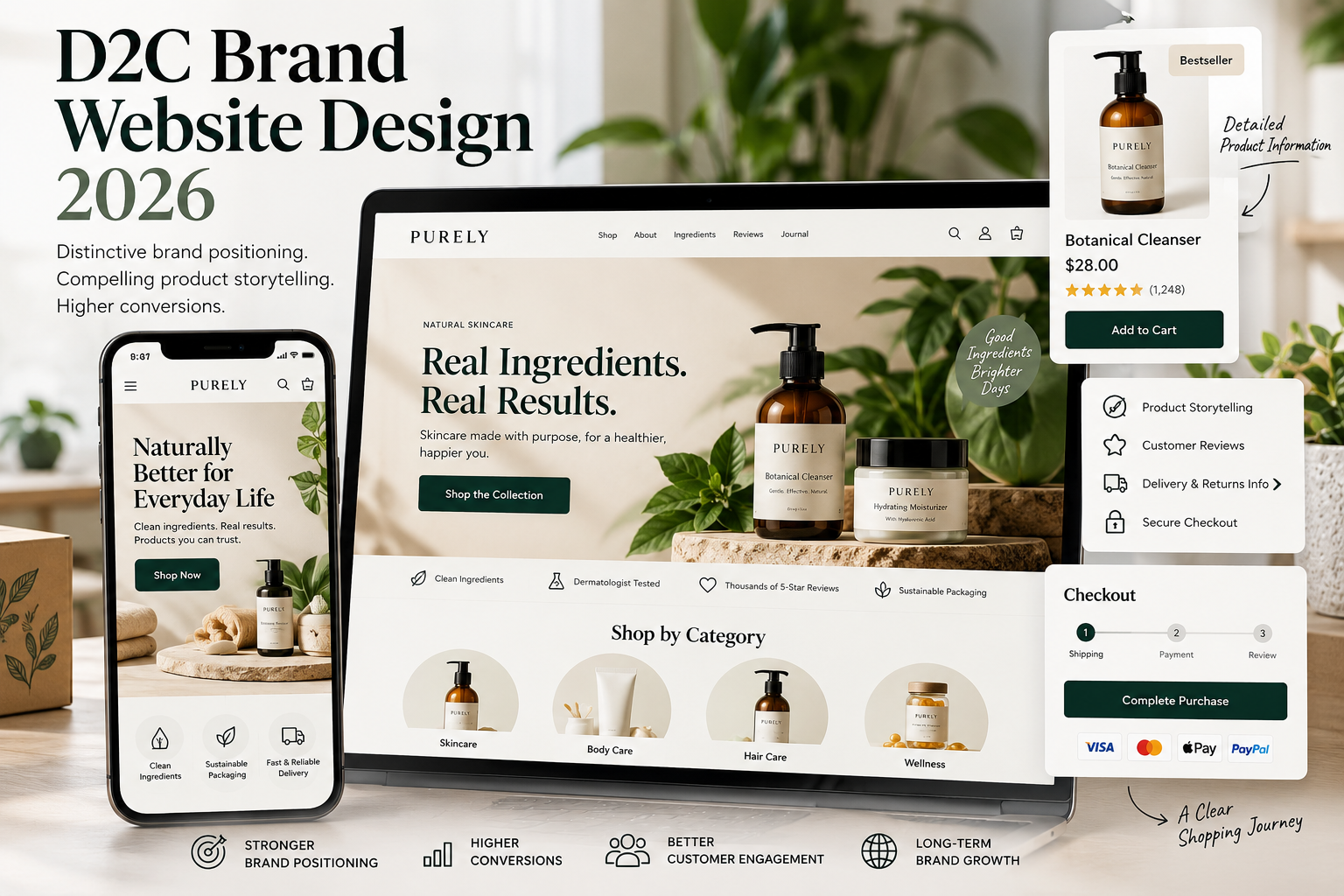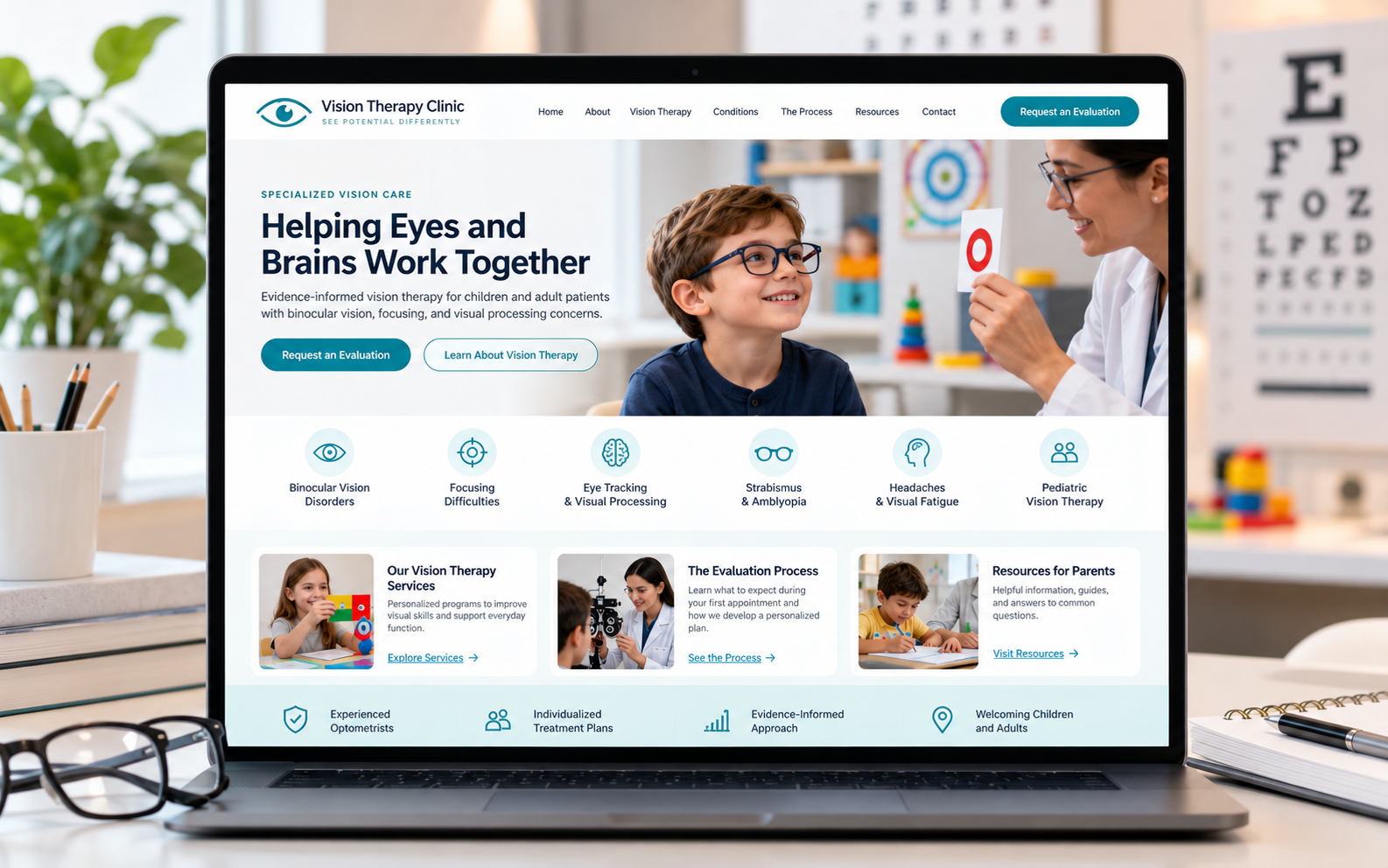
Quick Answer
Patients considering premium dermatology treatments rarely choose a clinic based solely on credentials or technology. They evaluate trust, expertise, exclusivity, and perceived treatment quality through digital experiences long before booking a consultation. Strategic aesthetic website design services help dermatologists position themselves as premium providers, increase consultation quality, reduce price sensitivity, and generate stronger patient enquiries by creating trust-focused digital journeys that align with modern patient expectations.
TL;DR
Premium cosmetic dermatology has become increasingly competitive across major markets such as New York, London, Sydney, Singapore, and Dubai.
Patients researching advanced treatments like Ultherapy, Fraxel laser resurfacing, Morpheus8 skin remodeling, Sofwave lifting procedures, Hydrafacial therapies, or Picosure pigmentation correction often spend more time validating trust than comparing technologies.
The strongest dermatology websites function as patient confidence systems.
They combine:
- Premium positioning
- Trust architecture
- Before-and-after validation
- Mobile-first UX
- Consultation-focused design
- Luxury branding
- Patient psychology
The result is stronger consultation quality, higher treatment acceptance rates, and improved patient acquisition.
Key Takeaways
- Premium patients judge websites before they judge treatments.
- Trust architecture directly influences consultation requests.
- Luxury positioning reduces price resistance.
- Before-and-after galleries remain one of the highest-converting assets.
- Mobile UX significantly impacts patient confidence.
- International patients require additional trust signals.
- Strategic website design often improves conversions more effectively than increased advertising spend.
- Premium clinics use digital experiences to communicate expertise before consultations begin.
Why Premium Dermatology Patients Judge Your Website First
A patient researching non-surgical facial lifting with Ultherapy in Manhattan is not immediately comparing treatment specifications.
They are evaluating trust.
A professional considering Fraxel laser resurfacing in London is not primarily concerned about device technology.
They are evaluating credibility.
A patient exploring Morpheus8 skin tightening in Sydney wants reassurance that the clinic can deliver safe, predictable outcomes before making contact.
This shift in patient behavior has changed how dermatology websites influence revenue.
Modern patients complete a significant portion of their decision-making journey before speaking with a clinic representative. Industry research consistently suggests that more than 70% of the buying journey is completed digitally before direct contact occurs.
Your website becomes the first consultation.
Patients evaluate:
- Clinical sophistication
- Brand quality
- Physician expertise
- Patient outcomes
- Communication style
- Operational professionalism
These evaluations often happen within seconds.
Premium patients are particularly sensitive to digital presentation because aesthetic procedures involve emotional vulnerability, financial investment, and visible outcomes.
A weak website immediately increases perceived risk.
A strategic premium skin clinic website design reduces perceived risk before a consultation ever occurs.
The Financial Cost of Weak Digital Positioning
Many dermatologists invest heavily in:
- Paid search campaigns
- Social media advertising
- Influencer collaborations
- SEO initiatives
- Reputation management
Yet consultation quality remains inconsistent.
The problem is frequently not visibility.
The problem is confidence.
Potential patients arrive on the website but fail to gain enough reassurance to move forward.
This creates a costly conversion leak.
The Conversion Leak
Industry conversion benchmarks indicate that premium cosmetic dermatology websites often convert below 1.5% when trust architecture is weak, even when traffic quality remains strong.
Clinics spending $50–$150 per click on competitive searches such as:
- Morpheus8 London
- Fraxel Manhattan
- Ultherapy Sydney
- Picosure pigmentation treatment
- Advanced laser resurfacing
can lose substantial revenue when digital onboarding experiences create friction.
A poorly optimized consultation journey turns expensive traffic into missed opportunities.
The financial impact compounds quickly.
Every abandoned consultation request represents:
- Lost treatment revenue
- Lost lifetime patient value
- Lost referrals
- Lost repeat business
The strongest clinics understand that conversion optimization begins long before a patient reaches the booking form.
Is Your Clinic Website Attracting the Wrong Type of Patient?
If your treatments are premium but your enquiries are price-sensitive, your website may be creating the wrong first impression. A refined clinic website can help position your brand for higher-value consultations.
Explore Aesthetic Clinic Website Design →The Aesthetic Confidence Architecture
In my experience designing hundreds of healthcare and premium service websites, successful patient acquisition follows a predictable psychological pattern.
I call this process the Aesthetic Confidence Architecture.
Stage 1: Visual Validation
Patients first assess whether the website feels trustworthy.
They subconsciously evaluate:
- Typography
- Layout structure
- Photography quality
- Brand consistency
- Visual sophistication
Premium aesthetics create emotional reassurance.
Generic design creates hesitation.
Stage 2: Clinical Validation
Patients begin verifying expertise.
They look for:
- Physician credentials
- Certifications
- Training
- Professional memberships
- Specialized experience
This stage determines whether the clinic appears capable of delivering premium outcomes.
Premium dermatology positioning also needs to account for the difference between a physician-led medical practice and a purely cosmetic treatment business. Our guide to what medical skin practices need from their websites explains how physician credentials, medical conditions, patient education, treatment pathways, trust signals, and appointment UX should work together without making a dermatology practice look like a generic med spa.
Stage 3: Outcome Validation
Patients seek proof.
Before-and-after galleries, patient stories, treatment examples, and clinical outcomes become central decision-making tools.
Trust accelerates when evidence feels authentic.
Stage 4: Emotional Validation
Patients evaluate whether the clinic understands their goals.
Effective websites address:
- Treatment concerns
- Recovery expectations
- Appearance goals
- Lifestyle considerations
This stage often determines whether a visitor becomes a lead.
Stage 5: Consultation Activation
The final stage focuses on action.
Patients need a simple, reassuring pathway toward consultation.
Many clinics lose potential patients here because booking systems create unnecessary friction.
Why Most Dermatology Websites Fail to Attract Premium Patients
Many clinics unintentionally position themselves as commodity providers.
The website may accurately describe treatments while failing to communicate value.
Common problems include:
Generic Visual Presentation
Stock imagery weakens authenticity.
Patients want evidence of real expertise, not photographs that appear across hundreds of healthcare websites.
Weak Trust Positioning
Credentials, certifications, publications, awards, and clinical distinctions are often hidden instead of highlighted strategically.
Overwhelming Navigation
Visitors struggle to locate treatment information, physician credentials, consultation pathways, and outcome evidence.
Poor Mobile Experiences
A significant percentage of premium treatment research now occurs on mobile devices.
Weak mobile UX quietly destroys trust.
Feature-Focused Messaging
Many clinics focus excessively on device specifications rather than patient outcomes.
Patients rarely book because they understand wavelengths, pulse durations, or treatment protocols.
They book because they believe the clinic can solve their concerns.
Premium Treatment Research Has Changed
Patients researching cosmetic dermatology today are significantly more informed than previous generations.
A visitor exploring:
- Fraxel laser resurfacing
- Morpheus8 collagen remodeling
- Sofwave lifting procedures
- Ultherapy treatments
- Picosure pigmentation correction
- Hydrafacial therapies
often compares multiple providers simultaneously.
They consume:
- Patient reviews
- Before-and-after results
- Physician biographies
- Social proof
- Educational content
before contacting any clinic.
Websites that support this research process generate stronger consultation quality.
Websites that interrupt the process lose patients to competitors.
The clinics attracting the highest-value consultations understand that digital trust must be earned before appointments are requested.
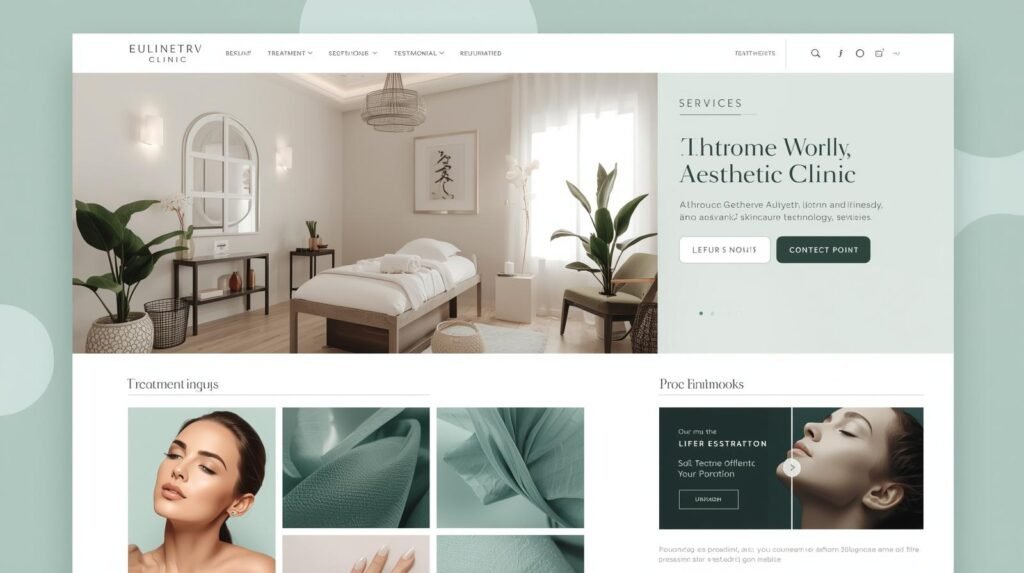
Commodity Treatment Pages vs Premium Consultation-Focused Pages
| Commodity Treatment Page | Premium Consultation-Focused Page |
|---|---|
| Focuses on device names and manufacturers | Focuses on patient concerns and outcomes |
| Heavy technical jargon | Clear explanations patients understand |
| Emphasizes wavelengths and specifications | Explains recovery, expectations, and suitability |
| Lists treatments individually | Creates personalized treatment pathways |
| Encourages price shopping | Encourages consultation requests |
| Creates uncertainty | Creates confidence |
Premium patients rarely purchase technology.
They purchase outcomes.
That distinction significantly impacts conversion rates.
Before-and-After Galleries: Your Most Valuable Trust Asset
A prospective patient may read treatment information.
They may review credentials.
They may explore physician biographies.
However, visual proof often becomes the deciding factor.
Patients trust outcomes.
Many clinics unintentionally weaken trust by organizing galleries incorrectly.
Instead of categorizing galleries by treatment technology, organize them by patient concerns.
Examples include:
- Acne scarring
- Hyperpigmentation
- Rosacea
- Fine lines and wrinkles
- Skin laxity
- Sun damage
- Uneven texture
This structure mirrors how patients think.
Someone suffering from melasma does not search for a specific laser platform.
They search for evidence that their concern can be improved.
The more relatable the outcomes feel, the stronger the emotional connection becomes.
Consultation requests increase naturally.
Why Visual Proof Reduces Price Resistance
Premium treatments often involve substantial investment.
Patients rarely object to pricing when confidence remains high.
They object when uncertainty remains unresolved.
Visual proof helps eliminate uncertainty.
Before-and-after galleries demonstrate:
- Clinical expertise
- Treatment consistency
- Patient suitability
- Realistic outcomes
- Physician credibility
Trust increases.
Price sensitivity decreases.
Many premium dermatology practices discover that strengthening visual proof improves consultation quality more effectively than discount promotions ever could.
Structuring Services to Increase Consultation Requests
Treatment presentation influences conversion performance far more than most clinics realize.
High-performing clinics structure service pages around:
The Patient Problem
Start with the concern.
Demonstrate understanding of the patient’s frustration.
The Desired Outcome
Clearly define the transformation patients seek.
The Treatment Pathway
Explain how the clinic approaches treatment planning.
Social Proof
Include testimonials, outcomes, and relevant examples.
Consultation Activation
Create a simple next step.
This framework consistently outperforms feature-heavy treatment descriptions because it aligns with actual patient decision-making behavior.
For a deeper understanding of how service presentation impacts consultation quality, explore our guide on how aesthetic clinics present services to increase consultation requests.
Want Your Website to Feel as Premium as Your Clinic?
High-end clients notice design quality, photography, trust signals, and booking flow within seconds. Let’s identify what your current website is communicating before patients ever contact you.
Mobile UX Directly Influences Patient Confidence
Premium patients increasingly evaluate providers through smartphones.
Research often begins during:
- Commutes
- Lunch breaks
- Travel
- Evenings
- Weekends
A dermatologist in Harley Street may lose potential consultations simply because the mobile experience creates frustration.
Common mobile UX problems include:
- Small typography
- Hidden consultation buttons
- Difficult navigation
- Slow loading pages
- Broken forms
- Poor image optimization
Patients interpret usability problems as operational problems.
The website becomes a reflection of the clinic itself.
Strong mobile UX communicates professionalism.
Weak mobile UX increases perceived risk.
The highest-performing clinics treat mobile optimization as a revenue strategy rather than a technical requirement.
Learning from Premium Skin Clinics
Many luxury dermatology practices face the same challenge.
Strong clinical expertise exists.
Patient acquisition remains inconsistent.
The difference often lies in digital positioning.
Our detailed guide on how premium skin clinics use website design to attract high-paying clients explores how trust architecture, luxury branding, and consultation-focused UX influence patient behavior long before appointments are scheduled.
The same principles apply directly to premium dermatology practices.
Patients consistently gravitate toward providers who communicate expertise clearly, confidently, and professionally.
Real Client Insight: How Better UX Increased Premium Consultation Requests by 44%
A multi-location dermatology practice serving affluent patients in London experienced significant website traffic but inconsistent consultation quality.
Most enquiries focused heavily on pricing.
Few patients appeared ready to commit to premium treatment plans.
Our audit revealed several issues:
- Weak trust positioning
- Poor gallery organization
- Generic service presentation
- Mobile booking friction
- Limited differentiation from competitors
Traffic was not the problem.
Confidence was.
We redesigned the consultation journey around the Aesthetic Confidence Architecture.
Changes included:
- Reorganized before-and-after galleries
- Stronger physician authority positioning
- Improved mobile UX
- Simplified consultation pathways
- Enhanced trust signal placement
Within four months:
- Premium consultation requests increased by 44%
- Mobile engagement improved by 58%
- Time on site increased significantly
- Price-focused enquiries declined noticeably
- Consultation quality improved substantially
Traffic remained relatively stable.
The growth came from better conversion architecture rather than increased marketing spend.
This pattern appears repeatedly across premium healthcare brands.
Improving trust often generates stronger results than increasing traffic.
Designing for International and High-Net-Worth Patients
Premium dermatology clinics increasingly attract patients beyond their immediate geographic markets.
A patient in Dubai may travel to London for advanced pigmentation correction.
A professional in Singapore may compare cosmetic dermatologists across multiple countries before scheduling a consultation.
A patient researching advanced skin rejuvenation options in New York may evaluate providers globally before making a decision.
Distance increases perceived risk.
As risk increases, trust requirements increase as well.
International patients often ask:
- Can I trust this clinic?
- Will communication be straightforward?
- Is patient privacy protected?
- How will treatment planning work remotely?
- What happens after the procedure?
The website becomes the first answer to those questions.
Premium clinics proactively address these concerns through:
- Virtual consultation pathways
- International patient information hubs
- Secure enquiry systems
- Transparent treatment planning processes
- Concierge-style communication
The easier it becomes for international patients to understand the journey, the more likely they are to request consultations.
International Trust Signals Premium Patients Look For
Patients traveling across borders often require additional reassurance before committing to consultations.
High-performing dermatology websites frequently highlight:
- CQC registration and inspection ratings (United Kingdom)
- AAAASF accreditation and physician certifications (United States)
- MOH compliance standards (UAE)
- GDPR-compliant patient communication systems
- HIPAA-conscious consultation processes
- Secure patient data handling and encrypted consultation forms
These trust signals help reduce perceived risk while strengthening confidence among international treatment seekers.
Luxury Positioning Is More Than Beautiful Design
Many clinics misunderstand luxury positioning.
Premium patients are not searching for beautiful websites.
They are searching for certainty.
True luxury aesthetic clinic web design combines:
- Sophisticated visual presentation
- Consultation-focused UX
- Clinical authority
- Outcome validation
- Emotional reassurance
- Seamless patient journeys
Luxury positioning works because it lowers perceived risk.
Patients investing thousands of dollars into aesthetic treatments expect confidence at every stage of the experience.
When design quality, communication clarity, and trust architecture align, consultation requests increase naturally.
Building a High-Performance Consultation Journey
The consultation journey should feel effortless.
Patients should move naturally through:
- Awareness
- Validation
- Trust
- Confidence
- Consultation
This sequence mirrors how premium patients make decisions.
A high-converting aesthetic clinic website supports every stage intentionally.
The goal is not pressure.
The goal is clarity.
When uncertainty decreases, consultation requests increase.
Why Strategic Website Design Creates Long-Term Growth
Marketing campaigns generate attention.
Website strategy converts attention into revenue.
Many dermatology clinics focus heavily on attracting traffic while overlooking the experience patients encounter after arriving.
A strategically designed website improves:
- Consultation quality
- Treatment acceptance rates
- Patient confidence
- Brand perception
- Long-term profitability
The strongest clinics understand that digital trust compounds over time.
Every page influences perception.
Every interaction influences conversion.
Investing in Health, Beauty & Wellness website design strategy creates long-term value because the website continues generating results long after advertising campaigns end.
Conclusion
Premium dermatology patients evaluate trust, expertise, outcomes, and professionalism long before scheduling consultations. Strategic aesthetic website design services help clinics communicate authority, strengthen patient confidence, reduce price sensitivity, and increase consultation requests by creating digital experiences that align with modern patient expectations.
The most successful dermatology practices understand that website performance extends far beyond aesthetics. Trust architecture, patient psychology, consultation-focused UX, visual proof, mobile usability, and premium positioning all influence conversion behavior. Investing in aesthetic website design services creates a stronger foundation for sustainable growth, higher-value consultations, and improved patient acquisition across local and international markets.
Is Your Website Positioning You as a Premium Dermatology Provider?
If patients are visiting your website but failing to request consultations, the issue may not be your treatments, credentials, or marketing investment.
The challenge is often how confidence is being communicated.
We help dermatologists, aesthetic physicians, and premium skin clinics create conversion-focused digital experiences that improve trust, strengthen positioning, and attract higher-value patients.
We work fully remotely with clinics across the US, UK, Australia, Canada, Singapore, and UAE.
Available across US, UK & AU time zones · Fully remote · No commitment required
Ready to Attract More Premium Aesthetic Clients?
If your clinic website feels outdated, crowded, or disconnected from your premium services, you may be losing high-value consultations before patients ever call. Let’s turn your website into a luxury trust-building experience.
Seamless cross-border onboarding ensures smooth collaboration with your marketing, operations, and clinical teams regardless of location.
FAQs
Why is website design important for premium dermatology clinics?
Website design shapes how patients perceive expertise, treatment quality, and trustworthiness before consultations occur. Premium patients often decide emotionally whether a clinic feels credible enough for advanced aesthetic treatments long before they evaluate pricing or treatment plans. A strategically designed website improves confidence, strengthens perceived value, and increases consultation requests from qualified patients.
What makes an aesthetic clinic website high-converting?
High-performing aesthetic clinic websites combine:
- Trust-focused UX
- Strong visual proof
- Premium branding
- Mobile-first usability
- Clear treatment presentation
- Consultation-focused pathways
These elements work together to reduce patient uncertainty, strengthen confidence, and improve consultation quality significantly. Patients are more likely to book when the website answers concerns before they need to ask them.
How do before-and-after galleries improve patient bookings?
Before-and-after galleries provide visual proof of treatment outcomes. Patients often trust authentic results more than marketing claims because they can see evidence of real transformations. Well-structured galleries organized around concerns such as acne scars, pigmentation, wrinkles, or skin texture help visitors relate to previous patients and feel more confident about moving forward.
Why do premium patients care about luxury positioning?
Premium patients associate sophisticated design, seamless experiences, and refined branding with professionalism and treatment quality. Luxury positioning reduces perceived risk and increases confidence by signaling that the clinic operates at a high standard. Strong positioning also helps reduce price sensitivity because patients focus on expertise and outcomes rather than comparing providers solely on cost.
Do you work with dermatology clinics internationally?
Yes. We work fully remotely with dermatology clinics and aesthetic practices across the US, UK, Australia, Canada, Singapore, and UAE. We help premium clinics improve patient trust, consultation quality, luxury positioning, conversion-focused UX, and long-term patient acquisition through strategic website design.