Quick Answer
AI recommendations for eye clinics are not the same across every city or platform. Our review of 2026 public AI recommendation records found 15 practices across New York, Los Angeles, Chicago, Houston, and San Francisco that were explicitly cited by ChatGPT, Gemini, and Perplexity in the available city-level records. The more important finding is what these practices make easy to understand online: their location, services, physicians, specialties, expertise, reputation, and patient pathways.
TL;DR
- 15 eye-care practices across five U.S. cities were identified in the 2026 research records used for this article.
- The city-level records show the named practices as cited by ChatGPT, Gemini, and Perplexity.
- The practices do not all use the same website structure, but they make important information about services, locations, doctors, and expertise publicly accessible.
- AI visibility should not be confused with a permanent ranking or endorsement.
- AI Search Visibility for Eye Clinics is best approached as a combination of website clarity, local information, authority, reputation, and technical accessibility.
- The goal is not simply to be mentioned by AI. The goal is to be discoverable, understandable, trusted, and easy to contact.
What Did ChatGPT, Gemini and Perplexity Actually Name?
The strongest part of this research is the actual business data.
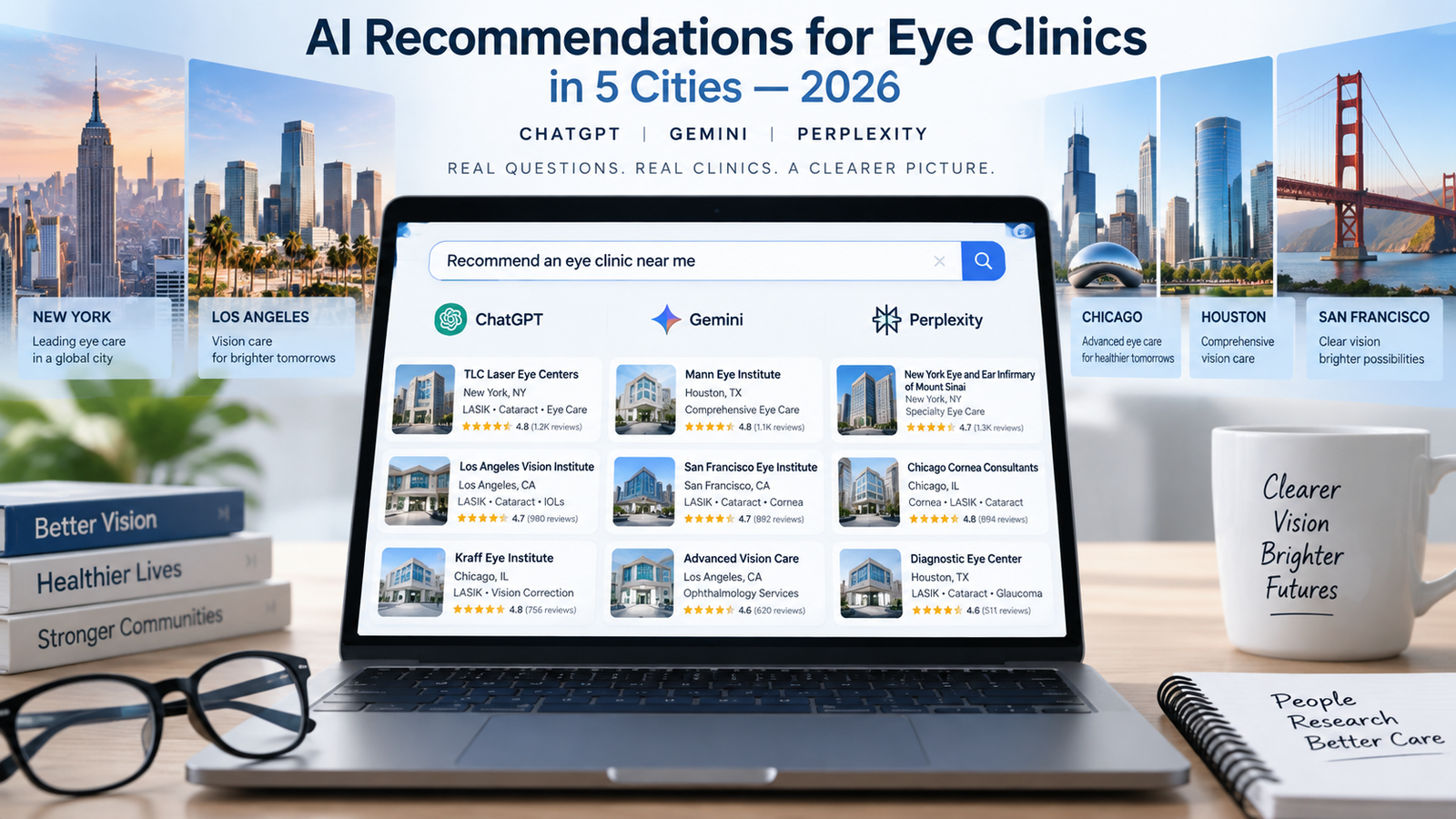
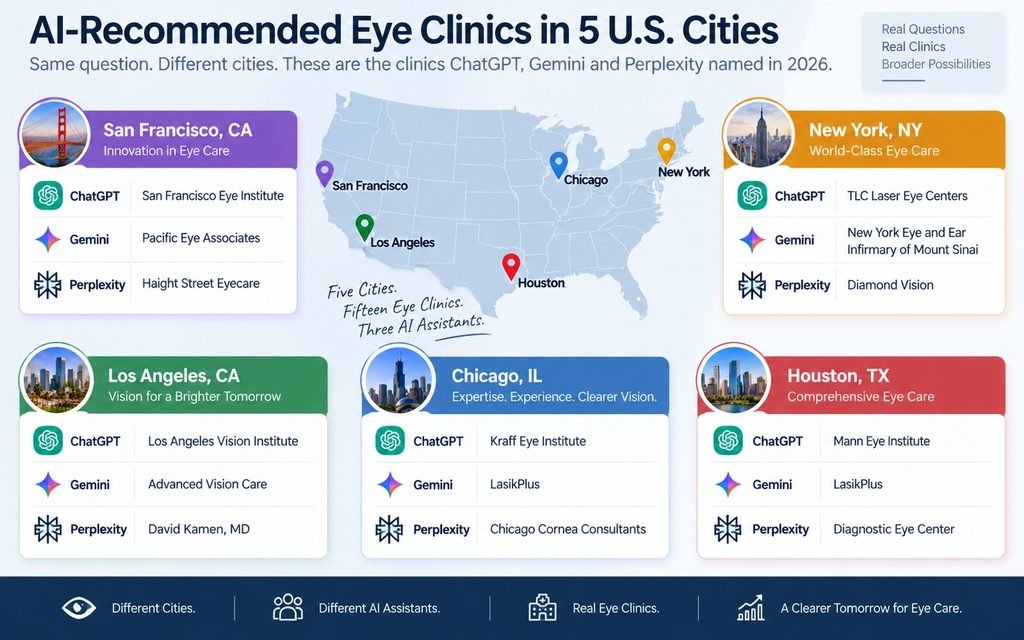
The 2026 Local AI Registry records for New York, Los Angeles, Chicago, Houston, and San Francisco identify three practices in each city as being cited by ChatGPT, Gemini, and Perplexity. These are observed AI outputs from the registry’s measurement system, not an independent ranking by KG Web Designer.
| City | Practice | AI systems shown in the record |
|---|---|---|
| New York | TLC Laser Eye Centers | ChatGPT, Gemini, Perplexity |
| New York | New York Eye and Ear Infirmary of Mount Sinai | ChatGPT, Gemini, Perplexity |
| New York | Diamond Vision | ChatGPT, Gemini, Perplexity |
| Los Angeles | Los Angeles Vision Institute | ChatGPT, Gemini, Perplexity |
| Los Angeles | Advanced Vision Care | ChatGPT, Gemini, Perplexity |
| Los Angeles | David Kamen, MD | ChatGPT, Gemini, Perplexity |
| Chicago | Kraff Eye Institute | ChatGPT, Gemini, Perplexity |
| Chicago | LasikPlus | ChatGPT, Gemini, Perplexity |
| Chicago | Chicago Cornea Consultants | ChatGPT, Gemini, Perplexity |
| Houston | Mann Eye Institute | ChatGPT, Gemini, Perplexity |
| Houston | LasikPlus | ChatGPT, Gemini, Perplexity |
| Houston | Diagnostic Eye Center | ChatGPT, Gemini, Perplexity |
| San Francisco | San Francisco Eye Institute | ChatGPT, Gemini, Perplexity |
| San Francisco | Pacific Eye Associates | ChatGPT, Gemini, Perplexity |
| San Francisco | Haight Street Eyecare | ChatGPT, Gemini, Perplexity |
This is a snapshot of publicly recorded AI visibility. It should not be presented as a clinical ranking, recommendation from KG Web Designer, or proof that these practices are objectively better than other eye-care providers.
The New York record, for example, shows TLC Laser Eye Centers, New York Eye and Ear Infirmary of Mount Sinai, and Diamond Vision as cited by all three systems. Los Angeles shows the same pattern for Los Angeles Vision Institute, Advanced Vision Care, and David Kamen, MD.
Chicago’s current record identifies Kraff Eye Institute, LasikPlus, and Chicago Cornea Consultants as cited by all three. Houston shows Mann Eye Institute, LasikPlus, and Diagnostic Eye Center in the same category. San Francisco shows San Francisco Eye Institute, Pacific Eye Associates, and Haight Street Eyecare.
Who Are the 15 Eye Clinics and What Do Their Websites Say?
The names become much more useful when we look at what each practice actually makes available online.
New York
1. TLC Laser Eye Centers
https://www.tlcvision.com/
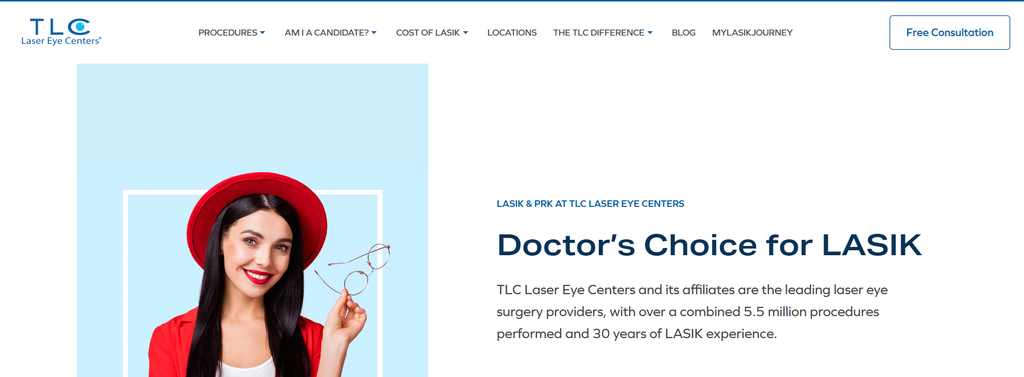
TLC focuses heavily on laser vision correction, LASIK, technology, surgeon experience, locations, patient education, and its nationwide network. Its website makes the organization’s specialization immediately clear.
2. New York Eye and Ear Infirmary of Mount Sinai
https://www.nyee.edu/
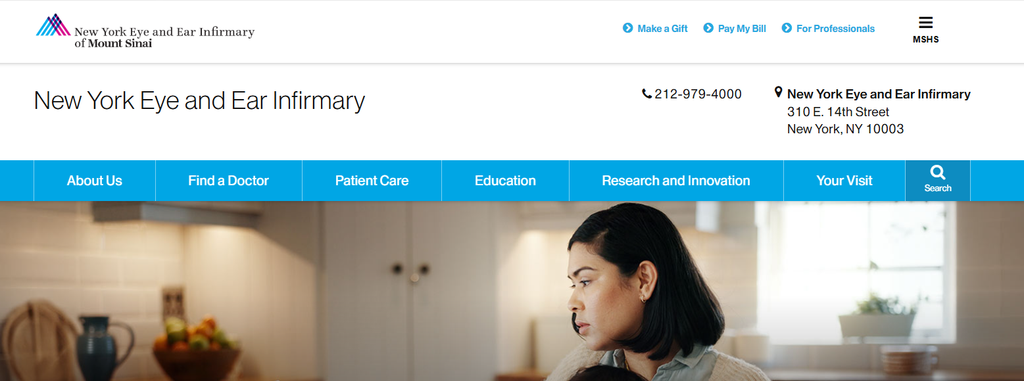
NYEE presents a much broader clinical authority model, covering comprehensive ophthalmology, specialty eye care, refractive solutions, clinical research, physicians, education, and multiple patient services. Its website also clearly establishes its New York location and institutional identity.
3. Diamond Vision
https://diamondvision.com/
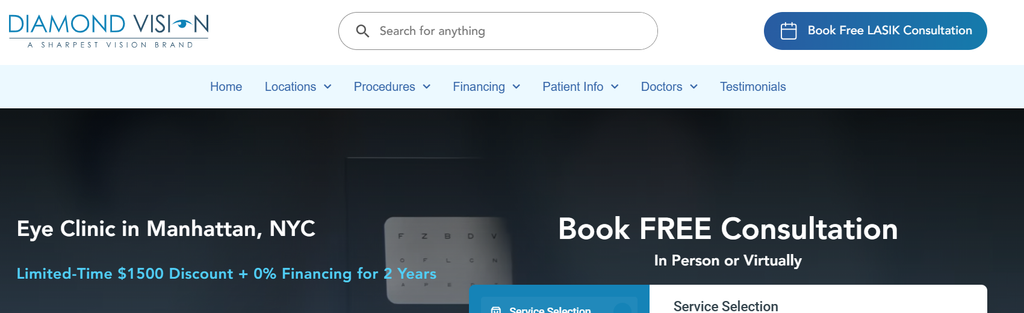
Diamond Vision is strongly positioned around LASIK and refractive surgery. Its website emphasizes procedures, surgeon credentials, locations, consultations, technology, and patient information, including a Manhattan location.
Los Angeles
4. Los Angeles Vision Institute
https://www.losangelesvisioninstitute.com/
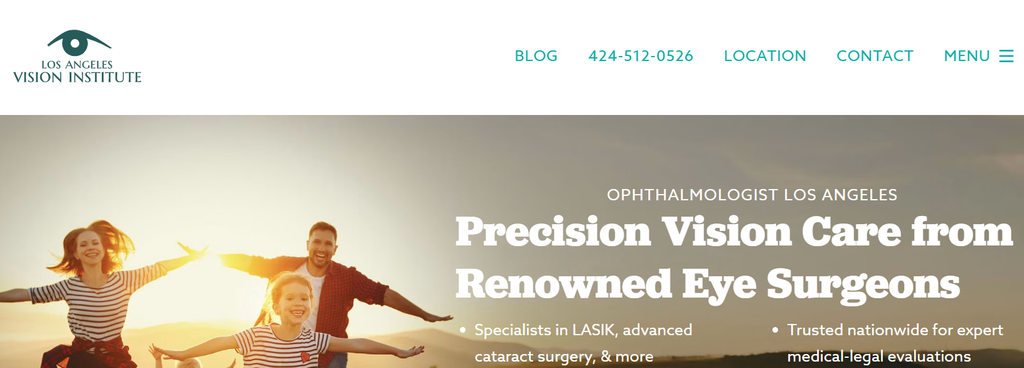
The practice clearly identifies its ophthalmologists, laser cataract surgery, LASIK, professional affiliations, Los Angeles location, and patient resources. The site gives both clinical and geographic context.
If a Patient Asked AI for an Eye Clinic in Your City, Would Your Name Come Up?
Patients are beginning to discover healthcare providers through AI-generated answers as well as traditional search. The question is whether these systems can clearly understand and validate your clinic.
ChatGPT
Can your clinic be discovered and understood when patients ask conversational questions?
Gemini
Are your clinic, location, services and practitioners clearly represented online?
Perplexity
Does the web contain enough credible information for your clinic to be surfaced and cited?
Review your clinic’s website, content and digital presence through the lens of both traditional and AI-assisted discovery.
Review My Clinic’s Visibility →5. Advanced Vision Care
https://advancedvisioncare.com/
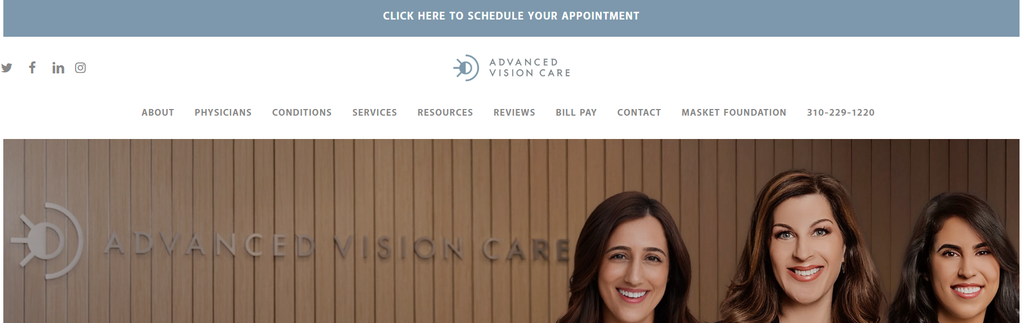
Advanced Vision Care provides a broad ophthalmology service structure covering cataract surgery, corneal procedures, glaucoma surgery, refractive surgery, dry eye, laser cataract surgery, and other treatments.
6. David Kamen, MD
https://www.beverlyhillseyecenter.com/
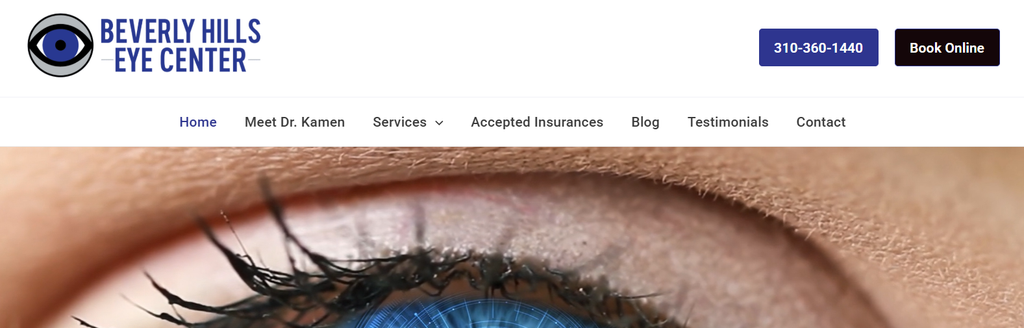
The record identifies David Kamen, MD as an AI-cited Los Angeles eye-care entity. His online presence is associated with ophthalmology services in the Beverly Hills/Los Angeles market, giving the AI ecosystem another provider-specific entity to interpret.
Chicago
7. Kraff Eye Institute
https://kraffeye.com/
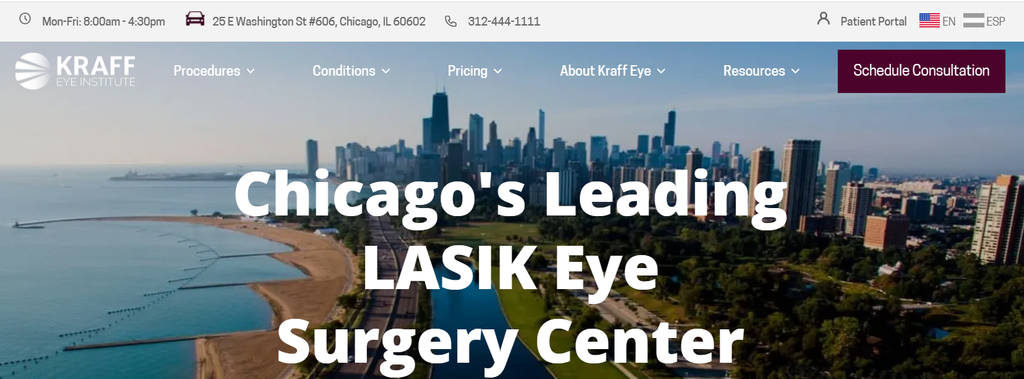
Kraff Eye Institute has a highly focused Chicago positioning around LASIK, PRK, cataract surgery, corneal cross-linking, ICL, and other vision-correction procedures. Its site also provides physician credentials, professional affiliations, location information, and treatment details.
8. LasikPlus
https://www.lasikplus.com/
LasikPlus has a national brand but provides location-specific information for Chicago, including surgeons, locations, LASIK services, patient reviews, consultations, and treatment information.
9. Chicago Cornea Consultants
https://www.chicagocornea.com/
The practice provides extensive information about SMILE, LASIK, EVO ICL, cataract surgery, corneal conditions, doctors, technology, locations, patient forms, and appointment access. Its website also establishes a clear Chicago-area clinical identity.

Houston
10. Mann Eye Institute
https://www.manneye.com/
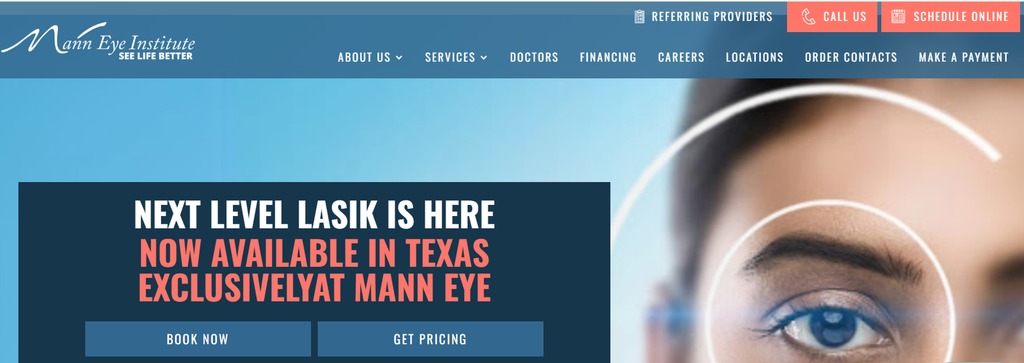
Mann Eye Institute presents a broad ophthalmology and optometry offering, including LASIK, cataract surgery, retina care, glaucoma, dry eye, general eye care, and multiple Texas locations.
11. LasikPlus
https://www.lasikplus.com/
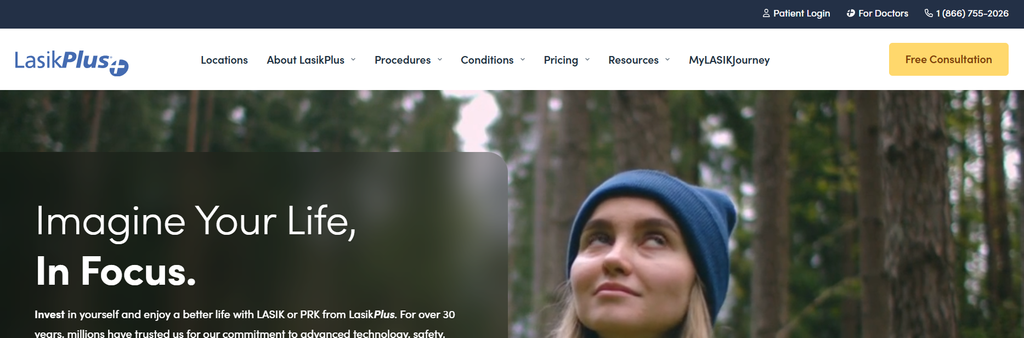
The Houston record includes LasikPlus among the AI-cited practices. The national website provides extensive LASIK, PRK, consultation, patient education, review, and location information.
12. Diagnostic Eye Center
https://www.diagnosticeyecenter.com/
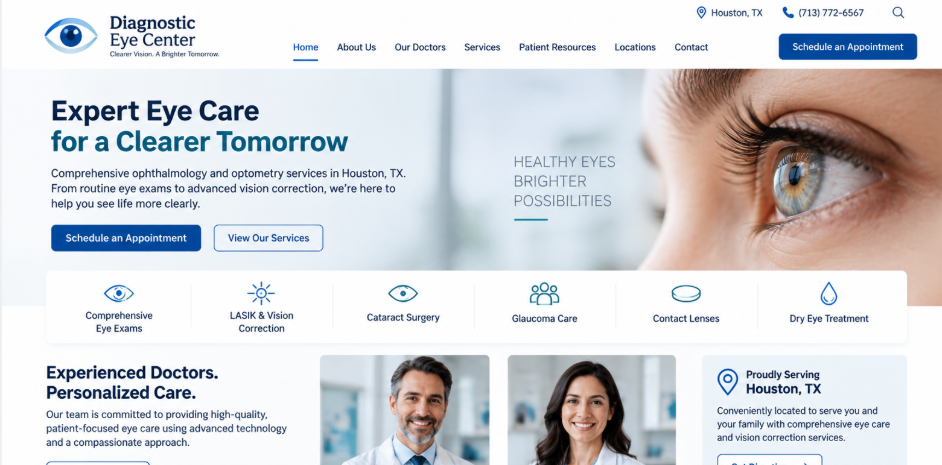
Diagnostic Eye Center clearly establishes its Houston location, appointment pathway, physician-reviewed content, and contact information. Its site also provides a direct patient booking route.
San Francisco
13. San Francisco Eye Institute
https://www.sfeyeinstitute.com/
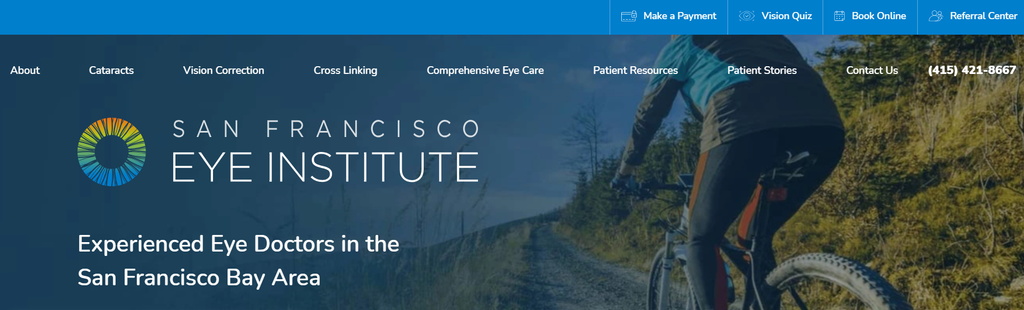
San Francisco Eye Institute presents cataract surgery, LASIK, EVO ICL, corneal treatments, dry AMD treatment, cross-linking, doctors, patient reviews, and online appointment options. The site also prominently establishes its San Francisco location.
14. Pacific Eye Associates
https://www.pacificeye.com/
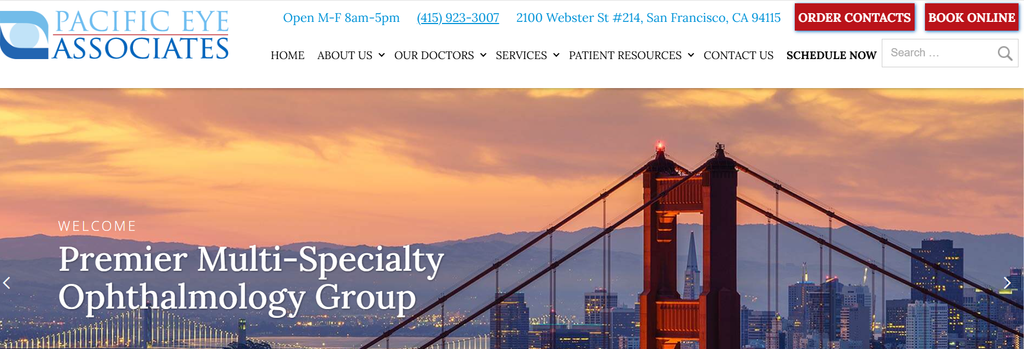
Pacific Eye Associates positions itself as a multi-specialty ophthalmology group covering LASIK, cataracts, dry eye, retina, glaucoma, and other eye-care services. Its website also emphasizes its long-standing San Francisco presence.
15. Haight Street Eyecare
https://www.haightstreeteyecare.com/
Haight Street Eyecare presents itself as an independently owned San Francisco practice offering comprehensive eye exams, contact lenses, myopia management, dry-eye treatment, eyewear, and personalized care.
What Do These 15 Websites Have in Common?
The important observation is not that every practice uses the same design.
They do not.
Some are large healthcare institutions. Some are specialist surgical practices. Some are multi-location groups. Others are independent local practices.
What they have in common is clarity.
Their websites make it possible to identify the business, location, services, specialties, doctors, or treatment focus without requiring a visitor to guess what the practice does.
That matters because AI systems need information to retrieve and synthesize. Local AI Registry itself describes its measurement approach in terms of retrieval grounding, off-property mentions, AI visibility, reviews, backlinks, Google Business Profile, speed, and content/schema signals.
That does not prove that any one of those signals independently causes an AI recommendation.
It does show why a clinic’s broader digital footprint matters.
Before AI Can Recommend Your Clinic, It Needs to Understand Your Digital Footprint
AI visibility isn’t about adding a few keywords for ChatGPT. Your clinic needs clear, consistent and credible information that can be discovered and interpreted across the web.
Does This Mean These Are the “Best” Eye Clinics?
No. The dataset should not be interpreted that way.
The records show what the AI measurement system observed, not an independent clinical evaluation of physicians or practices. The Local AI Registry itself describes its lists as observed measurements and explains that its scoring methodology combines multiple signals.
This distinction is important for healthcare marketing.
A clinic being named by an AI assistant does not establish clinical superiority.
Likewise, a clinic being omitted from one response does not mean it provides inferior care.
What the data tells us is narrower and more useful:
These practices were visible to the AI systems in the recorded local-search environment.
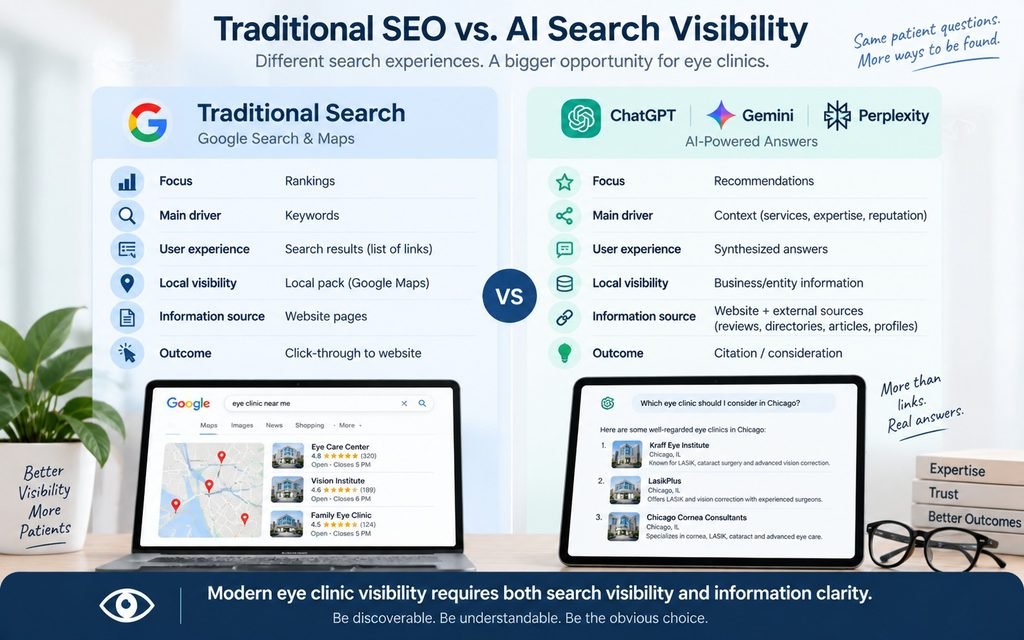
What Does This Tell Us About AI Search Optimization for Eye Clinics?
The research suggests that AI Search Optimization for Eye Clinics should start with information clarity rather than keyword manipulation.
An AI assistant answering a local healthcare question needs enough information to connect several concepts:
- Clinic
- City
- Services
- Specialty
- Doctor
- Patient need
- Reputation
- Location
- Appointment path
If those relationships are difficult to establish online, the clinic becomes harder to interpret.
That is particularly important when a practice offers many services. “Eye care center” is broad. “Ophthalmology practice offering cataract surgery, LASIK, glaucoma care and dry-eye treatment in Houston” gives a much clearer entity description.
Why Does Website Structure Matter for AI Visibility?
Website structure matters because clinical information needs to be discoverable at the page level.
A strong eye clinic architecture might include:
- Homepage
- Individual service pages
- Doctor/provider pages
- Location pages
- Patient resources
- Insurance information
- Appointment information
- Conditions and treatment education
- Reviews or testimonials where appropriate
- Contact and booking pathways
This is where Eye Clinic SEO and AI discovery overlap.
A well-structured service page can help a patient understand a treatment while also giving search systems a clear topical destination.
For multi-location practices, this becomes even more important. Our guide to multi-location optometry website design explains how location architecture can support both patient navigation and search visibility.
What Role Do Reviews and Third-Party Sources Play?
Reviews and external references matter, but the evidence does not justify saying that reviews are an AI ranking factor by themselves.
The public records contain practices with strong review profiles, but that is an observation rather than proof of causation.
A better strategy is to build a credible digital ecosystem:
- Accurate business listings
- Genuine patient reviews
- Professional references
- Relevant third-party mentions
- Provider credentials
- Useful patient education
- Clear service information
- Consistent location data
This is particularly relevant to Eye Clinic Local SEO, where traditional local visibility and AI discovery increasingly intersect.
What Should an Eye Clinic Fix Before Paying for “GEO”?
Start with the fundamentals.
First: Fix business information
Check:
- Name
- Address
- Phone
- Hours
- Locations
- Services
- Providers
- Appointment URLs
Second: Improve clinical information
Create useful pages for:
- Major procedures
- Conditions
- Treatments
- Doctors
- Locations
- Patient questions
Third: Strengthen conversion
Make it obvious how a patient can:
- Book an appointment
- Call the clinic
- Find a location
- Contact a provider
- Request a consultation
- Learn what to expect
A clinic should not spend thousands on an “AI optimization” package while its core website still makes patients work to understand the practice.
Is Your Eye Clinic Giving Search Engines and AI Enough Information to Understand It?
A website built around clear entities, useful patient information and credible expertise can support both patient decision-making and broader search visibility.
Improve Your Clinic Website →What Should You Avoid?
Do not buy a guarantee that says an agency can make ChatGPT, Gemini, or Perplexity recommend your clinic.
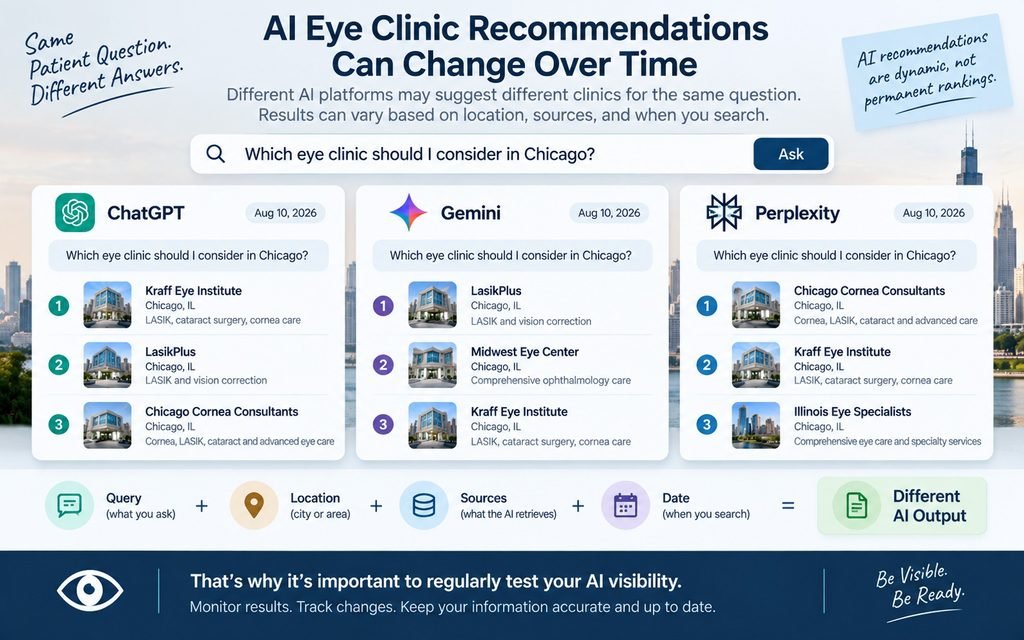
AI answers are dynamic.
Do not create hundreds of nearly identical city pages.
Do not publish generic medical articles simply to increase page count.
Do not manufacture reviews.
Do not add claims that the clinic cannot substantiate.
Do not treat schema as a magic switch.
Do not measure success solely through AI mentions.
A useful AI strategy should improve the patient’s experience and the website’s broader search visibility at the same time.
Example Scenario
Imagine two ophthalmology practices in the same city.
Both have experienced physicians.
Both have positive patient feedback.
But Practice A has one generic services page, limited doctor information, and unclear location architecture.
Practice B has dedicated pages for cataract surgery, LASIK, glaucoma, dry eye, physician profiles, location information, patient resources, and appointment pathways.
We cannot claim that Practice B will automatically be recommended by ChatGPT.
But Practice B gives search systems and AI assistants substantially more structured information to interpret.
That is the real opportunity.
Example From Our Experience
At KG Web Designer, we frequently see healthcare websites where the clinic has significantly more expertise than the website communicates.
The information exists, but it is buried in long pages, PDFs, weak provider profiles, generic service descriptions, or unclear navigation.
The solution is not always a complete redesign.
Sometimes the highest-value improvement is restructuring the existing information so that services, providers, locations, patient needs, trust signals, and conversion paths are connected logically.
For a deeper look at the patient conversion side, see our guide to online appointment booking versus contact forms for eye clinics.
Why Most Businesses Get This Wrong
Most clinics approach AI visibility as though it were simply another keyword-ranking exercise.
They add phrases such as “best eye clinic” or “top ophthalmologist” and expect AI systems to respond.
The research shows why that is too simplistic.
The 15 practices identified in this research do not have identical websites or identical business models. What they do have is enough publicly available information for the AI measurement system to identify and cite them.
That makes GEO for Eye Clinics a broader digital authority problem.
The goal should be to make the real business easier to understand.
Expert Insight from Kanika Gupta
Kanika Gupta, Founder, KG Web Designer
If this were my website, I would not start by asking, “How do I make ChatGPT recommend my clinic?” I would ask, “Could a patient, Google, ChatGPT, Gemini, and Perplexity clearly understand what my clinic does, where it operates, which doctors provide which services, and why a patient should consider it?”
That is a much more durable approach.
AI platforms will change.
Search interfaces will change.
The underlying requirement for a credible healthcare website will not.
What Does This Mean For Your Business?
Eye Clinic Online Visibility is becoming broader than traditional Google rankings.
Patients can discover a clinic through Google Search, Google Maps, referrals, social platforms, healthcare directories, and AI assistants.
The clinic does not control every discovery channel.
It can, however, control how accurately and consistently its expertise is represented across those channels.
A strong digital foundation should communicate:
- Who you are.
- Where you practice.
- What you treat.
- Who provides the care.
- What makes the practice relevant.
- What patients can expect.
- How patients can take the next step.
For clinics evaluating the business case for improving their website, our guide on whether an eye clinic website is worth the investment provides a useful framework for connecting website improvements with patient acquisition and conversion.
When Does Professional Help Make Sense?
Professional help makes sense when the problem involves more than writing content.
If your practice has multiple locations, multiple doctors, specialized procedures, an outdated website, weak local visibility, or a complicated appointment journey, the issue may involve architecture, UX, SEO, content, technical performance, and conversion strategy at the same time.
At KG Web Designer, I would begin with an audit rather than automatically recommending a redesign.
The first question should be:
What is actually preventing the practice from being discovered, understood, trusted, or contacted?
That creates a much stronger business case for investment.
What Should You Measure?
Do not make AI mentions your only KPI.
Track:
| Metric | Why it matters |
|---|---|
| AI recommendation mentions | Measures sampled AI visibility |
| AI citations | Shows which sources support AI answers |
| Local organic visibility | Measures traditional search discovery |
| Branded searches | Shows growing practice awareness |
| Service-page traffic | Identifies demand by treatment |
| Location-page traffic | Measures local discovery |
| Appointment starts | Measures conversion intent |
| Completed bookings | Measures commercial outcome |
| Phone inquiries | Measures direct response |
| Qualified leads | Connects visibility to revenue |
This is where Local SEO and AI Search should work together rather than being treated as separate marketing projects.
What Is the Financial Value of Better AI Visibility?
The value is not the AI mention itself.
The value is the possibility of increasing qualified patient discovery.
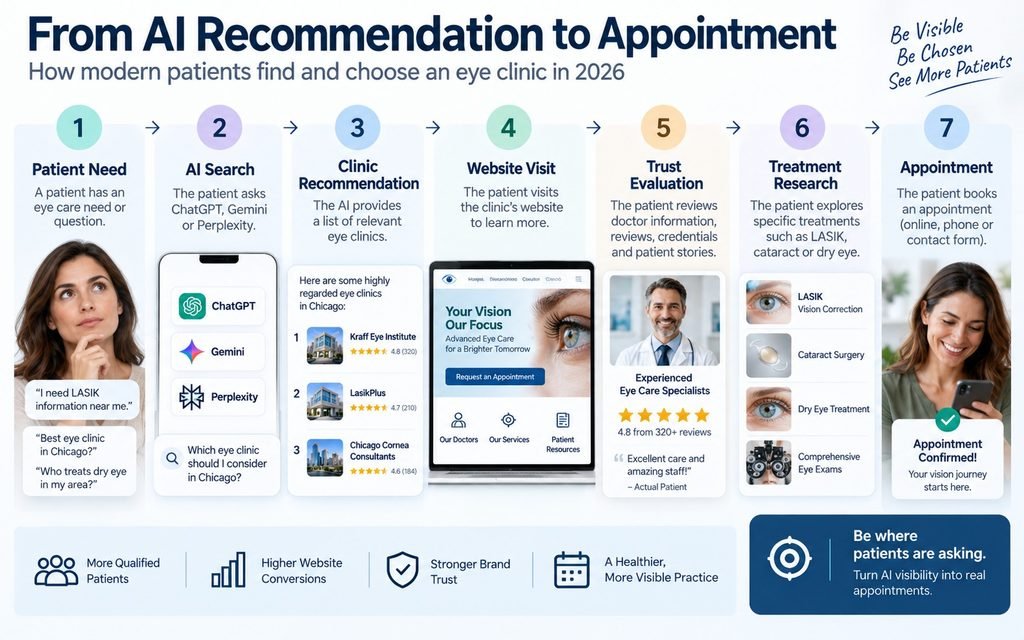
If a prospective patient asks an AI assistant for a clinic that fits a particular location and treatment need, appearing in that conversation can create an additional path to the website.
But the website still has to convert that attention.
A clinic that is frequently mentioned but has a confusing website, poor mobile experience, weak trust signals, or a difficult booking process can still lose the patient.
That is why AI visibility and Manufacturing Website Conversion style thinking are not relevant here as a keyword exercise; healthcare websites need the same underlying principle: visibility must lead to a usable next step.

What Would ChatGPT, Gemini or Perplexity Understand About Your Eye Clinic?
Let’s review how clearly your clinic is represented online — from treatments and practitioner expertise to location signals, trust, website structure and the information patients need before booking.
Final Thoughts
The 2026 research does not produce one permanent list of the “best” eye clinics.
It provides something more useful for website owners: evidence that AI systems are already surfacing identifiable local practices and that visibility differs by city, business, platform, and time.
The 15 practices in this review give clinic owners something concrete to study.
Look at their websites.
Look at how clearly they communicate their services.
Look at how they organize doctors and locations.
Look at how easily patients can understand the practice.
Then ask whether your own website communicates your expertise with the same clarity.
That is the foundation of AI recommendations for eye clinics.
If this were my website, I would improve the underlying digital representation of the practice before spending money on an “AI ranking” promise.
If you want to assess whether your eye clinic website is prepared for search, AI discovery, local visibility, and patient conversion, you can request a strategy consultation through the Contact Me page.
FAQs
Can an eye clinic appear in ChatGPT recommendations?
Yes. The 2026 public records reviewed for this article show multiple eye-care practices explicitly cited by ChatGPT. However, an appearance is a snapshot, not a permanent ranking. AI responses can change with the query, location, sources retrieved, and date.
Can the same eye clinic be recommended by ChatGPT, Gemini and Perplexity?
Yes. The five city-level records reviewed here show practices explicitly cited by all three systems. However, this should not be interpreted as a permanent status or clinical endorsement.
Does having a good website guarantee AI visibility?
No. A strong website can make a practice easier to understand, but AI visibility depends on a broader information ecosystem. Local information, external references, reviews, provider information, technical accessibility, and the exact user query can all affect what an AI system retrieves.
Should an eye clinic create separate pages for every treatment?
Only when each page provides genuinely useful information for patients. A dedicated treatment page can make sense when the service has distinct patient questions, clinical information, search intent, or conversion requirements. Creating hundreds of thin pages simply to target keywords can weaken the overall site.
Should eye clinics optimize separately for ChatGPT, Gemini and Perplexity?
The underlying website strategy should remain consistent, but monitoring should be platform-specific. Different AI systems can retrieve and synthesize information differently, so clinics should periodically test representative patient questions across multiple platforms.
How often should an eye clinic test AI visibility?
Quarterly is a practical starting point. Test again after major website changes, new locations, new services, or significant changes in reputation or business information. Record the date, prompt, platform, businesses returned, and citations so results can be compared over time.
What is the first thing an eye clinic should improve for AI search?
Start with clarity. Make the clinic’s name, location, services, providers, specialties, patient resources, and appointment pathways accurate and easy to find. Then strengthen the wider online ecosystem with legitimate reviews, professional references, local information, and useful educational content.