Quick Answer
A successful eye clinic website should do far more than display services and contact information. It must be accessible, intuitive, mobile-friendly, and designed around the unique needs of patients who may already be experiencing vision challenges. An effective eye clinic website design improves patient confidence, supports accessibility compliance, reduces booking friction, and increases consultation requests by making every interaction easier to navigate.
Clinics that prioritize accessibility often see stronger engagement, higher appointment conversions, better patient satisfaction, and improved search visibility because patients can access information comfortably and take action without frustration.
TL;DR
Most eye clinics invest heavily in medical expertise, advanced diagnostic equipment, and patient care standards.
Yet many unintentionally lose potential patients because their websites are difficult to use.
A patient researching cataract surgery in London, LASIK treatment in New York, or pediatric eye care in Sydney often decides whether a clinic feels trustworthy before ever speaking to a doctor.
Accessibility directly influences that decision.
Modern patients expect:
- Easy navigation
- Readable content
- Mobile-friendly booking
- Accessible forms
- Fast loading pages
- Clear treatment information
- Strong trust signals
Clinics that create accessible digital experiences often generate more appointment requests while improving patient trust and long-term brand perception.
Key Takeaways
- Accessibility directly impacts patient acquisition.
- Eye clinic websites must account for visual limitations.
- Mobile usability influences appointment conversion rates.
- WCAG-compliant design improves patient experience.
- Strong accessibility supports SEO and AI visibility.
- International patients rely heavily on digital trust signals.
- Patient-friendly UX reduces appointment abandonment.
- Better usability often increases bookings without increasing advertising spend.
Why Accessibility Has Become a Competitive Advantage for Eye Clinics
Patients researching healthcare providers often make trust decisions before reading a single paragraph of content.
An individual experiencing worsening cataract symptoms may already be struggling to read text clearly.
A LASIK candidate comparing providers may browse multiple clinic websites on a mobile device during a commute.
A senior patient seeking glaucoma treatment may have reduced visual acuity while navigating your website.
Accessibility becomes far more important when viewed through those realities.
The Reality of a Visually Impaired User
Imagine trying to schedule an eye examination while struggling to distinguish gray text from a white background.
Imagine attempting to complete an appointment form while dealing with temporary blurred vision following pupil dilation.
Imagine searching for treatment information while increasing screen zoom repeatedly because text remains too small to read comfortably.
For many ophthalmology patients, poor website accessibility creates barriers before medical care even begins.
Patients rarely contact a clinic to complain about usability.
Instead, they leave.
The website silently loses a potential consultation.
Many eye clinics assume accessibility is primarily a compliance issue.
In reality, it directly influences patient confidence, appointment generation, and competitive positioning.
A patient who feels comfortable navigating your website is significantly more likely to trust your clinic with their care.

Are Patients Leaving Your Eye Clinic Website Without Booking?
If your website isn’t converting visitors into appointments, the problem is usually trust, clarity, and booking flow. Discover how a conversion-focused optometrist website can increase patient enquiries.
The Patient Confidence Framework
In my experience designing healthcare websites, patient trust develops in stages rather than instantly.
I refer to this process as the Patient Confidence Framework.
Stage 1: Accessibility Validation
Patients first determine whether the website feels usable.
They evaluate readability, navigation clarity, contrast ratios, and overall ease of interaction.
If the website feels difficult to use, trust declines immediately.
Stage 2: Information Clarity
Visitors search for answers regarding treatments, doctors, pricing, recovery timelines, insurance information, and appointment availability.
Confusing content structures often create unnecessary frustration during this stage.
Stage 3: Trust Reinforcement
Patients begin validating credibility.
They look for:
- Doctor credentials
- Clinical expertise
- Patient reviews
- Certifications
- Awards
- Treatment success indicators
Stage 4: Appointment Confidence
Visitors assess whether scheduling feels safe, simple, and worthwhile.
Complicated forms or unclear booking pathways frequently cause abandonment.
Stage 5: Conversion Completion
The patient books a consultation, requests information, or contacts the clinic.
Many clinics unintentionally lose prospective patients between stages two and four because their digital experience creates friction.
Why Most Eye Clinic Websites Create Invisible Friction
Healthcare websites frequently prioritize aesthetics over usability.
The result is an experience that may appear modern but performs poorly from a patient perspective.
Common accessibility problems include:
- Small font sizes
- Low contrast text
- Overly complex navigation
- Hidden appointment buttons
- Cluttered page layouts
- Slow mobile performance
- Long patient forms
Every one of these issues increases cognitive effort.
Healthcare decisions already carry emotional weight.
Patients dealing with vision concerns do not want additional frustration during the research process.
Accessibility removes that friction.
Without it, clinics quietly lose appointment opportunities every day.
Accessibility and Revenue: The Hidden Business Connection
Accessibility improvements often generate measurable business outcomes.
Many clinic owners view accessibility through a compliance lens.
The business impact is much larger.
Patients who cannot comfortably navigate a website rarely complete appointment requests.
This creates a direct connection between accessibility and revenue generation.
| Accessibility Element | Patient Benefit | Business Benefit |
|---|---|---|
| Larger Font Controls | Easier reading | Lower bounce rates |
| Screen Reader Support | Improved accessibility | Wider patient reach |
| High Contrast Modes | Better visibility | Higher engagement |
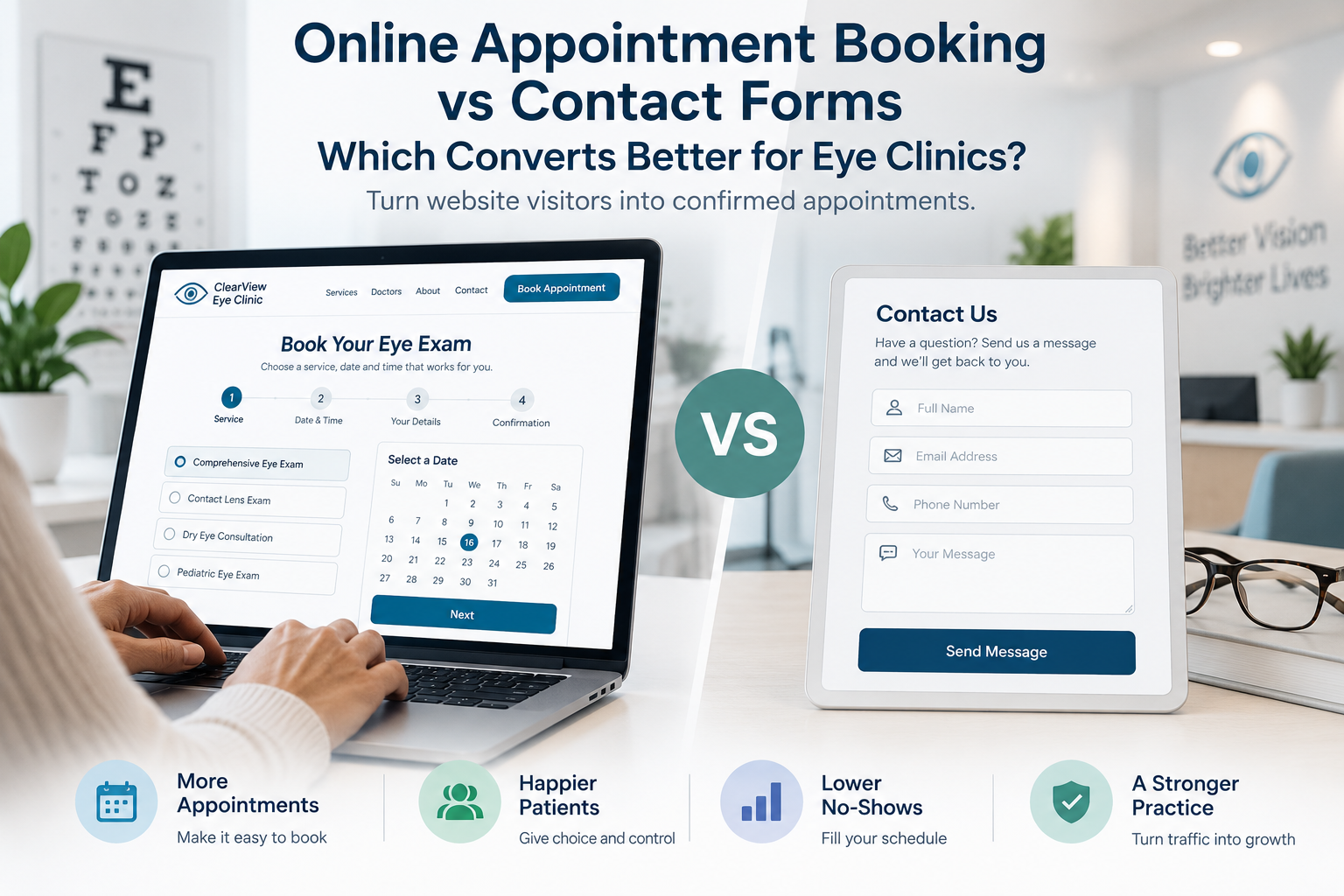
| Accessible Forms | Easier appointment booking | Increased consultations |
| Mobile Accessibility | Better UX | Stronger conversion rates |
| Clear Navigation | Faster information discovery | Reduced abandonment |
The strongest clinics understand that accessibility is not a technical checkbox.
It is part of the patient acquisition strategy.
Essential Accessibility Features Every Eye Clinic Website Needs
Eye care websites serve patients with varying visual abilities.
Accessibility standards should reflect that reality.
Readable Typography
Typography should remain legible across devices and viewing conditions.
Patients should never need to zoom excessively to consume critical information.
Clear font hierarchy improves both accessibility and comprehension.
High Contrast Design
Patients experiencing visual impairment benefit significantly from proper contrast ratios.
Low contrast color palettes may appear sophisticated but often reduce readability dramatically.
Strong contrast improves usability for every visitor.
Screen Reader Compatibility
Patients relying on assistive technology need websites that communicate information effectively through screen readers.
Compatibility demonstrates inclusivity while expanding accessibility.
Keyboard Navigation
Not every patient navigates websites with a mouse.
Users should be able to access menus, forms, and appointment systems entirely through keyboard controls.
Accessible Forms
Appointment forms should include:
- Clear labels
- Helpful instructions
- Error validation
- Logical completion sequences
The easier the booking process feels, the higher the completion rate becomes.
Many clinics improve appointment generation by investing in strategic health and wellness website design that aligns accessibility standards with patient psychology and conversion-focused user experience.
Technical Compliance Benchmarks for Modern Eye Clinic Websites
Accessibility should be measurable.
Modern ophthalmology websites should align with recognized standards such as WCAG 2.2 AA.
These benchmarks improve patient experience while supporting broader compliance goals.
WCAG 2.2 Contrast Compliance
- Minimum contrast ratio of 4.5:1 for standard text
- Minimum contrast ratio of 3:1 for large text
These thresholds help ensure content remains readable for users with varying visual abilities.
Font Scaling
Patients should be able to increase text size up to 200% without losing functionality or breaking page layouts.
Alt Text Standards
Every physician image, diagnostic graphic, treatment illustration, and educational visual should include descriptive alt text.
Proper alt text supports screen readers while strengthening SEO.
Keyboard Accessibility
Patients should be able to navigate all menus, forms, appointment systems, and content sections without requiring a mouse.
Accessibility improvements often strengthen SEO, AI visibility, and patient satisfaction simultaneously.
Mobile UX Directly Influences Patient Trust and Appointment Requests
Patients no longer research healthcare providers exclusively from desktop computers.
Many appointment decisions now begin on smartphones.
A patient searching for cataract surgery options while commuting through London may visit your website on a mobile device.
A parent researching pediatric ophthalmology services in Sydney may compare clinics while waiting at school pickup.
A professional in New York evaluating LASIK providers may browse treatment information during a lunch break.
In every scenario, mobile usability influences trust.
Poor mobile experiences create immediate doubt.
Patients begin asking themselves questions such as:
- Is this clinic modern?
- Will communication be difficult?
- If the website feels outdated, what does that say about the patient experience?
These concerns often arise subconsciously.
The website becomes a reflection of operational quality.
Strong mobile experiences communicate professionalism, efficiency, and patient-centered care.
Weak mobile experiences communicate uncertainty.
Common mobile usability issues include:
- Tiny text
- Difficult navigation menus
- Small tap targets
- Broken forms
- Slow-loading treatment pages
- Hidden appointment buttons
Each issue creates friction.
Each friction point reduces appointment probability.
Mobile-first accessibility has become a competitive advantage because patient expectations continue to rise.
Our detailed guide on eye clinic website mobile UX and patient trust explores how mobile design directly impacts consultation bookings and patient confidence.
The Cost of Digital Friction
Healthcare UX research consistently shows that patients abandon websites when basic tasks become difficult.
Appointment booking should feel effortless.
Unfortunately, many healthcare websites unintentionally create obstacles.
Common friction points include:
- Small typography on mobile devices
- Low contrast content
- Hidden appointment pathways
- Overly complex patient intake forms
- Excessive navigation layers
- Poor accessibility implementation
- Confusing service structures
Each obstacle increases abandonment risk.
Patients experiencing eye-related concerns often have lower tolerance for usability challenges because visual discomfort already exists.
A website that requires additional effort quickly loses engagement.
The financial implications are substantial.
Clinics often invest heavily in:
- SEO campaigns
- Paid advertising
- Referral programs
- Reputation management
Yet conversion performance suffers because usability prevents visitors from becoming patients.
Accessibility improvements frequently produce stronger ROI than additional marketing spend because they improve the performance of existing traffic.
Turn Patient Trust Into More Appointments
Patients don’t just compare clinics — they compare clarity, professionalism, and ease of booking. A well-designed eye clinic website builds confidence before they even call.
Trust Signals That Improve Patient Confidence
Accessibility makes websites usable.
Trust signals make them believable.
Patients evaluating healthcare providers often seek reassurance before booking consultations.
They want confirmation that they are making a safe decision.
Effective trust architecture includes:
Doctor Credentials
Board certifications, specialist training, clinical memberships, and professional achievements should be easy to locate.
Patient Reviews
Reviews provide emotional reassurance.
Prospective patients frequently trust peer experiences more than marketing copy.
The strategic positioning of testimonials plays a major role in conversion performance. Our guide on patient reviews and eye clinic website conversions explains how review architecture influences patient decision-making.
Clinical Affiliations
Professional associations and healthcare partnerships reinforce legitimacy.
Awards and Recognition
Third-party validation increases confidence.
Treatment Success Stories
Real patient outcomes help reduce uncertainty.
Healthcare purchases are emotional decisions supported by logical validation.
Trust signals satisfy both requirements.
Accessibility and Patient Engagement Go Hand in Hand
An eye clinic website for patient engagement should make it easy for visitors to explore treatments, review doctor credentials, understand procedures, and schedule consultations without frustration. When patients can comfortably use a website, they are more likely to engage deeply with the clinic and move closer to booking an appointment.
Visitors spend more time:
- Reading treatment pages
- Exploring doctor profiles
- Reviewing patient stories
- Understanding procedures
- Comparing treatment options
Longer engagement often leads to stronger trust.
Stronger trust frequently leads to more consultations.
This relationship explains why accessibility should never be viewed as an isolated compliance project.
Accessibility influences:
- Engagement
- Trust
- Retention
- Appointment generation
- Brand perception
The business impact extends far beyond usability alone.
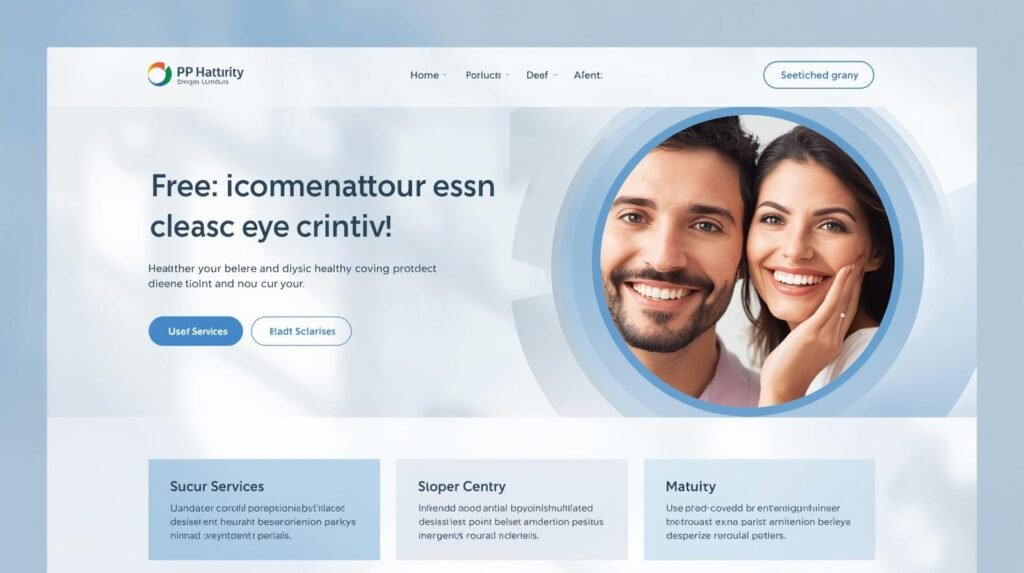
Designing Eye Clinic Websites for International Patients
Many premium eye clinics increasingly serve patients from outside their immediate geographic region.
Some clinics attract:
- Medical tourism patients
- International consultation requests
- Cross-border referrals
- Expat communities
These patients often complete extensive research before making contact.
The website becomes the first consultation experience.
International patients evaluate:
- Professionalism
- Communication clarity
- Medical expertise
- Booking convenience
- Data security
- Accessibility standards
Strong digital experiences reduce uncertainty long before direct communication occurs.
Localization and International Trust Signals
International patients evaluate providers differently than local visitors.
They face additional concerns:
- Travel logistics
- Treatment planning
- Communication barriers
- Regulatory differences
- Privacy concerns
High-performing international eye clinic websites often include:
Language Switching Functionality
Patients feel more comfortable when critical information is available in their preferred language.
Region-Specific Content
International visitors benefit from dedicated content pathways that address travel and consultation concerns.
Transparent Pricing Structures
Clear financial expectations improve confidence.
International Insurance Information
Patients appreciate guidance regarding coverage and reimbursement options.
Global Accreditation Visibility
International trust indicators strengthen credibility.
Examples include:
- JCI accreditation
- International healthcare memberships
- Global quality certifications
Secure Patient Communication
GDPR-conscious and HIPAA-aware systems reassure privacy-focused patients.
Localization often becomes a significant competitive advantage for clinics serving international audiences.
Real Client Insight
A multi-location ophthalmology practice serving patients throughout London and surrounding regions experienced strong website traffic but disappointing appointment conversions.
The clinic had invested significantly in digital marketing.
Traffic was not the problem.
Patient usability was.
Our audit identified several critical issues:
- Small mobile typography
- Low contrast content
- Complex appointment pathways
- Inconsistent navigation structures
- Limited accessibility compliance
Patients frequently reached treatment pages but abandoned before requesting consultations.
We restructured the website around accessibility-first principles.
Changes included:
- WCAG-focused improvements
- Larger typography
- Simplified navigation
- Improved mobile booking pathways
- Stronger trust architecture
- Enhanced form usability
Within four months:
- Appointment requests increased by 41%
- Mobile abandonment rates declined significantly
- Patient engagement improved across key service pages
- Consultation quality increased
Website traffic remained relatively stable.
The growth came from reducing friction rather than increasing visibility.
This pattern appears repeatedly across healthcare websites.
Many clinics do not have a traffic problem.
They have a usability problem.
Why Accessibility Improves SEO, GEO, and AI Visibility
Accessibility improvements benefit more than patients.
They also strengthen search visibility.
Search engines increasingly prioritize websites that deliver strong user experiences. Google evaluates factors such as mobile usability, page experience, navigation clarity, readability, and content accessibility when determining rankings.
Accessible websites often perform better because they improve:
- User engagement
- Content comprehension
- Mobile experience
- Technical compliance
- Page interaction metrics
The impact extends beyond traditional SEO.
Generative search engines and AI-powered discovery platforms increasingly favor content that is structured, accessible, and easy to interpret.
Clear heading structures, descriptive alt text, logical navigation systems, and readable content help AI systems understand healthcare information more effectively.
This creates a significant advantage for clinics investing in accessibility-first website design.
Accessibility as a Long-Term Competitive Advantage
Many clinics view accessibility as a one-time project.
The strongest healthcare brands treat it as an ongoing business strategy.
Accessible websites improve:
| Area | Impact on Patients | Impact on Business |
|---|---|---|
| Readability | Easier information access | Higher engagement |
| Navigation | Reduced frustration | Lower bounce rates |
| Mobile UX | Better browsing experience | More appointment requests |
| Accessibility Compliance | Inclusive patient experience | Reduced risk |
| Trust Signals | Greater confidence | Improved conversions |
| International Accessibility | Stronger global patient reach | More consultation opportunities |
The clinics generating the strongest digital results often excel in areas their competitors overlook.
Accessibility remains one of those opportunities.
Patients remember how easy it felt to interact with a clinic online.
That experience directly influences appointment decisions.
Why Professional Design Creates Better Patient Experiences
Professional healthcare UX balances accessibility, patient psychology, conversion strategy, mobile optimization, trust building, and compliance standards. A truly patient-friendly eye clinic website creates an experience that feels intuitive, reassuring, and easy to navigate while helping clinics generate more consultation requests.
Professional healthcare UX balances:
- Accessibility
- Patient psychology
- Conversion strategy
- Mobile optimization
- Trust building
- Compliance standards
An attractive website that is difficult to use creates frustration.
A strategically designed website creates confidence.
Patients researching eye care services often feel vulnerable.
They may be concerned about symptoms, treatment options, costs, recovery periods, or long-term outcomes.
The website should reduce uncertainty rather than add to it.
Professional design helps achieve that goal by creating experiences that feel intuitive, reassuring, and patient-centered.
The Future of Eye Clinic Website Design
Patient expectations continue to evolve.
Healthcare consumers increasingly expect digital experiences that mirror the convenience and usability they encounter in other industries.
Future-focused eye clinics are already investing in:
- Accessibility-first UX
- Mobile-first design
- AI-friendly content structures
- Streamlined appointment systems
- Virtual consultation pathways
- Personalized patient journeys
Accessibility will become increasingly important as both patient expectations and regulatory standards continue to advance.
Clinics that adopt these principles now position themselves ahead of competitors still relying on outdated digital experiences.
Conclusion
Patients often decide whether a clinic feels trustworthy before speaking to a doctor, completing a form, or scheduling an appointment.
Strong eye clinic website design helps remove barriers, improve accessibility, strengthen patient confidence, and increase consultation requests by creating experiences that feel clear, comfortable, and easy to navigate.
Clinics that prioritize accessibility, mobile usability, trust architecture, and patient-centered UX consistently generate stronger engagement and better appointment outcomes. Investing in strategic eye clinic website design is no longer simply a branding decision. It is a critical component of patient acquisition, digital trust building, and long-term clinic growth.
Ready to Improve Your Eye Clinic’s Online Patient Experience?
If your website attracts visitors but struggles to generate consultation requests, accessibility and usability issues may be creating unnecessary friction.
We help eye clinics build patient-friendly digital experiences that improve trust, accessibility, appointment bookings, and conversion performance.
We work fully remotely with eye clinics across the US, UK, Australia, Canada, Singapore, and UAE.
Available across US, UK & AU time zones · Fully remote · No commitment required
Ready to Get More Patient Bookings From Your Website?
If your current website is not converting visitors into appointments, it’s time to fix the experience. I help optometrists and eye clinics build websites that drive real patient enquiries.
Seamless cross-border onboarding: We coordinate directly with your internal marketing, operations, and IT teams across North America, Europe, and APAC to ensure a smooth website design and optimization process.
FAQs
Why is website accessibility important for eye clinics?
Website accessibility ensures patients with varying levels of vision and digital ability can comfortably navigate your website. Accessible websites improve trust, increase appointment requests, support inclusivity, and create a better patient experience while helping clinics meet modern accessibility expectations and compliance standards.
What makes an eye clinic website patient-friendly?
A patient-friendly eye clinic website combines clear navigation, readable typography, strong contrast ratios, mobile optimization, accessibility compliance, trust signals, and simple appointment scheduling. These elements help patients find information quickly and feel confident about contacting the clinic.
How does mobile UX affect eye clinic appointment bookings?
Many patients research healthcare providers using smartphones. Poor mobile usability creates frustration, reduces trust, and increases abandonment rates. Mobile-friendly design improves engagement, patient confidence, and consultation requests while supporting better overall conversion performance.
Do accessibility improvements help SEO and AI visibility?
Yes. Accessibility improvements often strengthen content structure, navigation, mobile usability, readability, and engagement metrics. These factors support traditional SEO while also improving visibility in AI-driven search experiences and generative search platforms.
Do you work with eye clinics internationally?
Yes. We work fully remotely with eye clinics across the US, UK, Australia, Canada, Singapore, and UAE, helping practices improve patient trust, accessibility compliance, appointment conversions, healthcare UX, and conversion-focused website strategy.
Our Eye Clinic Website Services
Ready to Increase Your Patient Bookings?
If your website is getting traffic but not bookings/appointments, the issue is not visibility.
It’s structure, trust, and UX.