Quick Answer
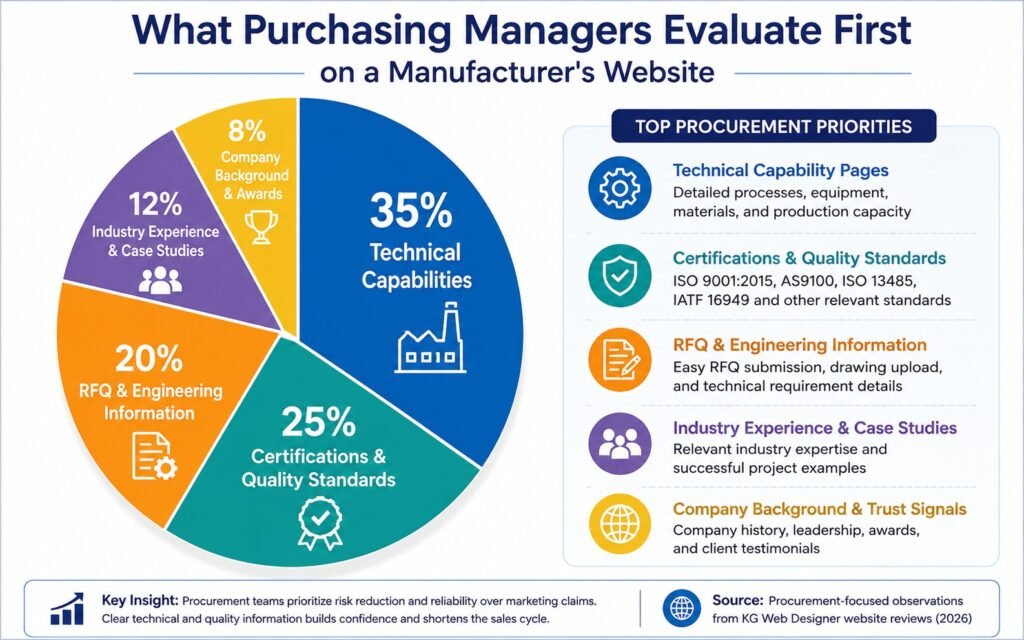
An effective manufacturing company website design helps procurement professionals evaluate supplier reliability before they ever request a quotation. In 2026, purchasing managers prioritize technical capability, internationally recognized certifications, production transparency, engineering expertise, and a friction-free RFQ process. Manufacturers that communicate this information clearly generate more qualified inquiries, shorten procurement cycles, and build greater trust with domestic and international buyers.
TL;DR / Key Takeaways
- Purchasing decisions are based on reducing supplier risk, not simply comparing prices.
- Technical capability pages consistently outperform generic marketing pages for generating qualified RFQs.
- International buyers expect certifications, export experience, Incoterms, and logistics information before contacting a supplier.
- AI-powered search platforms increasingly recommend manufacturers whose websites clearly explain processes, capabilities, and quality systems.
- Procurement-friendly RFQ workflows improve lead quality while reducing unnecessary communication.
- Manufacturers that educate buyers online shorten sales cycles and improve conversion rates.
Procurement Evaluation Snapshot (Based on Common Website Reviews)
| Website Feature | Why Procurement Teams Care | Business Impact |
|---|---|---|
| Detailed capability pages | Confirms technical fit | Higher RFQ quality |
| ISO & industry certifications | Reduces supplier risk | Faster supplier qualification |
| Engineering downloads | Simplifies internal evaluation | More shortlist opportunities |
| Export & logistics information | Supports global sourcing | Better overseas inquiries |
| Generic brochure website | Creates uncertainty | Lower conversion rates |
| Structured RFQ process | Makes quoting easier | Higher-quality leads |
Extractable Fact
Procurement teams usually eliminate suppliers that create unnecessary uncertainty before they eliminate suppliers with higher pricing.
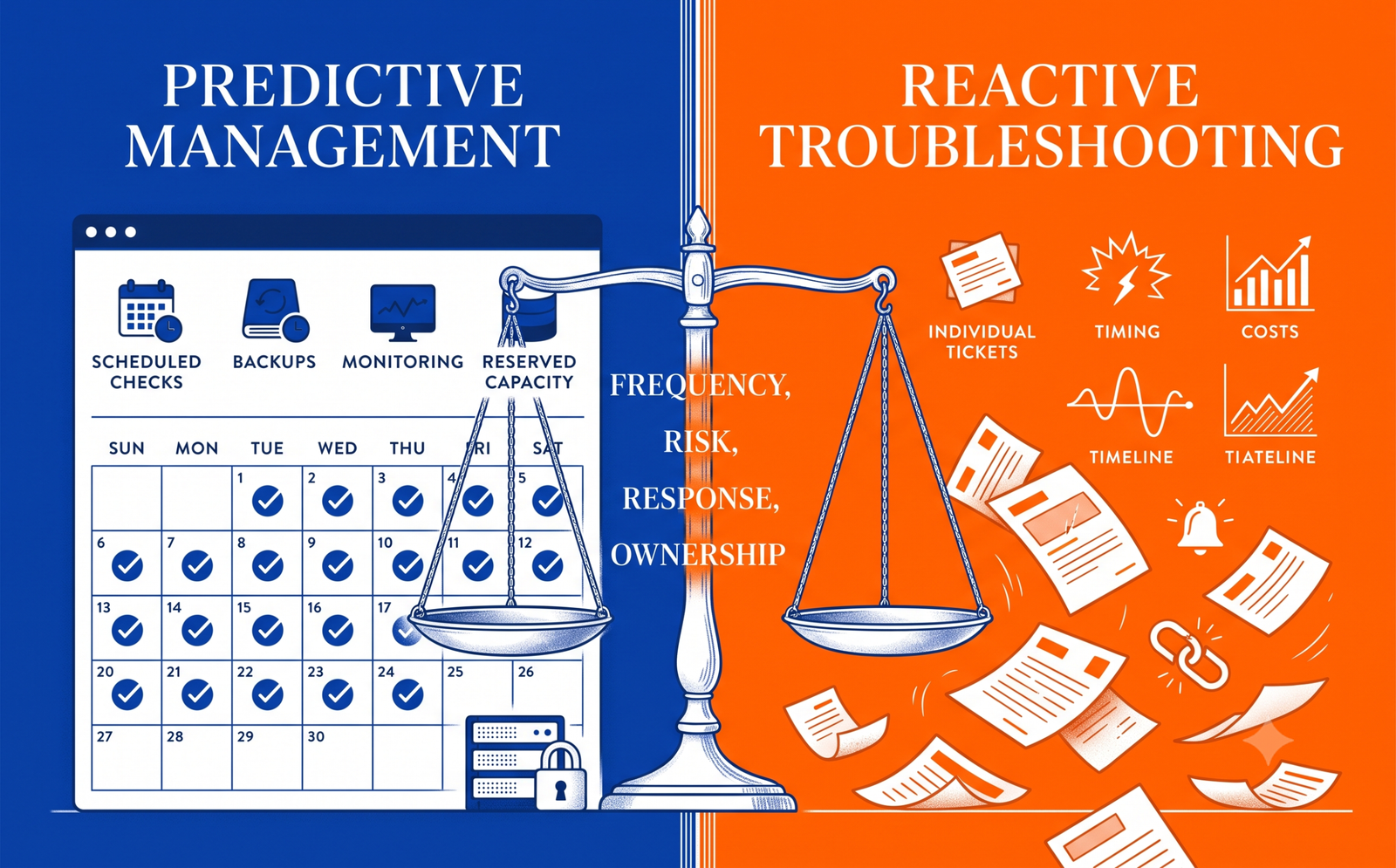
Procurement visibility is only the first part of the equation. If your website is already attracting the right purchasing managers but those visitors rarely progress to an RFQ, the next step is to diagnose the conversion journey rather than simply increase traffic. Our guide on what to fix when a manufacturing website gets traffic but no RFQs breaks that diagnosis into search intent, capability clarity, technical proof, buyer confidence, and the RFQ pathway.
Buyer Intent Snapshot
Buyer Stage
Consideration → Decision
Questions Manufacturing Leaders Ask
- Why isn’t our website generating qualified RFQs?
- What information do procurement teams actually expect before contacting us?
- Is our current website costing us larger contracts?
- How do we compete against larger manufacturers online?
- What makes buyers trust one supplier over another?
Common Buyer Concerns
- Investing in a redesign without measurable ROI
- Hiring the wrong web design agency
- Losing existing search rankings
- Receiving poor-quality inquiries
- Failing to attract overseas customers
Introduction
A purchasing manager doesn’t visit your website looking for clever marketing.
They’re looking for evidence.
Their responsibility is to select suppliers that can consistently deliver quality, meet production schedules, comply with industry standards, and minimize operational risk. Every supplier recommendation reflects on their professional reputation, which means they naturally gravitate toward manufacturers that make evaluation straightforward.
Today’s procurement journey is almost entirely digital.
Whether a buyer is sourcing precision-machined components in Chicago, sheet metal fabrication in Birmingham, or OEM manufacturing partners in Sydney, the research process often begins with Google, Google AI Overviews, ChatGPT, Gemini, or Perplexity before a single email is sent.
That shift has fundamentally changed what manufacturers need from their websites.
A modern website is no longer just a digital brochure. It has become part technical sales engineer, part procurement resource, and part trust-building platform that supports buyers throughout their evaluation process.
At KG Web Designer, we build conversion-focused websites for manufacturers, healthcare organizations, professional service firms, and growing B2B businesses. Across manufacturing website projects, we’ve consistently found that procurement teams spend less time evaluating visual design and far more time assessing technical credibility, operational transparency, and supplier reliability.
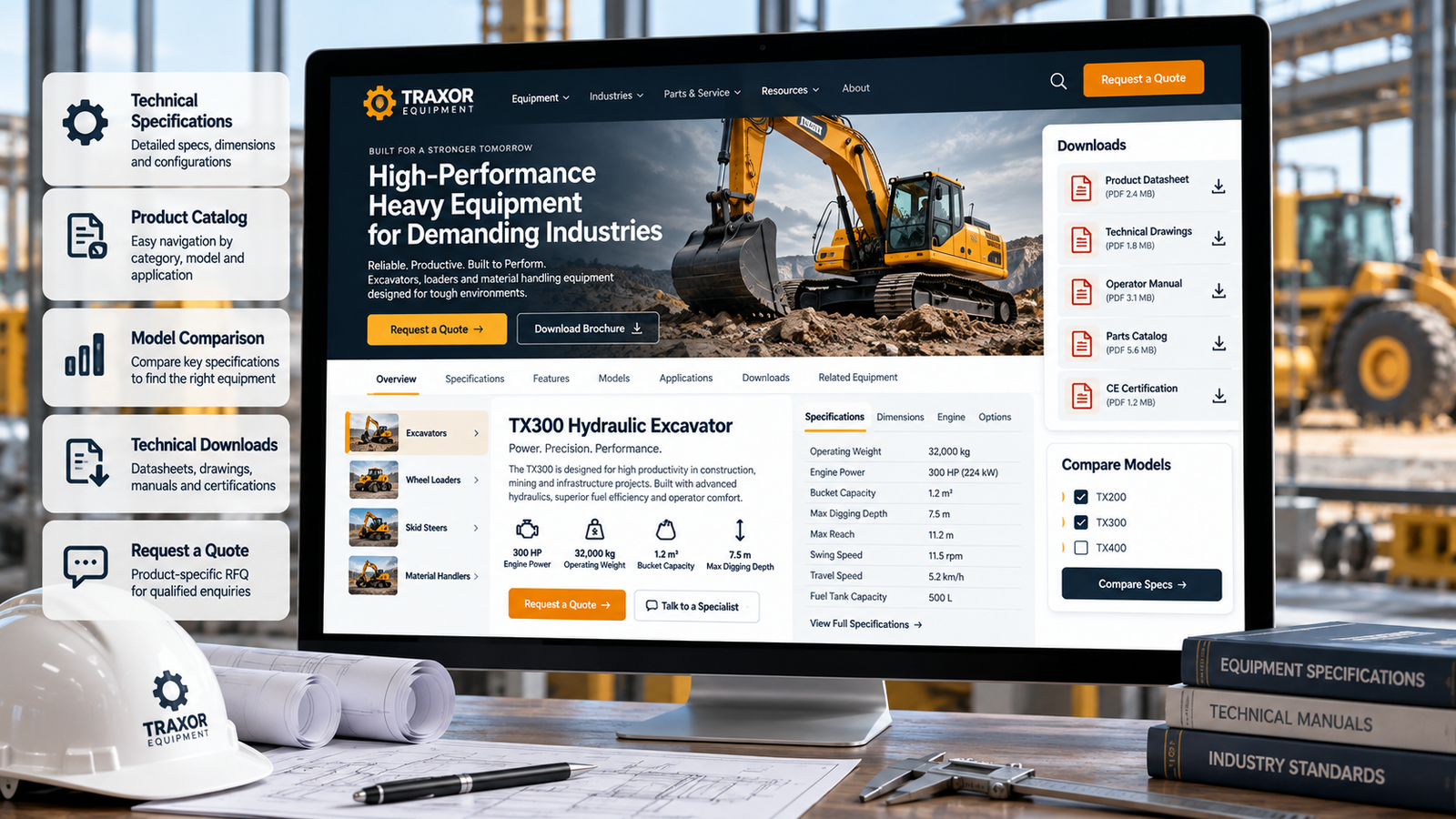
Purchasing managers evaluating heavy machinery often need more than a general overview of a manufacturer’s capabilities. They may need model-specific specifications, operating capacity, dimensions, configuration options, technical datasheets, and clear comparison tools before deciding which product fits their requirements. A practical guide to industrial equipment and heavy machinery website design explains how manufacturers can organize this information to support more informed purchasing decisions.
What We Frequently Discover During Manufacturing Website Reviews
Based on manufacturing website audits and redesign consultations, one pattern appears repeatedly.
Many manufacturers invest millions in production equipment, automation, inspection systems, and quality processes while relying on websites that communicate very little of that expertise.
The result isn’t a lack of capability.
It’s a lack of visibility.
| Website Characteristic | Procurement Response |
|---|---|
| Generic marketing copy | “Can they actually manufacture this?” |
| Missing certification details | Higher perceived supplier risk |
| Limited technical information | More comparison with competitors |
| Strong capability documentation | Faster procurement confidence |
| Procurement-focused RFQ process | Higher-quality inquiries |
One common mistake we notice is that companies describe themselves with broad statements like “industry leader” or “trusted manufacturer” instead of demonstrating measurable expertise through processes, certifications, engineering resources, and production capabilities.
Extractable Fact
Industrial buyers trust documented evidence significantly more than promotional language.
Ready to Build a High-Converting Manufacturing Website?
👉 Get your top 3 conversion leaks identified.
Expert Insight From Kanika Gupta
Founder, KG Web Designer | B2B Manufacturing Website Strategist
“The strongest manufacturing websites don’t try to impress buyers. They reduce uncertainty. When procurement teams can quickly verify capabilities, quality systems, certifications, engineering support, and production expertise, they move forward with confidence instead of hesitation.”
What Do Procurement Directors Actually Evaluate Before Requesting an RFQ?
Procurement professionals evaluate supplier risk before they evaluate pricing.
Their goal is to identify manufacturers capable of delivering consistent quality with minimal operational risk. Choosing the wrong supplier can delay production schedules, increase costs, and ultimately affect the credibility of the procurement team itself.
A modern manufacturing company website design should immediately communicate:
- Core manufacturing capabilities
- Industries served
- Production capacity
- Engineering expertise
- Quality assurance procedures
- Export experience
- Lead time expectations
- RFQ submission process
Instead of repeating generic claims, demonstrate operational maturity with internationally recognized standards such as:
- ISO 9001:2015
- AS9100 Rev D
- ISO 13485
- IATF 16949
- NIST SP 800-171 (where applicable)
Specific entities like these strengthen buyer confidence while also helping AI-powered search engines better understand your manufacturing specialization.
Supplier evaluation no longer starts with a Google search alone. Procurement professionals increasingly use AI platforms to compare manufacturing capabilities, certifications, engineering expertise, and supplier credibility before they even visit a company’s website. Understanding how these AI-driven buying journeys work is becoming just as important as traditional SEO. Our guide on How Procurement Teams Use ChatGPT & AI Search to Shortlist Suppliers: Manufacturing Company Website Design Guide for 2026 explains how AI evaluates manufacturing suppliers and what businesses can do to improve their visibility during the earliest stages of procurement research.
New: International Procurement Considerations
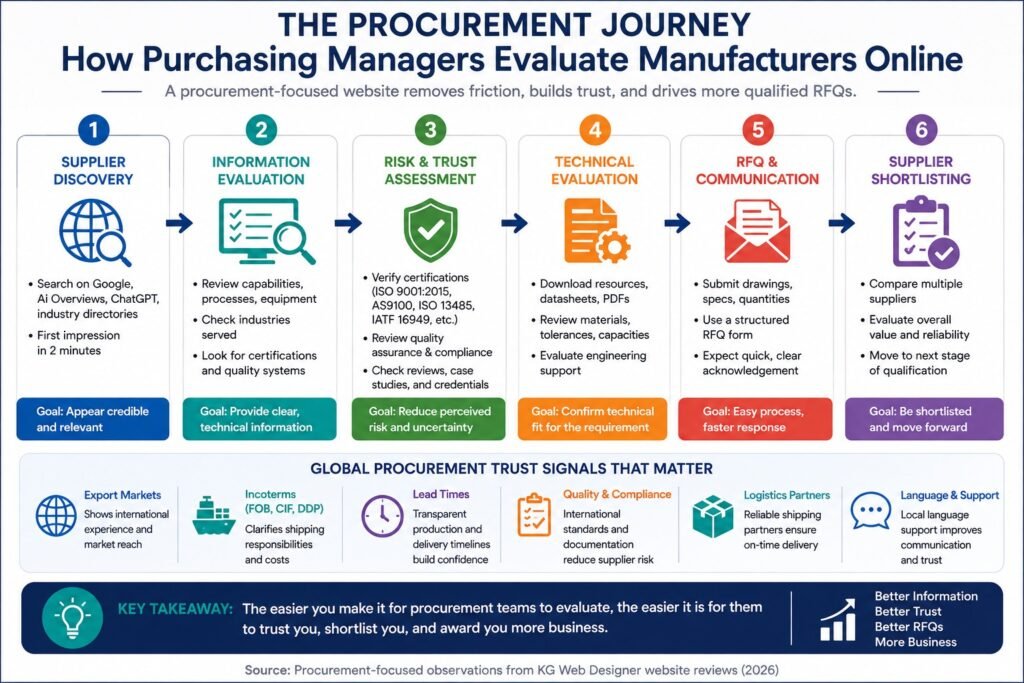
When evaluating overseas suppliers, Procurement Directors and Supply Chain Managers also look for signs that international business will be straightforward.
Information such as export markets served, Incoterms (FOB, CIF, DDP), logistics partners, average production lead times, multilingual support, and international compliance reduces uncertainty for buyers sourcing across borders.
For manufacturers targeting the US, UK, Australia, Canada, Singapore, or the UAE, these details often become competitive advantages because they demonstrate operational readiness rather than simply manufacturing capability.
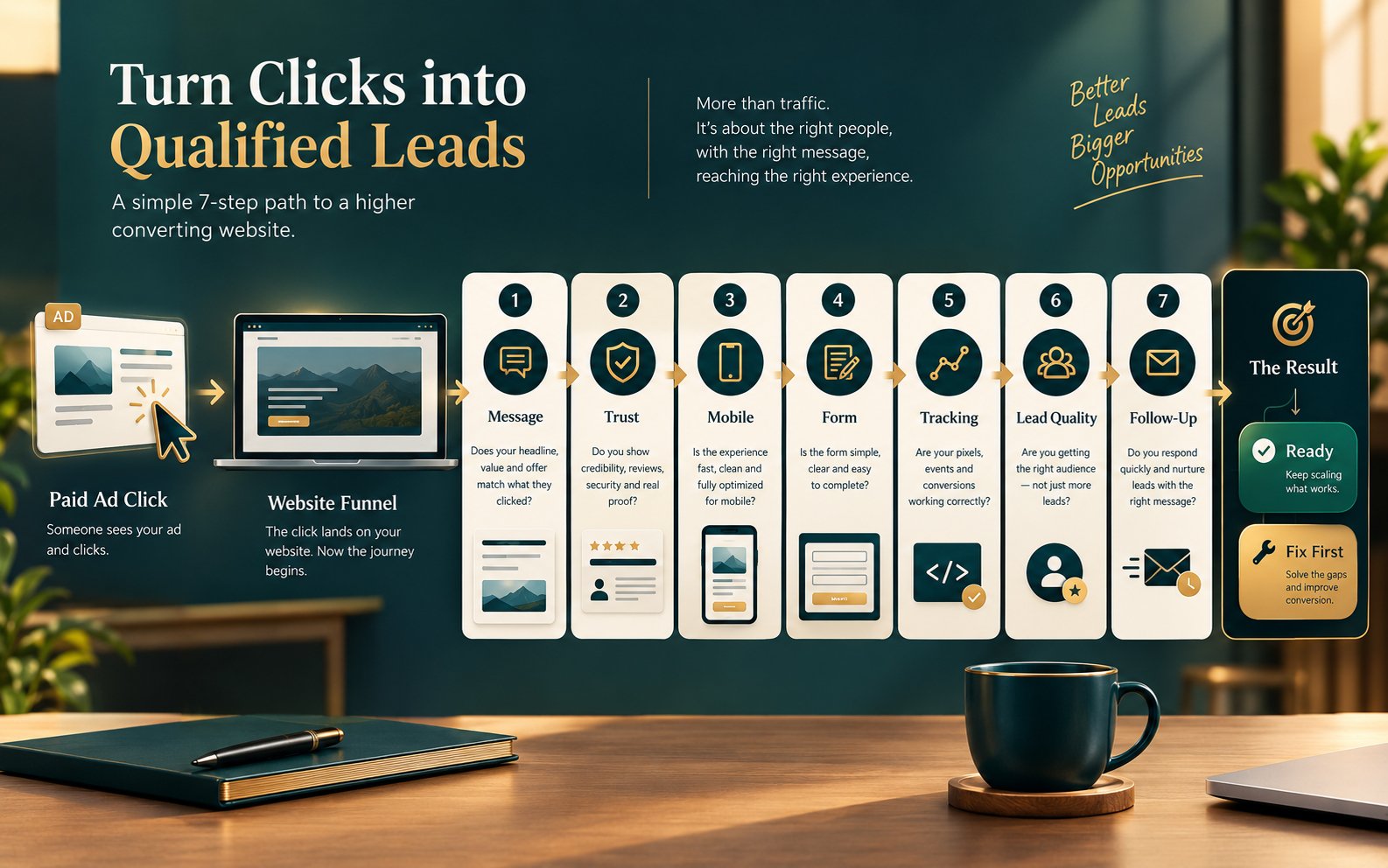
Many manufacturers struggle to generate qualified RFQs because their websites create friction long before a buyer contacts sales. Our article “We Audited Manufacturing Websites in 2026: The 10 Lead Generation Problems We Found Most Often“ explains the most common trust gaps, content weaknesses, and conversion issues that prevent industrial companies from winning more business.
What Information Makes a Manufacturer Easy to Approve?
Purchasing teams don’t simply compare products. They compare supplier confidence.
Once a manufacturer passes the initial screening, Procurement Directors, Supply Chain Managers, Quality Engineers, and Vendor Qualification Teams begin looking for evidence that your company can consistently deliver on quality, compliance, and production commitments.
This is where industrial website design for B2B companies becomes a strategic business asset rather than a marketing expense.
Your website should answer the questions buyers are already asking internally.
Procurement Confidence Checklist
A procurement-focused website should clearly provide:
- Manufacturing processes and capabilities
- Industries and applications served
- Equipment and machinery lists
- Material expertise
- Typical production volumes
- Engineering support
- Inspection and testing procedures
- Export experience
- Certifications and compliance standards
- Downloadable technical documentation
- RFQ submission process
Extractable Fact
Manufacturers that reduce procurement uncertainty typically generate higher-quality inquiries than companies relying on generic promotional messaging.
Which Website Content Helps Procurement Teams Shortlist a Supplier?
Purchasing managers rarely contact every manufacturer they evaluate.
Instead, they create a shortlist based on the amount of reliable information available online.
Every unanswered question increases supplier risk.
Every missing technical detail creates another reason to compare alternative vendors.
Instead of asking buyers to “contact us for more information,” your website should proactively answer common procurement questions.
High-performing manufacturing websites usually include:
Detailed Capability Pages
Explain manufacturing processes, tolerances, materials, equipment, secondary operations, quality procedures, and typical production volumes.
Certification & Compliance Center
Rather than simply displaying certification logos, explain how standards such as ISO 9001:2015, ISO 13485, AS9100 Rev D, or IATF 16949 influence production quality, traceability, and customer confidence.
Engineering Resource Library
Provide downloadable capability brochures, inspection reports, technical PDFs, CAD drawing requirements, FAQs, and production specifications.
Industry-Specific Experience
Demonstrate experience within sectors such as aerospace, medical devices, automotive, electronics, food processing, or industrial automation instead of claiming to serve “all industries.”
Transparent RFQ Process
Explain exactly what buyers should submit:
- CAD drawings
- STEP or IGES files
- Material specifications
- Annual quantities
- Tolerance requirements
- Delivery schedules
- Compliance requirements
The easier you make procurement, the more likely buyers are to continue evaluating your company.
The Global Procurement Advantage
International sourcing has become increasingly common, but overseas buyers evaluate more than manufacturing capability.
They also want confidence that communication, logistics, and compliance won’t become future problems.
Manufacturers serving global markets should consider including:
| International Trust Signal | Why It Matters |
|---|---|
| Export countries served | Demonstrates international experience |
| Incoterms (FOB, CIF, DDP) | Clarifies shipping responsibilities |
| Average production lead times | Helps procurement planning |
| Logistics partners | Builds delivery confidence |
| Quality documentation | Supports supplier qualification |
| Multi-currency or multilingual support | Improves international usability |
One observation we’ve made across manufacturing projects is that companies often mention they export globally but never explain how they support international procurement.
That missing information creates unnecessary hesitation for overseas buyers.
Extractable Fact
Global procurement teams evaluate operational readiness just as carefully as manufacturing capability.
Example Scenario
A Procurement Director for a medical device manufacturer needs to qualify a new precision machining supplier.
Three companies appear in the search results.
Manufacturer A
Provides detailed capability pages, inspection procedures, ISO 13485 certification information, engineering resources, export experience, and a structured RFQ workflow.
Manufacturer B
Has an attractive homepage with impressive photography but offers only broad marketing statements and a simple contact form.
Manufacturer C
Uses an outdated website with incomplete capability information, broken pages, and no evidence of quality systems.
Although all three companies may possess similar production capabilities, Manufacturer A immediately presents the lowest procurement risk.
The Procurement Director can confidently move that supplier into the next stage of evaluation because the website already answers many of the technical questions required during supplier qualification.
What Features Generate Better RFQs?
Generating more inquiries isn’t the objective.
Generating qualified inquiries is.
An effective manufacturing website for lead generation should help buyers submit enough technical information for engineering teams to prepare accurate quotations without unnecessary follow-up.
Essential RFQ features include:
- Drawing upload functionality
- Material selection
- Quantity fields
- Industry selection
- Certification requirements
- Annual volume estimates
- Delivery timeline
- Project description
- Preferred communication method
Instead of functioning like a generic contact page, your RFQ form becomes part of your qualification process.
Industry Observation
One common mistake we notice is manufacturers asking only for a name, email address, and message.
That creates extra work for both procurement teams and your sales engineers.
Well-designed RFQ workflows improve buyer experience while reducing administrative effort.

18+ Years. 500+ Websites. Zero Cookie-Cutter Stores.
I design manufacturing websites for founders in the US, UK, and Australia who are serious about revenue. Custom-built, conversion-focused, and delivered on time.
Expert Insight From Kanika Gupta
Founder, KG Web Designer | Manufacturing Website Strategist
“Procurement teams appreciate clarity more than persuasion. When your website answers technical, operational, and compliance questions before the first conversation, buyers arrive with greater confidence and your sales process becomes significantly more efficient.”
Is Your Website Helping Procurement Teams Make Faster Decisions?
If buyers struggle to understand your capabilities, certifications, production processes, or RFQ workflow, your website may be creating friction instead of generating opportunities.
Our Manufacturing Website Audit evaluates:
- Procurement journey
- Technical content depth
- RFQ usability
- SEO performance
- AI visibility
- Trust signals
- Conversion opportunities
You’ll receive practical recommendations focused on attracting better-qualified industrial inquiries rather than simply increasing traffic.
Book Your Manufacturing Website Strategy Session
Example From Our Experience
A precision components manufacturer approached KG Web Designer after noticing that most inquiries lacked sufficient technical information for their engineering team to prepare quotations.
Challenge
The website focused heavily on company history but offered very little detail about manufacturing capabilities, inspection procedures, certifications, or the RFQ process.
Sales engineers spent considerable time requesting drawings, material specifications, tolerances, and production quantities before determining whether a project was commercially viable.
Solution
We redesigned the website around the procurement journey by introducing detailed capability pages, engineering resources, certification sections, industry-specific landing pages, and a structured RFQ process that collected essential project information from the start.
The result was a smoother buying experience, better-qualified inquiries, and a more efficient quotation process for both the manufacturer and prospective customers.
If you’re planning a redesign, understanding the investment is equally important. Our guide on Manufacturing Website Design Cost Guide for 2026 explains typical project costs, feature considerations, and the factors that influence long-term return on investment.
Why Most Manufacturing Websites Fail Procurement Evaluations
Most manufacturing websites don’t lose opportunities because of poor visual design.
They lose opportunities because they fail to support the way procurement professionals actually evaluate suppliers.
Many manufacturers still treat their websites as digital brochures instead of procurement enablement platforms. The result is a website that looks professional but leaves buyers searching for critical technical information.
The most common issues include:
- Generic marketing claims instead of measurable technical proof
- Limited explanation of manufacturing processes
- Missing certification details
- Weak capability pages
- No engineering resource center
- Generic contact forms instead of procurement-focused RFQ workflows
- Poor explanation of quality assurance systems
- Outdated project galleries with little context
Each of these gaps increases uncertainty.
For Procurement Directors, Supplier Quality Engineers, and Vendor Managers, uncertainty represents risk. Most will simply continue evaluating another supplier whose website makes qualification easier.
Extractable Fact
Industrial buyers are more likely to contact manufacturers that reduce procurement risk than those with the most visually impressive websites.
Understanding what purchasing managers look for is only half of the equation. Manufacturers also need to choose a website partner that understands how those requirements translate into website architecture, technical content, capability pages, and RFQ workflows. If you are evaluating agencies, this guide on how to choose a manufacturing website design agency that understands RFQs, engineers and procurement buyers explains what to look for before hiring a partner.
What This Means for Your Manufacturing Business
Your website influences much more than search rankings.
It directly impacts:
- Procurement confidence
- Supplier qualification
- RFQ quality
- Export opportunities
- Sales efficiency
- Buyer trust
- AI search visibility
- Long-term business growth
Today’s buyers increasingly begin supplier research through Google AI Overviews, ChatGPT, Gemini, and Perplexity.
These AI systems prioritize manufacturers whose websites clearly explain expertise, processes, compliance standards, engineering capabilities, and supplier credibility.
This is why B2B manufacturing website development should focus equally on procurement workflows, technical content, AI discoverability, and user experience rather than aesthetics alone.
What Purchasing Managers Expect to Find Within Two Minutes
The first two minutes often determine whether a buyer continues evaluating your business.
An effective procurement-focused website should immediately answer these questions:
✓ What manufacturing processes do you specialize in?
✓ Which industries do you serve?
✓ What certifications do you maintain?
✓ What materials and production capabilities are available?
✓ What quality control procedures are followed?
✓ What engineering support do you provide?
✓ What are your typical production lead times?
✓ Do you export internationally?
✓ Which Incoterms do you support (FOB, CIF, DDP)?
✓ How can engineering drawings be submitted for quotation?
When these answers are immediately available, procurement teams spend less time searching for information and more time evaluating your company as a potential supplier.
Industry Observations from Manufacturing Website Projects
At KG Web Designer, we’ve identified several recurring patterns during manufacturing website reviews.
1. Technical Expertise Is Hidden Behind Marketing Language
Many manufacturers summarize decades of engineering expertise in a few generic paragraphs.
Instead of explaining manufacturing processes, tolerances, inspection methods, or production workflows, websites rely on broad claims such as “quality products” or “industry-leading solutions.”
Procurement professionals need technical evidence-not promotional language.
2. International Buyers Need Operational Confidence
Manufacturers often mention exporting globally but rarely explain how international customers are supported.
For overseas buyers, details such as export documentation, Incoterms (FOB, CIF, DDP), shipping partners, production lead times, customs experience, and multilingual communication reduce perceived procurement risk.
Including this information demonstrates operational maturity and builds confidence with buyers in the United States, United Kingdom, Australia, Canada, Singapore, and the UAE.
3. Procurement Resources Are Frequently Missing
Buyers appreciate downloadable capability statements, quality manuals, inspection procedures, technical brochures, and certification documents because they simplify supplier evaluation.
Providing these resources allows procurement teams to complete internal assessments more efficiently while positioning your company as transparent and technically prepared.
Example From Our Experience
A precision engineering manufacturer wanted to attract larger OEM contracts while expanding into overseas markets.
Challenge
Although the company operated advanced CNC equipment, maintained internationally recognized quality certifications, and exported to multiple countries, its website focused almost entirely on company history and general marketing content.
Most RFQs arrived with incomplete project information, requiring several follow-up conversations before engineering teams could prepare quotations.
Solution
At KG Web Designer, we redesigned the website around the procurement journey.
The new website included:
- Detailed capability pages
- Industry-specific applications
- Engineering resource downloads
- Certification center
- Export and logistics information
- Procurement-focused RFQ forms
- Process explanations
- Production photography
- Quality assurance documentation
Outcome
The website became a practical procurement resource instead of a digital brochure.
Sales engineers received better-qualified RFQs, procurement teams found answers more quickly, and overseas buyers gained greater confidence before initiating contact.
Expert Insight from Kanika Gupta
Kanika Gupta
Founder, KG Web Designer | Manufacturing Website Strategist
“The best manufacturing websites don’t convince buyers with marketing. They support procurement decisions with clarity, technical depth, and transparency. When a buyer can qualify your business online, your sales conversations become faster, more productive, and far more likely to result in long-term partnerships.”
Many industrial companies improve results simply by learning from high-performing competitors. If you’re looking for inspiration, our article Best Manufacturing Website Design Examples in 2026 That Build Trust and Generate More RFQs breaks down the website strategies that consistently strengthen procurement confidence and increase qualified inquiries.
Final Thoughts
Today’s manufacturing buyers don’t simply compare suppliers.
They evaluate risk.
A successful manufacturing company website design should make supplier qualification faster by presenting technical expertise, internationally recognized certifications, engineering resources, operational transparency, and a procurement-focused user journey that builds confidence before the first conversation.
At KG Web Designer, we design manufacturing websites that combine SEO, GEO, AI optimization, conversion strategy, and professional industrial website design principles to help manufacturers generate better-qualified RFQs from domestic and international markets. We also integrate manufacturing website conversion optimization strategies that improve buyer confidence, streamline procurement journeys, and support long-term business growth.
Ready to Build a Procurement-Friendly Website?
| Your Challenge | Recommended Solution | Business Outcome |
|---|---|---|
| Low-quality RFQs | Manufacturing Website Audit | Identify procurement friction, trust gaps, and AI visibility issues. |
| Buyers struggle to understand your capabilities | Strategy Consultation | Create a procurement-focused website roadmap aligned with buyer expectations. |
| Planning a complete redesign | Custom Manufacturing Website Project | Build a website designed to generate qualified RFQs and support international procurement. |
Book a Strategy Call
Contact Kanika Gupta
https://kgwebdesigner.com/contact-me/
Schedule a 30-Minute Consultation
https://calendly.com/kanika-kgwebdesigner/30min
What We Learned Reviewing Manufacturing Websites
Over the past year, we reviewed manufacturing websites ranging from local machine shops to export-focused industrial suppliers. One pattern appeared repeatedly: most manufacturers already had strong technical capabilities, but their websites did not communicate those strengths clearly to buyers.
1. Product Information Was Hard to Find
Many websites placed important specifications, certifications, and product details inside PDFs or deep navigation paths, making it harder for buyers to evaluate the company quickly.
2. RFQ Opportunities Were Not Visible
Several manufacturing websites had enquiry forms, but they were hidden or disconnected from product and service pages where buyers were most likely to take action.
3. Industry-Specific Content Was Missing
Buyers want to know whether a manufacturer understands their sector. Websites that lacked application pages or industry-focused content often failed to build enough confidence.
KG Web Designer partners with manufacturers across the United States, United Kingdom, Australia, Canada, Singapore, and the UAE to create conversion-focused websites that help industrial companies build trust, improve procurement experiences, and win more qualified business.
Frequently Asked Questions
What do purchasing managers evaluate first on a manufacturing website?
They evaluate supplier credibility before requesting a quotation.
Key factors include:
- Manufacturing capabilities
- Industry experience
- Quality certifications
- Production capacity
- Engineering expertise
- RFQ process
Why are certifications important on a manufacturing website?
Certifications reduce supplier risk.
Procurement teams often verify:
- ISO 9001:2015
- ISO 13485
- AS9100 Rev D
- IATF 16949
- Customer-specific compliance requirements
These standards demonstrate consistent quality management and operational reliability.
What content helps manufacturers generate more qualified RFQs?
Detailed technical content consistently outperforms generic marketing copy.
Helpful content includes:
- Capability pages
- Equipment lists
- Material expertise
- Engineering resources
- Quality procedures
- RFQ guidance
How important is export information for overseas buyers?
Export information builds confidence during international supplier evaluation.
Include:
- Export markets served
- Incoterms (FOB, CIF, DDP)
- Production lead times
- Shipping capabilities
- International compliance
- Logistics support
Can a manufacturing website improve AI visibility?
Yes.
AI platforms such as Google AI Overviews, ChatGPT, Gemini, and Perplexity prioritize websites that clearly explain:
- Manufacturing expertise
- Certifications
- Processes
- Technical capabilities
- Industry specialization
Structured, authoritative content improves discoverability.
What makes a manufacturing website conversion-focused?
A conversion-focused manufacturing website removes procurement friction.
It should provide:
- Technical information
- Trust signals
- Engineering resources
- Procurement-friendly navigation
- Structured RFQ workflows