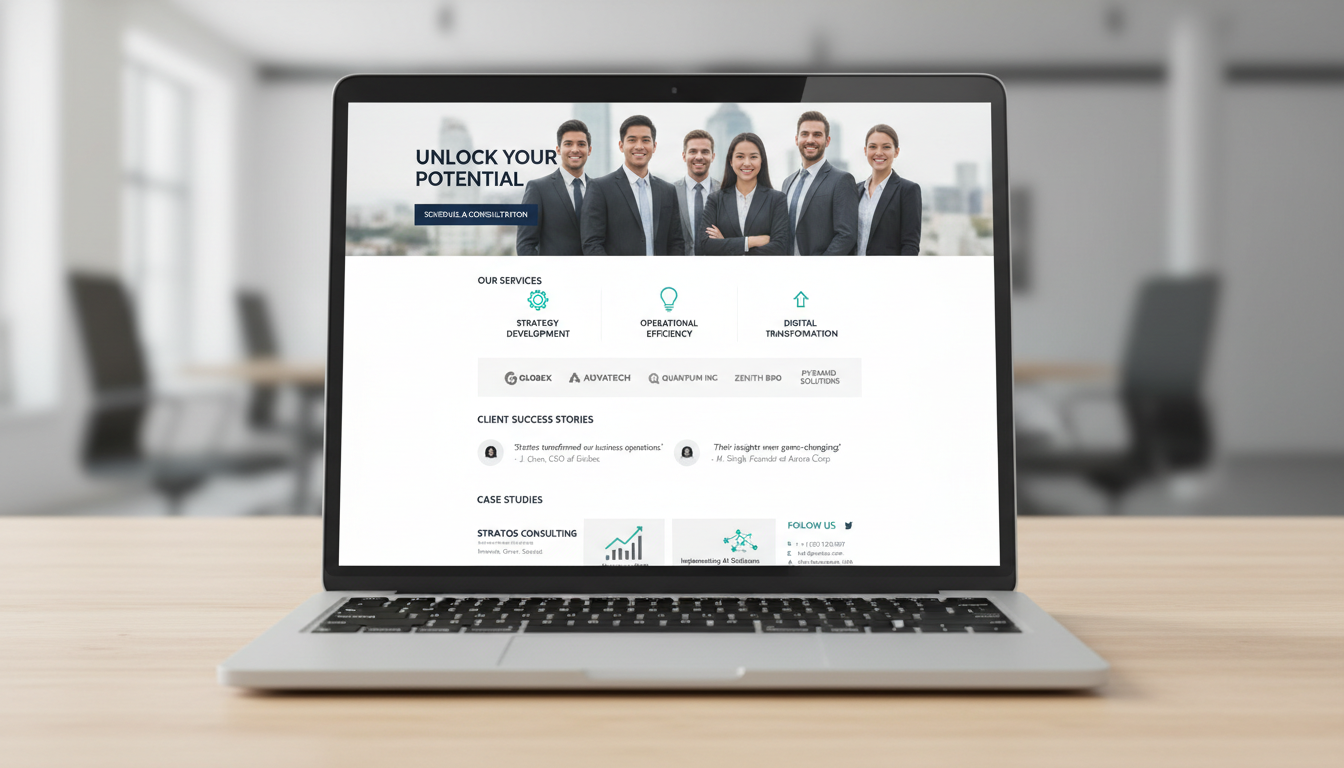
Key Takeaways (Quick Wins)
- Most professional website design for consultants fail because they don’t convert authority into enquiries
- High-performing websites are built around Client Discovery Journey and Social Proof
- Conversion-focused UX can significantly reduce Client Acquisition Cost (CAC)
- Integration with tools like HubSpot, Salesforce, and GoHighLevel improves lead quality
- Global clients expect GDPR/CCPA compliance, speed, and structured communication
- A well-designed website becomes a predictable client acquisition system
Most Consulting Websites Look Professional — But Don’t Generate Leads
Most consulting websites appear polished—but fail where it matters most:
👉 Generating high-value enquiries
The issue isn’t design quality. It’s lack of conversion strategy.
A decision-maker landing on your website is subconsciously evaluating:
- Can this consultant solve my problem?
- Do they have proven results?
- Is this worth a premium investment?
If your website doesn’t answer these within seconds, they leave.
👉 This is why professional services website design for consultants must focus on clarity, trust, and outcomes—not aesthetics.
Who This Guide Is For
This guide is designed for consultants who are serious about growth—not just having an online presence.
It’s for you if:
- You’re a B2B consultant, advisor, or firm targeting clients in the US, UK, or Australia
- You offer high-ticket services ($2,000–$10,000+) and need your website to reflect that positioning
- You’re getting traffic—but the wrong kind of leads (low budget, unqualified, or inconsistent)
- You rely on referrals today and want to build a predictable inbound lead system
- You feel your current website “looks fine” but doesn’t convert decision-makers
This is especially relevant if your website is currently:
- Acting like a brochure instead of a sales tool
- Focused on your services instead of your client’s outcomes
- Missing proof, structure, or a clear conversion path
Consulting Website Design Services Is Not for Everyone
This guide of consulting website design services is not for:
- Businesses looking for the cheapest website option
- Early-stage freelancers still testing their niche
- Companies that don’t rely on their website for lead generation
Because the strategies here are built for:
👉 Consultants who want fewer leads—but better ones
👉 Consultants who want to increase deal size, not just volume
👉 Consultants who understand that positioning drives pricing power
The Real Goal
If you’re reading this, your goal is likely not:
❌ “Get more website traffic”
It’s:
✅ “Attract the right clients, at the right price, consistently”
And that requires a different approach to professional services website design for consultants.
👉 One that focuses on conversion, clarity, and credibility—not just design
The Anatomy of a High-Ticket Consulting Website
A high-performing consulting website is not built like a standard business website.
It is structured as a conversion system aligned with the client discovery journey.
Key components include:
1. Authority Positioning
Clear, outcome-driven messaging that immediately communicates value.
2. Social Proof Integration
Strategically placed:
- Case studies
- Testimonials
- Results
👉 Social Proof is one of the strongest conversion drivers in B2B.
3. Frictionless UX
A streamlined experience that removes confusion and reduces decision fatigue.
4. Content Strategy
Content that educates, builds trust, and positions expertise—not just fills space.
5. Lead Capture Mechanisms
Including:
- Lead magnets
- Strategy call CTAs
- Email capture systems
6. CRM & Marketing Integrations
High-performing consulting websites integrate with tools like:
- HubSpot (lead nurturing & automation)
- Salesforce (enterprise pipeline management)
- GoHighLevel (funnels & lead tracking)
👉 This ensures leads are captured, tracked, and converted efficiently.
Why Traditional Consulting Websites Fail to Convert
Data from 400+ website builds shows consistent patterns:
1. Generic Messaging
“Professional services” language fails to connect.
👉 Clients want outcomes, not descriptions.
2. Weak CTA Strategy
Single CTA = lost opportunities.
3. Lack of Trust Signals
Without proof, high-ticket clients don’t engage.
4. Poor UX Structure
Confusing layouts increase bounce rates.
5. No Lead Nurturing System
No integration with CRM or automation tools = lost leads.
Most consulting websites fail due to structural issues—not just design flaws. Poor content hierarchy, unclear messaging, and lack of conversion pathways create friction at every step of the user journey.
Does Your Consulting Website Look Good But Fail to Bring Qualified Leads?
If your website feels more like a brochure than a client acquisition system, it may be costing you high-value enquiries. I help consultants turn generic websites into conversion-focused platforms built for trust, authority, and premium positioning.
If you want a deeper breakdown of why this happens and how to fix it, read the blog Why 80% of the consulting firms lose leads in 2026.
👉 This will help you identify the exact gaps that are costing you leads.
What High-Converting Consulting Websites Do Differently
High-converting consulting websites are not built to “look impressive.”
👉 They are built to influence decisions and drive action.
This is a critical distinction.
Most consulting websites are designed like digital brochures—informational, static, and passive.
High-performing websites, on the other hand, function as structured sales systems aligned with how decision-makers evaluate service providers.
1. They Lead With Outcome-Driven Messaging (Not Services)
The first 5–7 seconds determine everything.
Visitors don’t read—they scan.
And what they’re looking for is simple:
👉 “Can this person solve my specific problem?”
That’s why high-converting websites avoid vague statements like:
❌ “We offer business consulting services”
Instead, they lead with:
✅ “We help B2B companies reduce operational costs by 25% within 90 days”
Why This Works:
- It immediately establishes relevance
- It reduces cognitive effort
- It positions you as results-driven
👉 This aligns with how high-ticket buyers think: outcomes first, process later
2. They Build Trust Before Asking for Action
Most websites try to push users to “Contact Us” too quickly.
Website design for consulting firms understand:
👉 Trust is the gateway to conversion
They strategically layer trust signals throughout the page—not just on a testimonials page.
This includes:
- Client logos near the top
- Testimonials tied to specific results
- Case studies embedded within content
- Certifications or recognitions
The Key Insight:
Decision-makers are not looking for “proof that you exist.”
👉 They’re looking for proof that you deliver results
3. They Structure Content for Scanning (F-Pattern Behavior)
Corporate buyers don’t read every word.
They scan in what’s known as the F-pattern:
- Headline
- Subheadings
- First few lines
- Bullet points
High-performing consulting websites are designed specifically for this behavior.
They use:
- Clear, benefit-driven headings
- Short paragraphs (2–3 lines max)
- Strategic whitespace
- Visual hierarchy
Why This Matters:
👉 If your content isn’t scannable, it’s invisible
And invisible content doesn’t convert.
4. They Guide the User Through a Clear Decision Path
Most consulting websites leave users to figure things out.
High-converting websites remove that friction completely.
They guide visitors through a structured journey:
- Problem Recognition → “This is exactly what I’m facing”
- Solution Clarity → “This is how they solve it”
- Proof of Capability → “They’ve done this before”
- Low-Risk Action → “Let me explore further or book a call”
This Is Known As:
👉 Client Discovery Journey Mapping
Every section of the website exists to move the user one step forward.
Nothing is random.
Want a Website That Positions You as the Premium Choice?
High-ticket clients do not choose consultants based on design alone. They look for clarity, proof, structured messaging, and a frictionless path to action. Let’s build a website that supports your authority, improves lead quality, and increases your pricing power.
5. They Use Multi-Level CTAs (Not Just One “Contact Us” Button)
A single CTA assumes every visitor is ready to buy.
That’s not how decision-making works—especially in consulting.
High-performing websites include multiple conversion paths:
- Early-stage → “Read Insights” / “Download Guide” (Lead Magnet)
- Mid-stage → “View Case Studies”
- High-intent → “Book a Strategy Call”
Why This Works:
👉 It captures users at different levels of readiness
And increases overall conversion opportunities.
6. They Remove Friction at Every Step
Every extra step, confusion, or delay reduces conversions.
High-converting consulting websites are obsessed with reducing friction.
They:
- Simplify navigation
- Eliminate unnecessary pages
- Use clear next steps
- Reduce form fields
Example:
Changing:
❌ “Contact Us”
To:
✅ “See Available Strategy Call Slots”
👉 This reduces uncertainty and increases action.
7. They Integrate With Backend Systems (Not Just Design)
This is where most designers fall short.
A consultant website design that converts are not just front-end experiences—they are connected systems.
They integrate with:
- HubSpot (lead tracking & nurturing)
- Salesforce (pipeline management)
- GoHighLevel (funnels & automation)
Why This Matters:
Without integration:
👉 Leads are lost, delayed, or poorly managed
With integration:
👉 Every enquiry becomes a tracked, nurtured opportunity
8. They Position You as a Premium Option (Not a Commodity)
Generic websites create price-sensitive leads.
High-converting websites position you as a specialist.
They do this through:
- Clear niche positioning
- Outcome-based messaging
- Strong proof and authority signals
- Premium design and structure
The Result:
👉 You attract fewer leads—but significantly higher-value clients
And your pricing power increases.
9. They Function as Sales Systems—Not Marketing Assets
This is the biggest shift.
Most websites are:
👉 Informational
High-performing consulting websites are:
👉 Revenue-generating systems
They:
- Qualify leads
- Build trust
- Educate prospects
- Drive action
All without manual intervention.
The Bottom Line
A Business, Corporate & Professional website design is not defined by how it looks.
👉 It’s defined by how it performs.
And performance comes down to three things:
- Clarity → Can users instantly understand your value?
- Trust → Do they believe you can deliver?
- Structure → Are they guided toward action?
When these are aligned:
👉 Your website stops being a passive presence
And starts becoming a consistent source of high-value clients
Case Study: From Low-Quality Leads to High-Ticket Clients
A consulting firm targeting US clients had:
- ~1,200 monthly visitors
- 15–20 enquiries/month
- Low-quality leads
Strategic Changes:
- Replaced generic messaging with outcome-driven copy
- Introduced lead magnet + structured CTA flow
- Integrated CRM (HubSpot) for lead tracking
- Improved page structure and UX
Results (60 Days):
- Leads reduced to 8–10/month
- Lead quality improved significantly
- Closed 2–3 high-ticket clients/month
- Bounce rate reduced from 70% → 42%
👉 This shows how conversion-focused consulting website design improves both quality and ROI
Local SEO for Consulting Firms (US, UK, Australia)
Local SEO is critical for inbound consulting leads.
Examples:
- “Business consultant New York”
- “Strategy consultant London”
- “Management consultant Sydney”
Key Factors:
- Optimized Google Business Profile
- NAP consistency
- Location-based pages
- Review strategy
Technical Layer
Performance directly impacts ranking.
👉 Improve Core Web Vitals using tools like Google PageSpeed Insights.
This ensures:
- Faster load times
- Better rankings
- Higher conversions
Pricing Guide: What Does a Consulting Website Cost?
| Package Type | Ideal For | Investment Est. |
|---|---|---|
| Foundation | New Independent Consultants | $2k – $5k |
| Growth | Established Firms (US/UK/AU) | $5k – $10k |
| Authority | Scalable Consulting Businesses | $10k+ |
ROI Perspective
A $7,000 website that brings:
👉 2 clients worth $5,000 each
→ Generates $10,000 return
👉 This is why high-performing websites are an investment—not a cost
Global Collaboration Standards (Overseas Trust Section)
Working internationally is no longer a limitation—it’s a structured advantage.
Communication
- Slack (daily updates)
- Loom (walkthroughs)
- Zoom (strategy sessions recorded for your team)
Timezone Alignment
- 2–4 hours overlap with US/UK/AU
- Clear response timelines (12–24 hours)
Process
- Discovery → Strategy → Design → Development → Launch
- Defined milestones and deliverables
Compliance & Security
- GDPR compliance (UK/EU)
- CCPA compliance (US)
- ADA accessibility standards
👉 This ensures your website meets international expectations.
Why Consulting Firms Choose Specialists Over Agencies
Specialists focus on:
- Conversion strategy
- Client psychology
- Revenue outcomes
Unlike agencies:
- No communication layers
- No generic templates
- No diluted strategy
👉 The result is a more focused, high-performing consulting website
Common Consulting Website Mistakes That Cost You Clients
- No above-the-fold CTA
- Generic copy
- No Social Proof
- Slow loading speed
- No CRM integration
- Poor mobile UX
👉 Each creates friction and reduces conversions.
Conversion Metrics That Actually Matter
- Conversion rate
- Lead quality
- CAC (Client Acquisition Cost)
- Bounce rate
- Time on site
👉 These metrics determine actual business impact.
Frequently Asked Questions
Does website design impact consulting leads?
Yes. A conversion-focused website improves both lead quality and conversion rates by aligning messaging with user intent.
How much does a consulting website cost?
A professional consulting website typically costs between $5,000 and $15,000 depending on complexity and features.
Can I improve conversions without redesigning?
Yes, but only if your existing structure supports conversion optimization.
How long does a consulting website take to build?
Most projects are completed within 4–6 weeks.
Do I need CRM integration?
Yes. Tools like HubSpot or Salesforce ensure leads are captured and managed effectively.
Is SEO important for consultants?
Yes. SEO drives consistent inbound leads and reduces reliance on paid marketing.
Ready to Turn Your Website Into a Predictable Client Acquisition System?
In a free strategy call, I’ll identify the biggest conversion leaks on your current website, show you what is hurting lead quality, and suggest practical improvements to help you attract better consulting clients in 2026.
Final Thoughts: Your Website Is Your Sales System
Your website is not just a digital asset.
👉 It is your primary client acquisition engine
It determines:
- Who contacts you
- The quality of leads
- Your pricing power
A B2B consulting website design doesn’t just look professional.
👉 It drives predictable, scalable growth.
Not Ready Yet? Start With a Website Audit Checklist
If you’re not ready to book a call, start here:
👉 Download a Consulting Website Audit Checklist to identify:
- Conversion gaps
- UX issues
- Lead generation problems
Apply for a Website Strategy Session
If you want a clear plan to improve your website performance:
👉 https://calendly.com/kanika-kgwebdesigner/30min
In this session, you’ll get:
- A breakdown of your biggest conversion leaks
- 2–3 actionable improvements
- Clear next steps
(Limited slots available each week.)
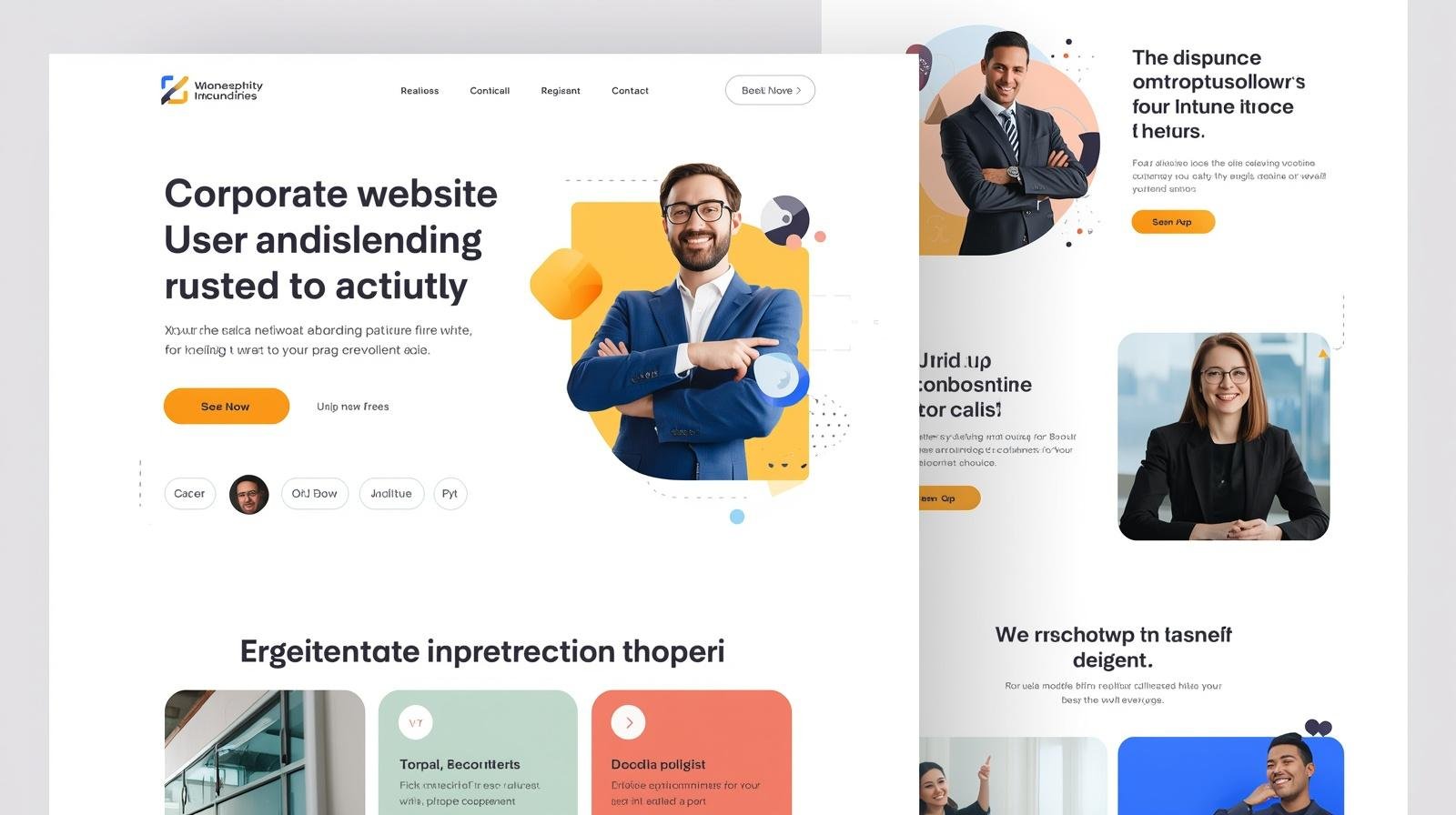
Corporate Website Design Services
Corporate Website Design
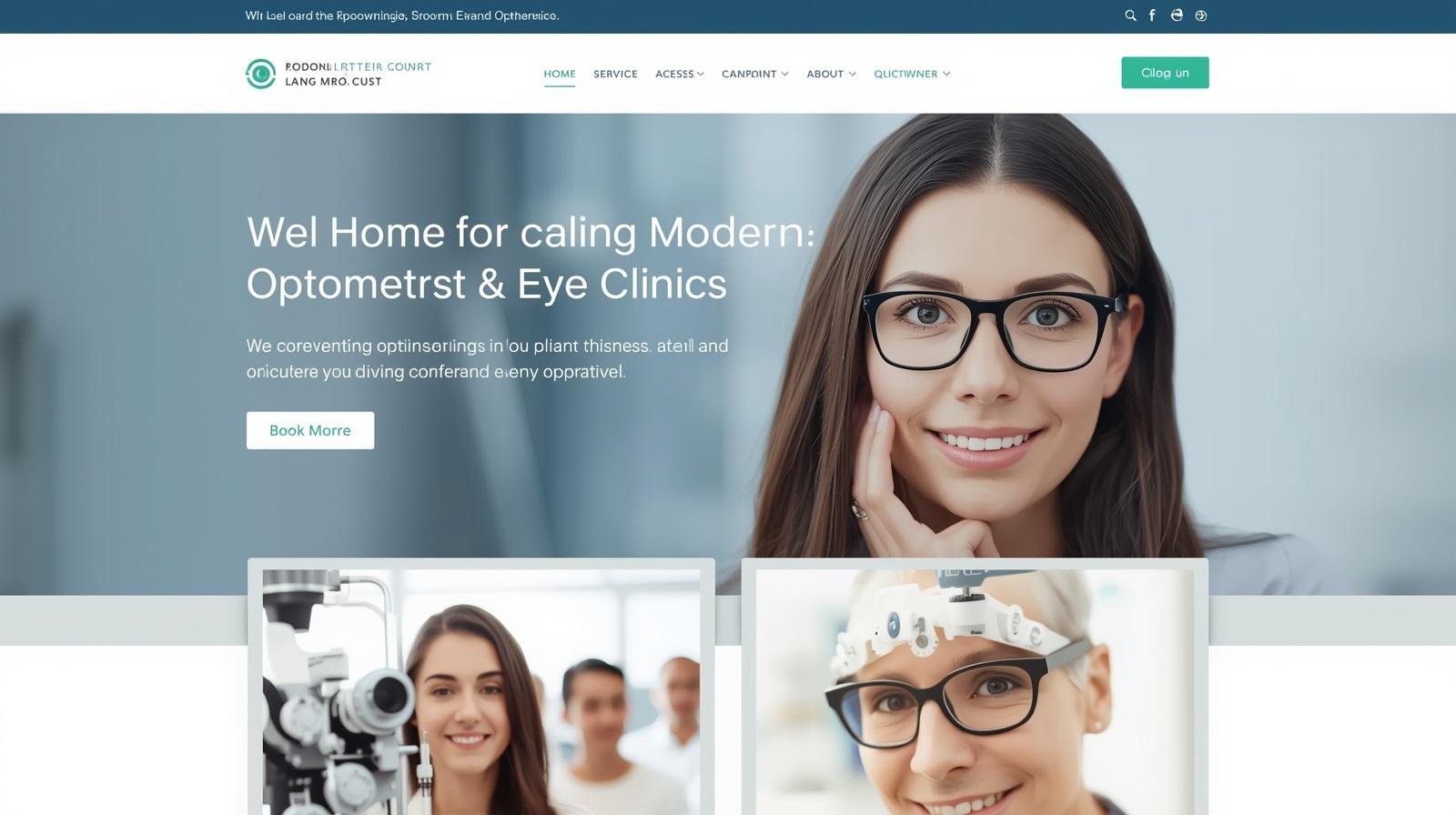
Patient-focused website design for optometrists with seamless appointment booking, mobile optimization, and trust-building user experience.
Consulting Firm Website Design
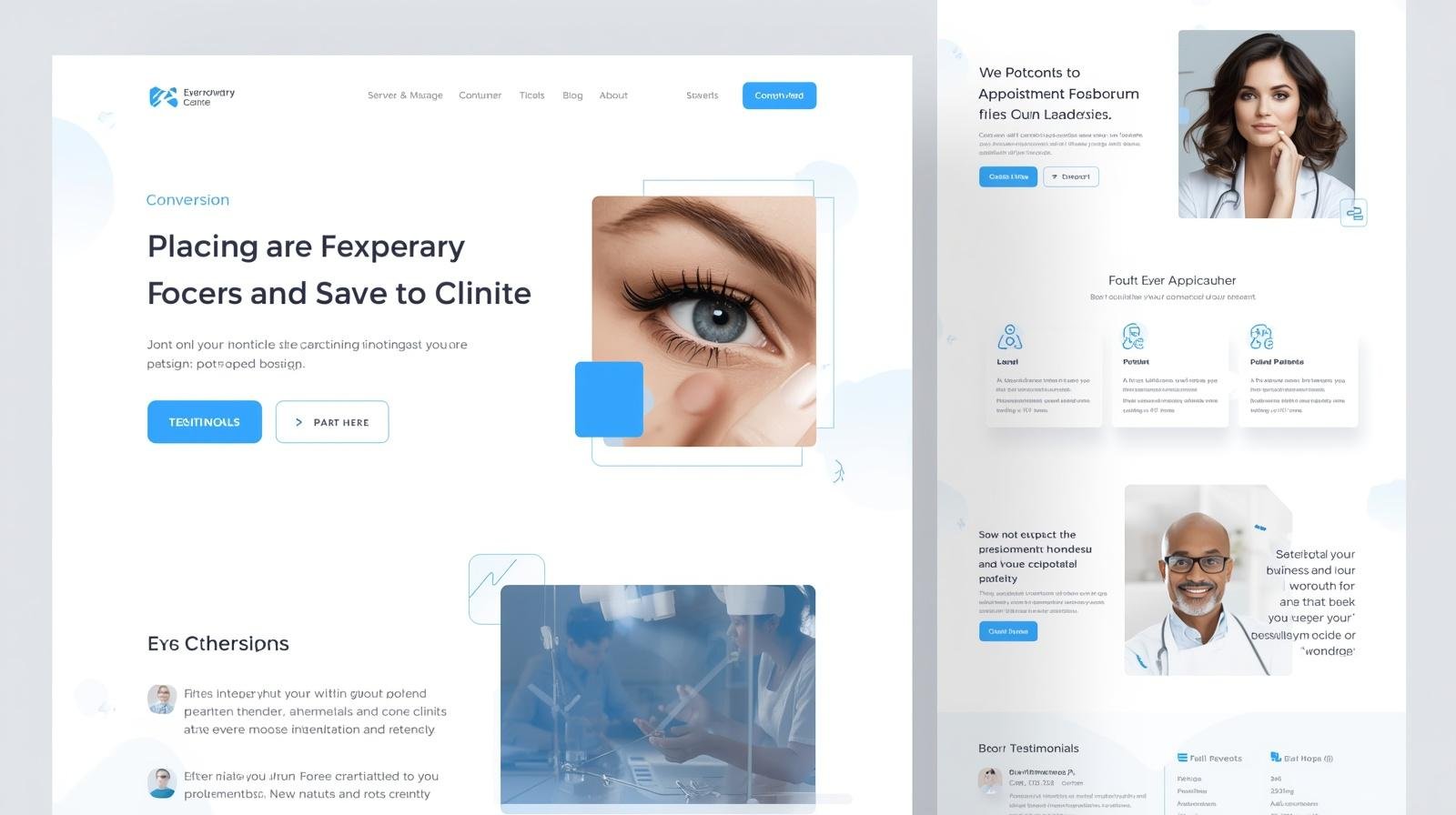
Modern, trust-focused websites for eye clinics designed to attract patients, highlight services, and increase appointment bookings.
Professional Services Website Design
Strategic website design for vision care brands that builds credibility, educates patients, and drives consistent enquiries.