Key Takeaways (Quick Wins)
- Ecommerce website design cost in 2026 ranges from $3,000 to $20,000+ depending on strategy, UX, and scalability
- The real cost is not the build—it’s the revenue your website generates (or loses)
- Conversion-focused design can double revenue without increasing traffic
- Global-ready websites (US/UK/AU) must include performance, compliance, and localization
- Overseas founders should evaluate process, trust, and ROI—not just price
Why Most Founders Misunderstand Ecommerce Website Design Cost
Most founders ask:
👉 “How much does an ecommerce website cost?”
But serious brands ask:
👉 “How much will this website return?”
Because your ecommerce website is not a design project.
It is your primary revenue system.
A cheap website might save $5,000 upfront—but lose $50,000 in conversions over time.
That’s why understanding Fashion website design cost in 2026 is not about budgeting.
👉 It’s about investment vs loss.
Ecommerce Website Design Cost in 2026 (Realistic Pricing Breakdown)
Entry-Level Websites ($3,000 – $6,000)
These are typically template-based builds designed for quick launch.
They may work for:
- Testing product-market fit
- Early-stage brands
But they lack:
- Conversion strategy
- Custom UX
- Performance optimization
👉 Good for validation—not for scaling.
Mid-Level Websites ($6,000 – $12,000)
These websites include:
- Custom UI/UX
- Mobile-first design
- Basic CRO implementation
They improve:
- Engagement
- Product presentation
- User experience
👉 Suitable for growing brands with steady traffic.
High-Performance Ecommerce Websites ($12,000 – $20,000+)
These are built as revenue-generating systems.
They include:
- Advanced UX strategy
- Conversion rate optimization (CRO)
- AI & GEO-ready content structure
- Performance engineering
- Scalable architecture
👉 Designed for brands targeting international markets and long-term growth.

Not Sure Which Budget Tier Fits Your Store?
Every ecommerce founder has different goals. In a free 30-min call, I’ll assess your product, market, and growth plan — and tell you exactly what level of investment makes sense for your business.
What Actually Drives Ecommerce Website Design Cost
1. Strategy & UX Planning
This is where most of the ROI is created.
It includes:
- Customer journey mapping
- Funnel optimization
- Behavioral insights
👉 Without this, design is just decoration.
2. Platform & Ecosystem Costs (Hidden but Critical)
Your total ecommerce cost includes more than design.
For example:
- Shopify: monthly subscription + apps
- WooCommerce: hosting + plugins
- Payment fees: Stripe, PayPal
👉 Many founders underestimate this layer.
3. Product Page Optimization
Product pages are where revenue happens.
High-performing pages include:
- Clear hierarchy
- Trust signals
- Strong CTAs
- Structured content
👉 This directly impacts conversion rate.
4. Checkout Optimization
According to the Baymard Institute, poor checkout UX is a major reason for cart abandonment.
Optimized checkout includes:
- Fewer steps
- Transparent pricing
- Multiple payment options
5. Performance & Speed
Research from Google shows faster websites significantly improve engagement and conversions.
Includes:
- Core Web Vitals
- Image optimization
- Efficient code
6. Compliance & Global Readiness
If you’re selling in US, UK, or EU markets, compliance affects cost.
Includes:
- GDPR
- CCPA
- ADA accessibility
👉 This is not optional in 2026—it’s expected.
7. AI & GEO Optimization (2026 Cost Factor)
Modern Fashion & Apparel websites must be optimized for AI discovery.
This includes:
- Structured content
- Schema markup
- Entity-based SEO
👉 This ensures visibility in AI-generated search results.
The Hidden Cost of Cheap Ecommerce Websites
Cheap websites often lead to:
- Low conversions
- Poor mobile UX
- High bounce rates
- Redesign within 12 months
👉 Many brands end up paying 2–3x more later.
Generalist vs Specialist Ecommerce Designer (2026 Comparison)
| Factor | Generalist Designer | Ecommerce Specialist |
|---|---|---|
| Strategy | Basic | Conversion-focused |
| UX | Generic | Data-driven |
| SEO | Basic | Advanced + technical |
| GEO Readiness | None | AI-optimized |
| Performance | Average | Optimized |
| Compliance | Ignored | Built-in |
| ROI | Unclear | Measurable |
👉 A generalist builds a website
👉 A specialist builds a scalable revenue system
Why Conversion-Focused Design Delivers Higher ROI
Most founders assume growth comes from increasing traffic—running more ads, investing in SEO, or expanding marketing channels.
But in reality, the fastest and most cost-effective way to grow revenue is improving what you already have:
👉 Your conversion rate.
Revenue Growth Without Increasing Traffic
Let’s break it down with a simple example:
If your website gets 10,000 visitors per month:
- At 1% conversion → 100 orders
- At 2% conversion → 200 orders
👉 That’s a 100% increase in revenue—without spending more on ads or traffic.
This is why conversion-focused design delivers such a powerful return on investment.
Conversion Impacts Multiple Revenue Drivers
A well-optimized ecommerce website design doesn’t just improve one metric—it improves several at once:
- Higher conversion rate → more visitors become customers
- Higher average order value (AOV) → better product presentation and upsells
- Lower bounce rate → users stay longer and explore more
- Reduced cart abandonment → smoother checkout experience
👉 These improvements compound, creating exponential growth over time.
Small UX Improvements Can Drive Big Results
You don’t always need a complete redesign to see impact.
Often, targeted improvements can significantly boost performance:
- Clearer product descriptions and visuals
- Stronger trust signals (reviews, guarantees, shipping clarity)
- Simplified navigation and checkout flow
- Mobile-first optimization
👉 Even a 0.5% increase in conversion rate can translate into thousands in additional monthly revenue.
Lower Customer Acquisition Cost (CAC)
If your website converts poorly, you need more traffic to generate the same revenue.
That means:
- Higher ad spend
- Lower profit margins
But when your website converts better:
👉 Your Customer Acquisition Cost (CAC) decreases
👉 Your marketing becomes more efficient
This is especially critical in competitive markets like the US, UK, and Australia.
Trust-Driven Design Increases Sales
Users don’t buy just because your product exists—they buy when they feel confident.
Conversion-focused design builds trust through:
- Clear messaging
- Visual hierarchy
- Professional design
- Transparent pricing and policies
👉 Trust is what turns visitors into paying customers.
Long-Term ROI That Compounds
Unlike ads, which stop working when you stop spending, your website continues to perform.
A conversion-optimized website:
- Improves results across all channels (SEO, ads, email)
- Scales with traffic growth
- Generates ongoing revenue
👉 This makes it one of the highest ROI investments in your business.
The Bottom Line
Conversion-focused design isn’t about making your website look better.
👉 It’s about making your business more profitable.
Because in ecommerce, the brands that win are not the ones with the most traffic—
👉 They’re the ones that convert the most value from it.
Let’s break it down:
If your website converts at 1%
And improves to 2%
👉 Your revenue doubles
No extra traffic. No extra ads.
👉 Just better design.
What Overseas Customers Expect in 2026
If you’re targeting US, UK, or Australian customers, your website must meet higher expectations.
This includes:
- Fast load speeds
- Mobile-first UX
- Transparent pricing
- Localized currency display
- Multiple payment options (Stripe, PayPal, BNPL)
👉 Anything less creates friction—and lost sales.

Currency, Pricing & Localization (Critical for Global Conversion)
One of the biggest mistakes ecommerce brands make is ignoring localization.
If your website shows:
- Wrong currency
- Hidden taxes
- Unclear shipping
👉 You instantly lose trust.
Best practices:
- Show local currency automatically (USD, GBP, AUD)
- Display taxes and duties upfront
- Provide region-based shipping timelines
👉 This alone can significantly improve conversion rates.
What It’s Like Working with an Overseas Ecommerce Designer
Hiring internationally can feel risky—but it doesn’t have to be.
Here’s how professional ecommerce projects are handled:
Communication
- Slack (daily updates)
- Loom (walkthroughs)
- Zoom (strategy calls)
Payments
- Stripe or international bank transfer
- Milestone-based billing (reduced risk)
Contracts
- Clear scope and deliverables
- NDA available
Revisions
- Structured rounds
- Documented feedback
Response Time
- 12–24 hours
👉 This ensures a smooth, predictable process.
Case Insight (Real-World Impact)
A DTC fashion brand targeting US customers had:
- High traffic
- Low conversions (1.2%)
After redesign:
- Improved UX
- Added trust signals
- Optimized checkout
👉 Conversion increased to 2.4% within 60 days
👉 Result: 2x revenue without increasing ad spend
18 Years. 500+ Websites. Zero Cookie-Cutter Stores.
I design ecommerce websites for founders in the US, UK, and Australia who are serious about revenue — not just a pretty storefront. Custom-built, conversion-focused, and delivered on time.
Why Overseas Brands Choose a Specialist Over Local Agencies
Many founders assume that hiring a local agency is the “safer” option. On the surface, it feels easier—same timezone, same market, easier communication.
But in 2026, that assumption no longer holds true.
What actually matters isn’t location—it’s expertise, process, and results.
1. Expertise Outweighs Geography
A local agency may understand your region—but not necessarily ecommerce at a deep level.
A specialist ecommerce designer brings:
- Proven conversion strategies
- Platform-specific expertise (Shopify, WooCommerce, Webflow)
- Experience across multiple global markets
👉 You’re not hiring someone nearby—you’re hiring someone who knows how to increase your revenue.
2. Specialists Work on Outcomes, Not Just Design
Most general agencies focus on:
- Delivering pages
- Meeting design expectations
Specialists focus on:
- Increasing conversion rates
- Improving user experience
- Driving measurable ROI
👉 The difference is not visual—it’s financial.
3. Global Experience = Better Decision-Making
Ecommerce Website Design Specialists working with overseas brands understand:
- Cross-border customer behavior
- Multi-currency expectations
- Payment preferences (Stripe, PayPal, BNPL)
- Cultural UX differences
👉 This allows them to build websites that perform across markets—not just locally.
4. Structured Remote Process Eliminates Risk
Modern ecommerce projects are built for remote collaboration.
A specialist will have:
- Clear onboarding process
- Defined milestones
- Transparent timelines
- Documented feedback loops
👉 This removes the uncertainty most founders associate with offshore hiring.
5. Communication Is Systemized (Not Dependent on Location)
With tools like:
- Slack (daily communication)
- Loom (visual feedback)
- Zoom (strategy calls)
👉 Communication becomes clearer and more efficient than traditional agency workflows.
Many overseas clients actually experience faster clarity and better documentation compared to local teams.
6. Cost Efficiency Without Compromising Quality
Specialists working remotely often provide:
- Higher expertise
- Better strategy
- Stronger ROI
At a more competitive investment compared to high-overhead local agencies.
👉 You’re paying for skill and outcome—not agency overhead.
7. Results Are Measurable—Not Assumed
Local agencies often sell “design quality.”
Specialists prove:
- Conversion improvements
- Revenue growth
- Performance metrics
👉 This shifts your decision from “Who feels safer?” to “Who delivers results?”
The Real Decision
The question is no longer:
👉 “Should I hire locally or overseas?”
The real question is:
👉 “Who can build a website that actually drives revenue?”
Because in ecommerce, one high-performing website can outperform years of marketing spend.
Bottom Line
Overseas brands don’t choose specialists because of cost alone.
They choose them because:
👉 They deliver better results, faster clarity, and measurable growth—regardless of location.
If you’re already evaluating ecommerce website design cost and want clarity on what your project would require—
👉 Explore ecommerce website design services.
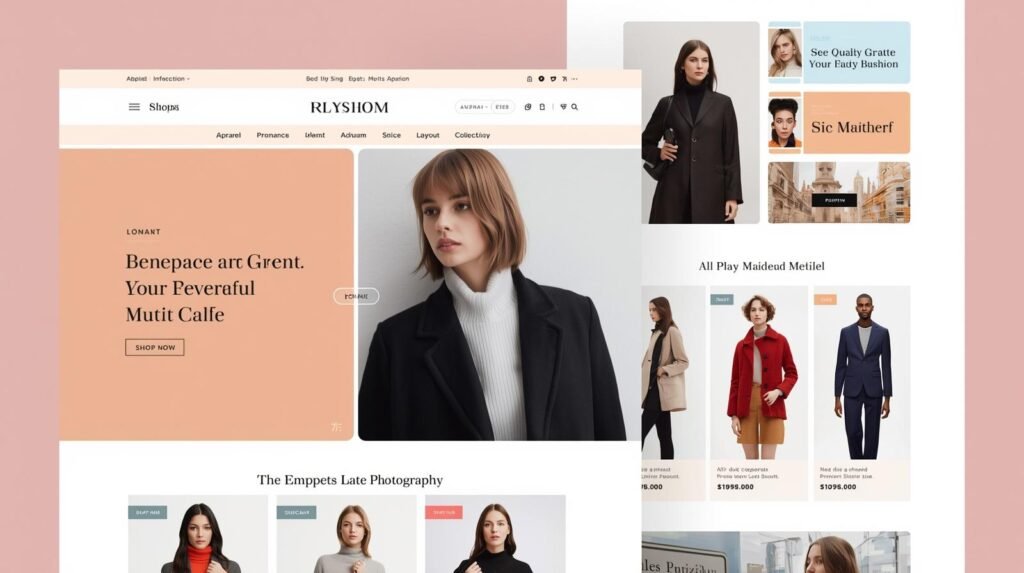
Why Fashion Ecommerce Design Directly Impacts Your Website Cost
One of the biggest factors that influences ecommerce website design cost is your industry—especially in fashion.
Fashion ecommerce is not just about listing products. It’s about creating a visual, emotional, and conversion-driven buying experience.
According to industry insights, modern fashion ecommerce has evolved into a data-driven, immersive experience where personalization and UX directly impact revenue
👉 This is why fashion websites often cost more to design—and deliver significantly higher ROI when done correctly. Read guide How Apparel Brands Increase Website Sales.
How to Choose the Right Ecommerce Website Designer
Look for:
- Ecommerce-specific experience
- Conversion-focused approach
- Clear communication process
- Understanding of global markets
👉 This ensures ROI—not just delivery.
Industry-Specific Design Matters
Beauty Ecommerce Design: Built for Trust, Visual Experience, and Repeat Purchases
Beauty ecommerce is fundamentally different from fashion or general retail.
Customers are not just buying a product—they are buying:
- Trust
- Results
- Personal transformation
That’s why beauty ecommerce websites must be designed to reduce hesitation and build confidence instantly.
Why Beauty Ecommerce Requires a Different Design Approach
Unlike fashion, where visual appeal drives impulse purchases, beauty buyers are more cautious.
They ask:
- Will this product work for me?
- Is it safe for my skin type?
- Can I trust this brand?
👉 This means your website must do more than showcase products—it must educate, reassure, and convert.
FAQ — Ecommerce Website Design Cost in 2026
How much does an ecommerce website cost in 2026?
Typically $3,000 to $20,000+ depending on scope and strategy.
What are ongoing costs?
Platform fees, hosting, maintenance, and updates.
Why is ecommerce design expensive?
Because it includes UX, CRO, performance, and scalability.
Can I start cheap and upgrade later?
Yes—but it often costs more long-term.
How long does it take?
Usually 4–8 weeks.
Does design really impact revenue?
Yes. Better UX directly improves conversions.
What platform should I choose?
Shopify, WooCommerce, and Webflow are common options.
Is hiring overseas safe?
Yes—if the process is structured, transparent, and milestone-based.
Final Thoughts: The True Cost Is Lost Revenue
The biggest mistake founders make isn’t overspending.
👉 It’s underinvesting in the one asset that drives all revenue.
A high-performing ecommerce website:
- Converts better
- Builds trust
- Scales globally
Ready to Build an Ecommerce Store That Actually Sells?
You now know what the right investment looks like. The next step is a quick call — no pitch, no pressure. Just clarity on what your store needs and what it’ll cost to build it right.