Key Takeaways
- A redesigned Optometrist website improves patient bookings, search visibility, and digital trust simultaneously.
- Most eye clinic websites fail not because of lack of traffic, but because of poor UX, weak trust signals, and structural SEO problems.
- Modern Eye clinic website redesign strategies combine UX architecture, compliance visibility, Local SEO, and conversion-focused booking systems.
- International optometry practices must align with HIPAA (USA), GDPR (UK), and Local SEO signals (India).
- Strategic website redesign improves engagement signals that directly influence Google SERP ranking of website and Google Maps visibility.
A poorly structured Optometrist website can quietly reduce patient bookings, weaken search rankings, and damage trust before a patient ever enters the clinic.
Many clinics assume their Eye clinic website only needs a modern design refresh. In reality, most underperforming optometry websites suffer from deeper structural problems: unclear service pages, weak booking flows, missing trust signals, and incomplete SEO architecture.
In the USA, US optometry practices must also integrate HIPAA-aligned appointment systems that reassure patients their data is secure. In the UK, GDPR transparency and accessibility standards influence digital credibility. In India’s competitive metro markets, Local SEO and Google Maps ranking determine whether an eye clinic is even visible to potential patients.
Search engines and patients evaluate the same signals:
- Clarity of services
- Ease of booking
- Trust indicators
- Structured content
- Engagement behavior
If these elements are weak, redesigning colors or layouts will not solve the real problem.
A strategic website redesign focuses on performance, not aesthetics.
How Does an Optometry Website Redesign Improve Bookings?
A strategic optometry website redesign improves patient bookings by restructuring service pages, simplifying appointment flows, strengthening trust signals, and aligning the website with Local SEO and compliance standards. These improvements increase engagement signals such as time on page, booking completion rates, and Google Maps interactions, which directly influence search rankings and patient conversions.
This improves:
- Featured snippet eligibility
- AI extraction
- SEO clarity
The Real Problem: Why Eye Clinic Websites Fail
1. Outdated Website Architecture
Many clinics built their website years ago and simply update content occasionally. The underlying architecture often includes:
- Generic service pages
- Unstructured navigation
- Limited mobile usability
- Weak SEO structure
Search engines cannot understand expertise when services are buried in one long page.
Patients also struggle to understand what the clinic actually specializes in.
Modern optometry practices require structured digital systems that reflect the way patients search for care.
2. Booking Drop-Off Happens Quietly
Clinics often report that traffic exists but bookings remain inconsistent.
This usually happens because:
- Appointment forms are too long
- Booking buttons are hard to find
- Confirmation steps are unclear
- Mobile scheduling is difficult
Patients hesitate when uncertainty increases.
Clinics we’ve worked with frequently discover that the majority of drop-offs occur between the moment a patient clicks “Book Appointment” and the moment they complete the form.
UX friction kills conversions silently. Clinics looking to improve patient conversions should also understand how booking experience influences decision-making. Our guide on how optometrists can increase patient bookings with website UX explains the specific UX improvements that increase appointment completion rates.
Patient Behavior Data in Healthcare Websites
Research across healthcare websites shows that:
• Over 60% of medical searches begin on mobile devices
• Appointment forms longer than 6–8 fields significantly increase abandonment
• Trust signals such as credentials and reviews increase healthcare conversions
For optometry clinics, small UX improvements can dramatically affect patient booking behavior.
3. Weak Trust Signals
Healthcare decisions are trust-driven.
Patients visiting an Eye clinic website subconsciously evaluate credibility through:
- Doctor qualifications
- Clinic photos
- Testimonials
- Security indicators
When these signals are missing or poorly placed, hesitation increases.
Search engines also evaluate trust through engagement signals.
Low engagement often correlates with weak credibility cues.
4. Compliance Risks Reduce Patient Confidence
Healthcare websites operate under regulatory expectations.
For example:
USA
- HIPAA-aligned appointment systems
- Secure patient information handling
UK
- GDPR transparency
- Accessibility standards for medical websites
- NHS vs private practice clarity
India
- Increasing expectations around patient data handling
- Strong reliance on Local SEO and Google Maps visibility
Modern optometry practices require compliance visibility within the website experience.
When compliance signals are missing, patients become cautious.

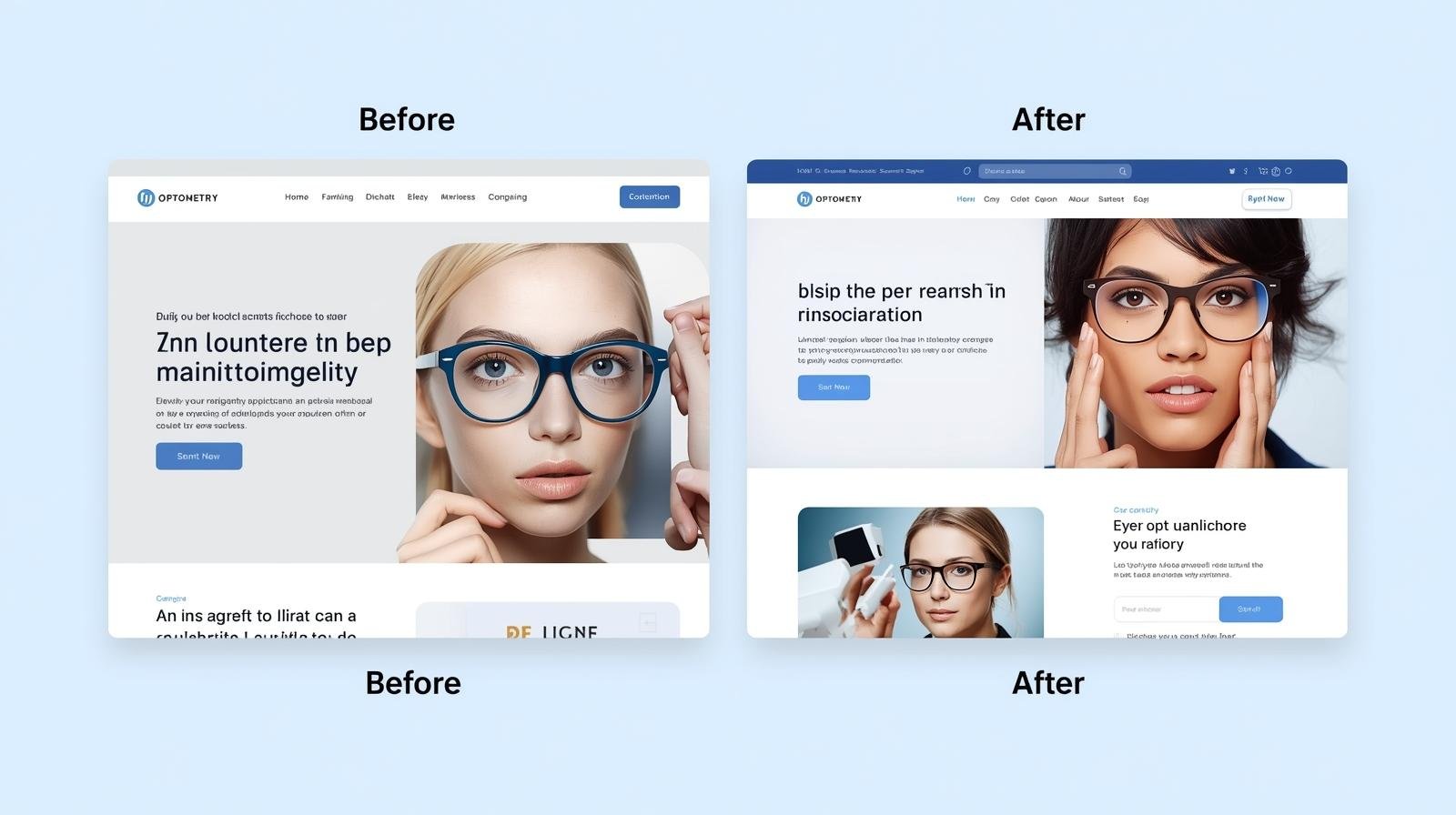
Before & After: What a Strategic Website Redesign Changes
A redesign is not about appearance.
It is about system performance.
Below is the structural transformation a proper redesign creates.
Before: Typical Underperforming Clinic Website
- One generic services page
- Poor Google Maps integration
- Long appointment forms
- Weak mobile usability
- Minimal SEO structure
- Limited trust indicators
Result:
- Lower rankings
- Booking drop-offs
- Higher dependence on ads
After: High-Performance Optometry Website
- Dedicated treatment pages
- Structured booking system
- Visible trust signals
- Local SEO optimization
- Technical performance improvements
- Compliance messaging
Result:
- Higher search visibility
- Improved patient engagement
- Stronger booking conversions
Comparison Table: Old vs Optimized Eye Clinic Website
| Element | Traditional Website | Redesigned Strategic Website |
| Service Pages | Combined generic page | Individual treatment pages |
| Booking UX | Long forms | Step-based appointment flow |
| Mobile Experience | Basic responsive design | Mobile-first UX |
| Trust Signals | Hidden | Integrated near booking actions |
| SEO Structure | Minimal | Structured SEO architecture |
| Compliance Signals | Rarely visible | Integrated into patient journey |
| Google Maps Signals | Weak | Local authority reinforced |
Strategic Redesign Framework for Optometry Clinics
A successful redesign follows five structural principles.
1. UX Designed Around Patient Behavior
Optometry patients search for solutions to specific problems.
Examples:
- Blurry vision
- Contact lens consultation
- LASIK surgery
- Pediatric eye exams
A redesigned website should include:
- Clear service hierarchy
- Simplified navigation
- Fast page load speed
- Mobile-friendly booking
UX should remove uncertainty.
Patients should understand what to do next within seconds.
2. Trust Signals Must Appear Where Decisions Happen
Trust should not be limited to the “About Us” page.
Instead, place trust indicators near key actions.
Examples:
- Doctor credentials near treatment pages
- Patient testimonials near booking forms
- Certifications near clinic information
- Insurance clarity before appointment scheduling
This reduces hesitation.
Trust must support conversion.
3. Compliance Must Be Visible
Compliance messaging increases confidence.
For example:
US optometry practices often include HIPAA-aligned messaging near appointment forms to reassure patients that sensitive medical information is handled securely. You can learn more about regulatory expectations in our guide on HIPAA compliance for optometry websites.
UK clinics highlight GDPR transparency and accessibility standards. Accessibility is especially important for optometry clinics because many website visitors may already experience vision challenges. Our article on WCAG accessibility standards for optometry websites explains how accessibility improves both compliance and patient usability.
Indian clinics benefit from clearly communicating data handling and secure appointment processes.
Compliance is not only legal.
It is psychological reassurance.
4. SEO Architecture Must Support Authority
Search engines prioritize structured expertise.
That means each major treatment must have:
- Dedicated landing page
- Clear headings
- Structured content
- Internal links
A strategic optometrist website design ensures search engines understand exactly what the clinic specializes in.
For broader healthcare services, structured design principles can also be seen in our Health & Wellness category.
Our approach as a medical website development specialist focuses on performance architecture rather than cosmetic redesign.
5. Local SEO Integration
Local visibility remains critical for healthcare practices.
Especially in competitive metro markets, clinics must strengthen:
- Google Maps ranking
- Local keyword signals
- Review authority
- Location consistency
Without Local SEO integration, even a redesigned website may struggle to rank.

Step-by-Step Optometry Website Redesign Process
A strategic redesign typically follows five phases:
1. Website Audit
Analyze booking drop-offs, SEO gaps, and engagement signals.
2. Service Architecture Rebuild
Create individual pages for each treatment or specialty.
3. UX & Booking Optimization
Design step-based appointment flows that reduce friction.
4. Trust & Compliance Integration
Place doctor credentials, certifications, and privacy signals near booking actions.
5. SEO & Local Authority Alignment
Optimize location pages, internal linking, schema markup, and Google Maps signals.
This structured process transforms a website from a digital brochure into a patient acquisition system.
Why Website Redesign Impacts SEO Performance
Google increasingly evaluates engagement signals.
These include:
- Time on page
- Booking interactions
- Bounce rate
- Navigation depth
A redesigned website improves these signals by:
- Making content clearer
- Simplifying booking
- Improving mobile usability
Better engagement signals strengthen SERP rankings.
International Market Considerations
A strong redesign strategy considers global digital standards.
USA
US optometry practices require:
- HIPAA-aligned appointment systems
- Secure patient data handling
- Transparent privacy messaging
UK
Healthcare websites must align with:
- GDPR data transparency
- Accessibility standards
- NHS/private practice distinction
India
Local competition makes these factors critical:
- Google Maps ranking
- Local SEO signals
- Competitive metro market visibility
Modern optometry practices require globally credible digital systems.
SEO + UX Redesign Checklist
Use this checklist to audit your current website.
Service Structure
>Separate page for each treatment
>Clear H1 and H2 hierarchy
>Structured FAQ section
Booking Experience
>Step-based appointment flow
>Clear confirmation message
>Mobile-optimized booking
Trust Signals
>Doctor qualifications visible
>Clinic photos included
>Patient testimonials displayed
Technical SEO
>Fast loading pages
>Mobile usability optimized
>Schema markup added
Local Authority
>Google Business optimized
>Reviews actively managed
>Location consistency maintained
Why Should an Optometrist Trust You to Build Their Website?
This is the most important question.
Optometry websites are different from standard business websites.
They involve:
- Sensitive patient data
- Accessibility needs
- Elderly user experience
- Medical credibility signals
- Competitive local search environments
Many designers focus on visual appearance.
Few understand optometry workflows.
Clinics we’ve worked with often approach us after experiencing:
- booking drop-offs
- poor Google Maps visibility
- declining search rankings
- weak patient engagement
Our design philosophy focuses on performance architecture.
In international markets like the USA and UK, structured compliance, accessibility, and trust signals define credibility.
That same strategic precision must exist in every modern optometry website.
You are not hiring a designer.
You are partnering with a specialist who understands medical search behavior and patient decision psychology.
That difference directly affects bookings and rankings.

Frequently Asked Questions
Why should optometry clinics redesign their website?
Because outdated architecture often reduces search visibility and patient conversions. A redesign aligns UX, SEO, and compliance signals.
How often should an eye clinic website be redesigned?
Most healthcare websites require a structural redesign every 4–6 years as digital standards evolve.
Does website design affect Google rankings?
Yes. Search engines evaluate engagement signals such as time on page, navigation behavior, and mobile usability.
Can a website redesign improve appointment bookings?
Yes. When booking flows are simplified and trust signals are visible, patient conversions increase significantly.
The Optometry Website Performance Formula
A high-performing eye clinic website aligns five critical layers:
- Structured service pages for SEO clarity
- Patient-centered UX design for booking conversions
- Trust signals that reinforce medical credibility
- Local SEO authority through Google Maps and reviews
- Technical performance that supports search visibility
When these layers work together, clinics see improvements in both patient bookings and search rankings.
Final Perspective
An optometry website redesign is not about modernizing visuals.
It is about building a system that supports:
- patient trust
- search visibility
- booking conversions
- compliance credibility
A properly structured Optometrist website becomes a digital extension of the clinic itself.
Search engines reward clarity, authority, and engagement.
Patients respond to trust and simplicity.
When a website redesign aligns SEO architecture, patient psychology, and booking UX, the result is not just a better-looking website — it becomes a reliable patient acquisition system.
If you’re an optometrist looking to build a compliant, high-converting website, explore our Optometrist Website Design Services.