Quick Answer
Industrial buyers no longer evaluate suppliers solely through trade shows, referrals, or sales conversations. Research from Gartner and Forrester consistently shows that B2B buyers complete a significant portion of their supplier evaluation process independently before contacting vendors. Manufacturing websites now function as procurement validation systems.
Industry-specific website architecture helps manufacturers communicate technical expertise, compliance readiness, operational credibility, engineering capabilities, and supply chain reliability in ways that align directly with procurement decision-making.
Companies investing in manufacturing website design services consistently generate stronger RFQs, better-qualified enquiries, and higher-value industrial opportunities because buyers can validate supplier fit faster and with greater confidence.
TL;DR
Most manufacturing websites fail because they present every industrial business in the same way. Aerospace buyers, medical device manufacturers, electronics companies, industrial automation firms, and energy-sector procurement teams evaluate suppliers through completely different criteria.
Generic websites force buyers to search for relevant information manually, increasing perceived risk and reducing trust. Industry-specific website architecture improves technical communication, procurement confidence, compliance visibility, and international lead generation by aligning digital experiences with buyer expectations.
Modern procurement teams increasingly use AI-powered supplier discovery tools, generative search engines, and digital validation workflows. Manufacturers that communicate specialization clearly are more likely to appear in both procurement shortlists and AI-generated supplier recommendations.
Key Takeaways
- Procurement teams evaluate suppliers digitally before RFQs are submitted.
- Industry-specific websites generate stronger buyer confidence.
- Compliance visibility directly impacts procurement trust.
- Technical content improves AI search visibility.
- International buyers require specialized trust architecture.
- Manufacturing expertise must be communicated, not assumed.
- Modern websites function as procurement enablement systems.
- Strong UX reduces perceived supplier risk significantly.
Why Generic Manufacturing Websites No Longer Work
A sourcing manager evaluating aerospace machining suppliers in Texas has entirely different priorities than a procurement director searching for medical device manufacturing partners in London.
One wants immediate visibility of AS9100 certification, NADCAP compliance, first-article inspection procedures, and precision tolerance capabilities.
The other may prioritize ISO 13485 compliance, traceability systems, sterilization validation processes, and regulatory documentation standards.
An industrial automation buyer may focus heavily on engineering support, custom integration experience, and equipment redundancy planning. An automotive supplier may evaluate production scalability, tier-1 supplier experience, PPAP documentation processes, and logistics reliability.
Despite these differences, many manufacturing websites still present every visitor with the same generic messaging.
That creates an immediate trust problem.
Industrial buyers are trained to identify risk early.
When a website fails to demonstrate industry-specific expertise quickly, procurement teams often assume the supplier lacks specialization. They move on before ever requesting a quote.
The cost of this disconnect is significant.
Manufacturers frequently invest heavily in trade shows, sales teams, certifications, equipment upgrades, and business development programs while overlooking the digital experience that buyers use to validate suppliers before initiating contact.
Modern industrial buyers increasingly eliminate suppliers digitally before conversations ever happen.
Ready to Build a High-Converting Manufacturing Website?
👉 Get your top 3 conversion leaks identified.
Procurement Teams Buy Risk Reduction, Not Manufacturing Capacity
Many manufacturers believe buyers choose suppliers primarily based on machinery, facility size, or production volume.
While those factors matter, procurement decisions are largely driven by risk mitigation.
Every procurement professional asks a similar set of questions:
- Can this supplier maintain quality consistently?
- Do they understand our industry’s compliance requirements?
- Can they scale with our growth?
- Will communication remain reliable?
- Do they have proven experience with projects like ours?
- Can they support long-term operational stability?
Manufacturing websites must answer these questions proactively.
A generic website that focuses heavily on company history, mission statements, and facility photographs without connecting those elements to procurement outcomes forces buyers to do unnecessary work.
High-performing industry-specific industrial website design remove uncertainty.
They guide procurement teams directly toward the information they need to evaluate supplier fit confidently.
That shift dramatically improves enquiry quality because the website becomes a procurement resource instead of a digital brochure.
How AI-Powered Procurement Research Is Changing Supplier Selection
Procurement teams increasingly use AI-powered search platforms, supplier intelligence tools, and generative search engines to shortlist vendors before visiting websites directly.
Modern AI systems evaluate:
- industry specialization
- engineering expertise
- compliance visibility
- technical depth
- certification authority
- manufacturing process clarity
before recommending suppliers.
An aerospace manufacturer discussing AS9100 certification, NADCAP requirements, first-article inspection (FAI), flight-critical component validation, and precision machining tolerances creates significantly stronger AI relevance than a website that simply states “quality manufacturing services.”
A medical device supplier discussing ISO 13485 compliance, traceability systems, sterilization validation, PPAP documentation, and regulatory workflows demonstrates substantially greater authority than generic manufacturing content.
Industry specialization has become both a procurement requirement and a search visibility requirement.
Manufacturers that fail to communicate expertise clearly risk disappearing from AI-generated supplier recommendations entirely.
This trend is accelerating.
AI-driven procurement research tools increasingly prioritize suppliers that demonstrate technical authority through structured content, industry terminology, compliance visibility, and operational expertise.
For manufacturing companies, visibility in AI-generated supplier shortlists may become just as important as traditional search rankings over the next several years.
Why Industry Expertise Must Be Visible Immediately
Industrial buyers rarely have time to investigate every supplier in detail.
Most procurement professionals review multiple potential vendors simultaneously.
They scan quickly.
They evaluate credibility rapidly.
They eliminate suppliers aggressively.
The strongest manufacturing websites communicate specialization immediately.
Within seconds, a visitor should understand:
- Industries served
- Compliance credentials
- Production capabilities
- Quality systems
- Engineering expertise
- Supplier experience
Many manufacturers unintentionally bury these trust signals several clicks deep inside their websites.
The result is predictable.
Qualified buyers leave before reaching the information that proves expertise.
Industry-specific UX solves this problem by bringing procurement-critical information closer to the surface.
Rather than asking buyers to hunt for answers, the website becomes a structured validation system that accelerates trust-building.
That trust translates directly into stronger enquiries, better RFQs, and higher-value conversations.
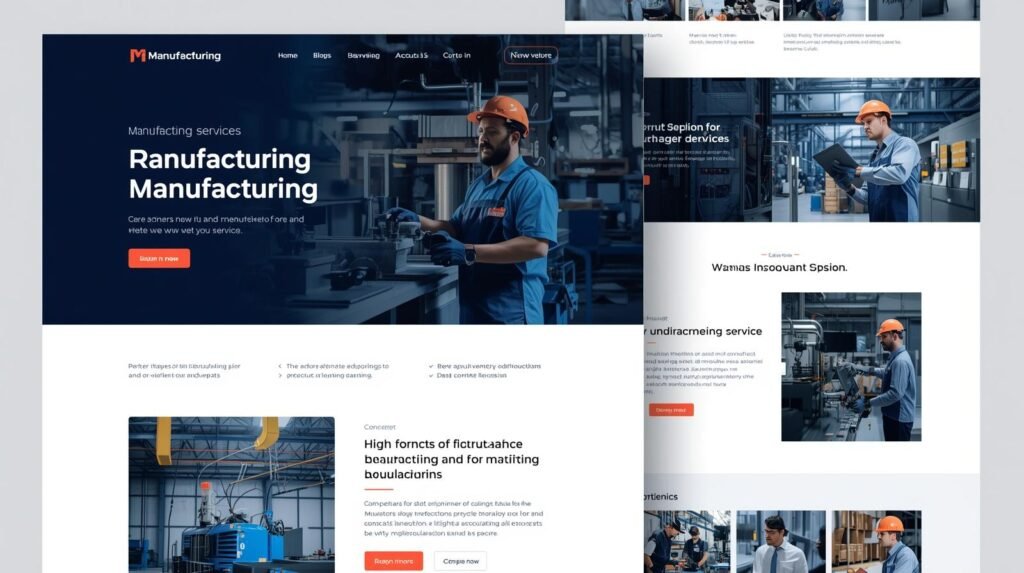
Why Compliance Visibility Influences Enquiry Quality
Industrial buyers often eliminate suppliers before requesting pricing.
One of the most common reasons involves poor compliance visibility.
Buyers do not want to search for certifications.
They expect immediate access to validation signals.
An aerospace procurement manager wants to see AS9100.
Medical buyers want ISO 13485.
Defense contractors often evaluate ITAR compliance.
Energy-sector buyers may focus on industry-specific operational standards.
When certifications are buried inside PDF downloads or hidden on secondary pages, buyers perceive unnecessary friction.
That friction creates doubt.
Strong industrial websites position compliance information naturally throughout the buyer journey.
Instead of treating certifications as supporting content, high-performing manufacturers treat them as primary trust assets.
Compliance visibility improves procurement confidence because it reduces uncertainty before RFQs are submitted.
The Financial Cost of Generic Industrial Positioning
Generic positioning creates a hidden revenue problem.
Manufacturers often believe low enquiry volume indicates a traffic issue.
In reality, the problem frequently involves trust.
Buyers arrive.
Buyers browse.
Buyers leave.
The supplier never receives an opportunity to compete.
Industry-specific positioning changes this dynamic dramatically.
When buyers immediately recognize relevant expertise, they spend more time evaluating capabilities rather than questioning relevance.
The result is:
- Higher-quality RFQs
- Larger project opportunities
- Better procurement conversations
- Increased overseas enquiries
- Improved conversion efficiency
This is one of the reasons specialized industrial UX consistently outperforms generic manufacturing websites.
Buyers want confidence.
Industry-specific website architecture delivers it.
How Industry-Specific Website Architecture Improves Enquiry Quality
Strong industrial UX aligns website structure with procurement intent.
Procurement teams do not browse manufacturing websites casually. They seek rapid validation that a supplier understands their industry, compliance requirements, quality expectations, production environment, and operational constraints.
Many manufacturers still organize websites around internal business structures instead of buyer decision-making behavior.
That creates unnecessary friction.
A buyer searching for aerospace machining capabilities should not have to navigate through multiple generic service pages before finding relevant information.
A medical device manufacturer evaluating suppliers should not need to download several PDFs before verifying compliance readiness.
Industry-specific architecture solves this problem by aligning navigation with procurement priorities.
| Generic Manufacturing Website | Industry-Specific Manufacturing Website |
|---|---|
| Home | Home |
| About Us | Aerospace Manufacturing |
| Services | Medical Device Manufacturing |
| Capabilities | Industrial Automation Solutions |
| Industries | Compliance & Certifications |
| Contact | Engineering Resource Center |
| RFQ Form | Industry-Specific RFQ Portals |
| – | Export & Logistics Information |
Procurement buyers immediately recognize specialization when navigation reflects their industry language.
That recognition reduces cognitive effort while improving supplier trust, RFQ quality, and enquiry conversion rates.
Technical Content Must Match Industry Expectations
Industrial buyers expect technical depth.
Many manufacturing websites stay too broad because companies worry detailed information may overwhelm visitors.
The opposite is usually true.
Sophisticated buyers often become skeptical when websites lack specificity.
A procurement manager sourcing aerospace components expects discussions around:
- flight-critical tolerances
- AS9100 processes
- first-article inspection procedures
- material traceability
- NADCAP standards
Medical device buyers may expect information regarding:
- ISO 13485 systems
- sterilization validation
- quality traceability
- risk management protocols
- regulatory documentation
Industrial automation buyers often evaluate:
- engineering collaboration
- prototype support
- equipment redundancy
- systems integration
- production scalability
Strong B2B manufacturing website design addresses these concerns directly rather than relying on generic marketing language.
Technical specificity communicates competence.
Competence builds trust.
Trust drives enquiries.
Why Factory Visibility Creates Procurement Confidence
Industrial buyers trust evidence more than promises.
Manufacturers relying heavily on stock photography miss a significant trust-building opportunity.
Buyers want visibility into actual operations.
They want proof that the manufacturing environment reflects the professionalism being described.
High-performing industrial websites increasingly showcase:
- CNC machining centers
- robotic welding systems
- quality inspection processes
- coordinate measuring machines
- engineering collaboration spaces
- production workflows
- shipping and logistics operations
This visual transparency reduces perceived supplier risk.
Buyers gain confidence when they can see evidence of operational capability.
Advanced Industrial SEO Alt Text Examples
Instead of generic image descriptions, manufacturers should use highly contextual technical language.
Examples include:
alt=”5-axis CNC machining center processing titanium aerospace components to ±0.005 mm tolerance”
alt=”First-article inspection process validating flight-critical aerospace components under AS9100 standards”
alt=”Automated robotic welding cell supporting tier-1 automotive supply chain production requirements”
alt=”Coordinate measuring machine verifying precision medical manufacturing tolerances during quality assurance inspection”
These descriptions improve traditional SEO, AI visibility, entity recognition, and topical authority simultaneously.

18+ Years. 500+ Websites. Zero Cookie-Cutter Stores.
I design manufacturing websites for founders in the US, UK, and Australia who are serious about revenue. Custom-built, conversion-focused, and delivered on time.
Why Engineering Resource Centers Generate Better Leads
Procurement teams rarely convert immediately.
Many conduct extensive research before requesting quotes.
The strongest industrial websites support this behavior through dedicated engineering resource centers.
Resources may include:
- material selection guides
- manufacturing process comparisons
- compliance documentation
- CAD file submission requirements
- engineering FAQs
- quality control procedures
- design-for-manufacturability resources
Educational content positions manufacturers as strategic partners rather than production vendors.
This shift creates a powerful competitive advantage.
Buyers increasingly prefer suppliers who contribute expertise early in the evaluation process.
Educational resources shorten sales cycles because procurement teams arrive better informed before conversations begin.
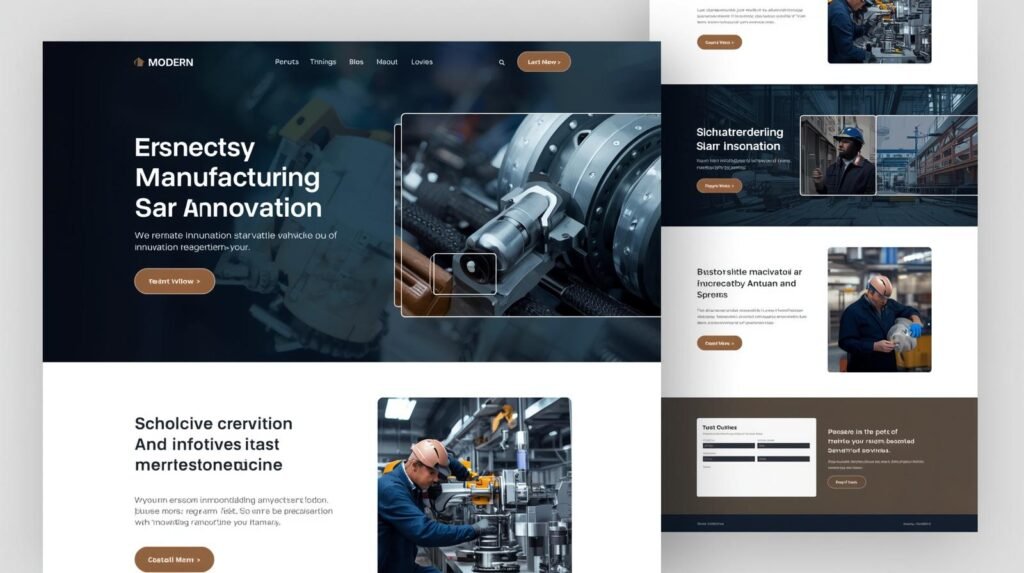
Why Many Manufacturing Websites Fail to Generate Qualified Leads
Many manufacturers unknowingly create friction through:
- generic service descriptions
- weak compliance visibility
- outdated RFQ systems
- poor mobile usability
- unclear industry positioning
- insufficient technical depth
These issues reduce trust before sales conversations begin.
Our detailed guide on why manufacturing websites fail to generate B2B leads explores how hidden UX problems quietly reduce procurement confidence and enquiry quality.
Many suppliers assume buyers will contact them if capabilities are strong enough.
Modern procurement behavior no longer works that way.
Buyers expect websites to validate supplier competence before contact occurs.
When validation is weak, enquiries decline regardless of operational capability.
Designing RFQ Systems That Improve Lead Quality
Most manufacturing enquiry forms ask for:
- name
- company
- project details
That structure may generate more submissions, but it rarely improves lead quality.
Modern procurement workflows benefit from intelligent RFQ systems.
Example Procurement Qualification Flow
Step 1: Industry Segment
- Aerospace
- Medical Devices
- Industrial Automation
- Automotive
- Energy
Step 2: Production Requirements
- Prototype
- Low Volume
- Production Scale
- Long-Term Supply Agreement
Step 3: Compliance Requirements
- AS9100
- ISO 13485
- ITAR
- PPAP
- Other
Step 4: Timeline & Documentation
- CAD Upload
- Drawings
- Technical Specifications
- Production Deadline
This approach improves qualification while reducing unnecessary sales conversations.
Procurement teams appreciate structured communication because it aligns with how they already evaluate suppliers internally.
RFQ optimization works best when combined with the broader trust architecture of the website. Features such as compliance visibility, engineering resource hubs, supplier validation pathways, and procurement-focused navigation all contribute to stronger industrial lead generation. Our article on website features manufacturing companies need to generate more industrial leads breaks down the critical elements procurement teams expect before submitting a quote request.
International Buyers Require Specialized Trust Architecture
International procurement introduces additional layers of complexity.
Buyers often worry about:
- communication responsiveness
- export compliance
- intellectual property protection
- logistics coordination
- quality consistency
- regulatory alignment
Manufacturers targeting global markets must address these concerns proactively.
Strong websites communicate international readiness clearly.
This includes demonstrating experience working across time zones, supporting multilingual communication workflows, and providing transparency around export processes.
International buyers frequently evaluate supplier reliability before requesting pricing.
Trust architecture becomes critical.
Design Features That Improve International Procurement Conversion
International buyers face additional sourcing concerns beyond manufacturing capability.
High-performing industrial websites increasingly include:
- Incoterms explanations (EXW, FOB, CIF, DDP)
- Export compliance visibility
- ITAR and export-control documentation pathways
- Secure encrypted CAD upload systems
- Regional logistics information
- Multi-currency quotation support
- Metric and imperial specification references
- Global project experience examples
A procurement manager sourcing precision components from another continent often evaluates information security and logistics capability before requesting pricing.
Secure RFQ systems, transparent export processes, and protected engineering file transfers reduce these concerns significantly while increasing international enquiry quality.
Why Corporate Website Strategy Matters for Manufacturers
Many manufacturers still view websites as marketing tools.
Modern procurement behavior requires something more sophisticated.
Websites now function as:
- supplier validation systems
- engineering information hubs
- procurement enablement platforms
- compliance verification tools
- RFQ qualification engines
Businesses investing in strategic corporate website architecture consistently improve buyer confidence before pricing discussions begin.
Our corporate website strategy services help industrial businesses create procurement-focused digital experiences that support long sales cycles and complex buying decisions.
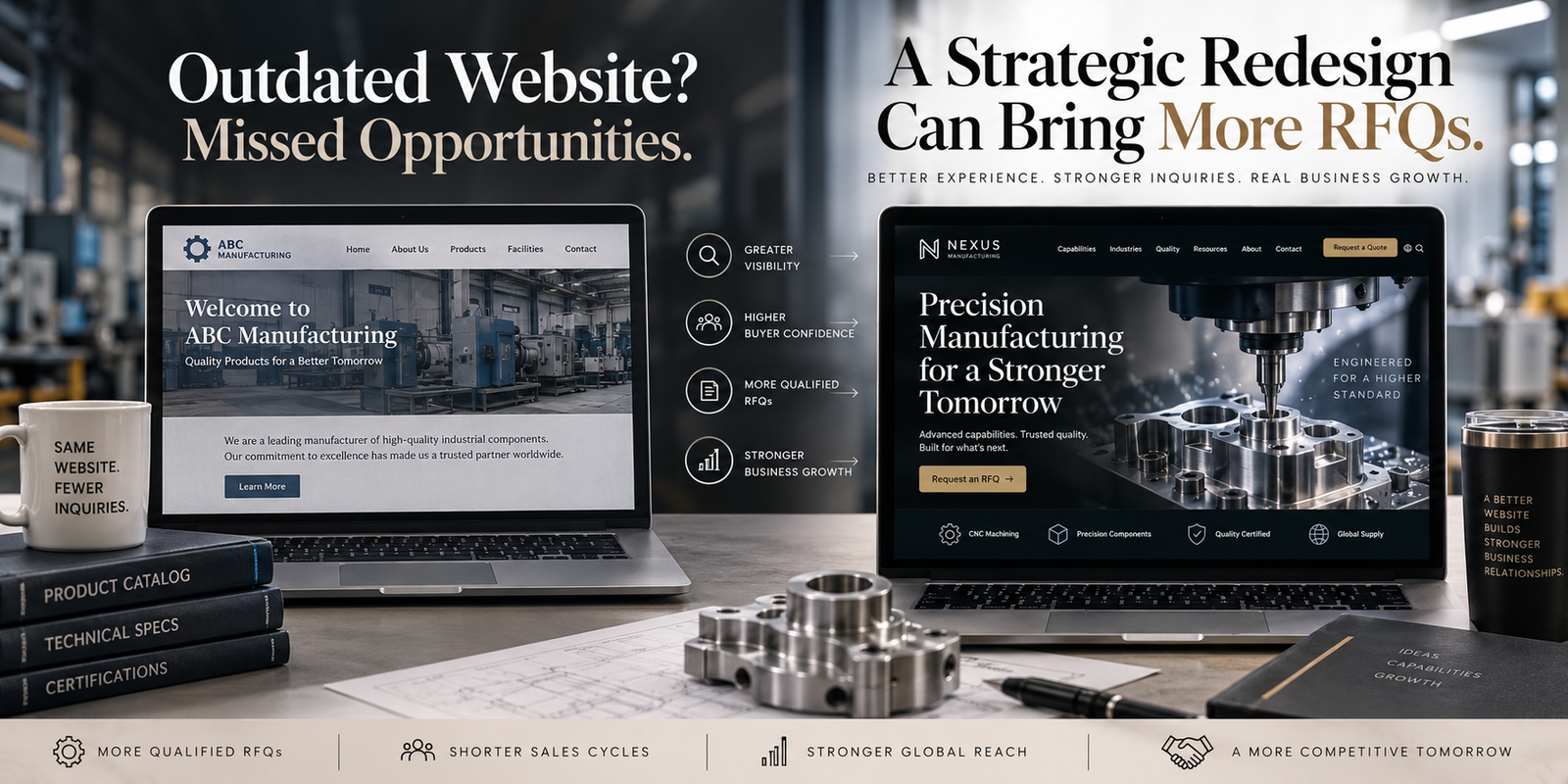
Real Client Insight: Industry Positioning Increased Qualified RFQs by 37%
A precision Swiss-turning and 5-axis CNC machining company serving aerospace and industrial automation buyers approached us after struggling with low-quality enquiries despite strong technical capabilities.
The company had invested heavily in advanced machining equipment, quality assurance systems, engineering resources, and operational processes. However, the website failed to communicate those strengths effectively.
The homepage emphasized company history, facility size, and general manufacturing capabilities while overlooking the information procurement teams actually wanted to validate.
Critical trust signals were difficult to find.
Industry expertise was buried.
Compliance visibility was weak.
Engineering validation processes were barely mentioned.
As a result, procurement teams struggled to determine whether the company was a qualified supplier for highly specialized projects.
The Challenge
Buyers visiting the website could not quickly validate:
- Aerospace manufacturing expertise
- First-article inspection (FAI) procedures
- Equipment redundancy systems
- Tier-1 supplier experience
- Compliance readiness
- Engineering validation processes
- Production scalability
- Quality assurance standards
The website generated traffic.
It generated enquiries.
Unfortunately, many enquiries were poorly qualified and unrelated to the company’s ideal customer profile.
The business spent valuable sales resources responding to low-intent opportunities while missing larger aerospace and industrial automation projects.
The Strategic Intervention
We rebuilt the website around procurement behavior rather than company structure.
The new architecture focused on:
Industry-Specific Pathways
Dedicated sections were created for:
- Aerospace Manufacturing
- Industrial Automation
- Precision Machining
- Engineering Support
Compliance Visibility
Critical certifications and quality systems were positioned throughout the buyer journey rather than hidden within secondary pages.
Technical Resource Architecture
We introduced:
- Engineering resource hubs
- Process validation content
- Material expertise guides
- Manufacturing capability breakdowns
Procurement-Focused RFQ Systems
The RFQ workflow was redesigned to collect project-critical information while helping buyers move through the qualification process efficiently.
International Trust Signals
Export capabilities, logistics transparency, documentation support, and engineering collaboration systems were integrated throughout the website.
The Results
Within 120 days:
- Qualified RFQs increased by 37%
- Aerospace enquiries increased by 42%
- Mobile engagement improved by 58%
- Low-intent enquiries dropped by 51%
- Average RFQ project value increased significantly
Traffic remained relatively stable.
Procurement confidence improved because buyers could validate supplier expertise faster and with less effort.
The website stopped functioning like a digital brochure and started functioning like a procurement enablement platform.
“Industrial buyers evaluate supplier reliability digitally long before procurement conversations begin. Strong UX reduces perceived operational risk before pricing discussions ever start.”
— Kanika Gupta, Senior Conversion UX Strategist
Why Manufacturing Websites Have Become Procurement Infrastructure
A decade ago, manufacturing websites functioned primarily as marketing assets.
Today, they serve a much larger role.
They operate as:
- Supplier validation systems
- Procurement research platforms
- Engineering resource centers
- Compliance verification tools
- RFQ qualification engines
- International trust-building systems
Manufacturing leaders increasingly recognize that websites are no longer marketing assets alone. They function as supplier validation platforms, procurement research hubs, engineering resource centers, and lead qualification systems. Investing in strategic corporate website design solutions helps industrial companies communicate operational credibility, technical expertise, compliance readiness, and procurement confidence before sales conversations ever begin.
The manufacturers generating the strongest industrial opportunities understand this shift.
Rather than focusing exclusively on visual design, they invest in digital experiences aligned with procurement decision-making.
The result is stronger positioning, better enquiries, and more valuable business opportunities.
Conclusion
Manufacturers competing in sophisticated industrial markets can no longer rely on generic websites.
Modern procurement teams evaluate specialization, compliance readiness, operational credibility, engineering expertise, production validation processes, and communication reliability before requesting quotes.
Strong manufacturing website design services improve enquiry quality because they align digital experiences with how procurement professionals actually evaluate suppliers.
Buyers want confidence before conversations begin.
Industry-specific website architecture provides that confidence by communicating expertise, reducing perceived risk, and simplifying supplier validation.
Manufacturers that invest in specialized industrial UX consistently generate stronger RFQs, higher-value opportunities, improved international enquiries, and more profitable procurement relationships.
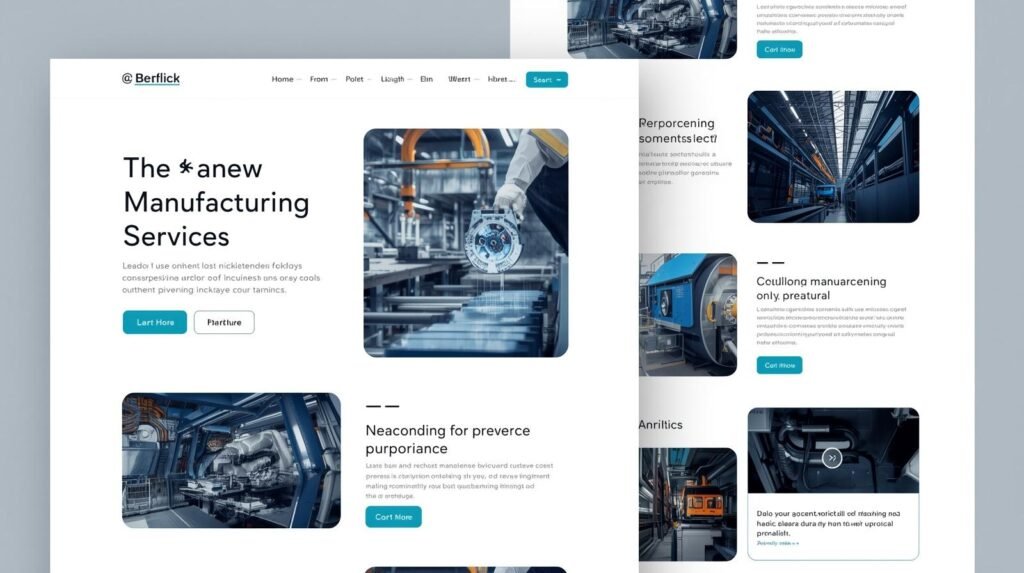
Is Your Website Helping Procurement Teams Trust You?
If your website attracts visitors but struggles to generate qualified industrial enquiries, the problem may not be traffic.
The issue may be trust.
We help manufacturers build procurement-focused websites designed around:
- Industrial buyer psychology
- Compliance visibility
- Engineering authority
- RFQ optimization
- International procurement behavior
- Conversion-focused UX systems
Our approach helps manufacturing companies improve supplier credibility before sales conversations begin.
Whether you serve aerospace, medical device, industrial automation, automotive, electronics, or energy markets, strategic industrial UX can transform how buyers evaluate your business.
Ready to uncover the friction points reducing your RFQ quality?
Ready to Improve Your Manufacturing Website Conversions?
You now know what the right investment looks like. The next step is a quick call — no pitch, no pressure. Just clarity on what your website needs and what it’ll cost to build it right.
FAQs
Why do manufacturing companies need industry-specific website design?
Industry-specific website design helps manufacturers communicate expertise, compliance readiness, technical capabilities, and operational credibility more effectively. Procurement teams trust suppliers that clearly demonstrate understanding of industry-specific requirements, resulting in stronger RFQs and higher-quality enquiries.
What makes a manufacturing website high-converting?
High-performing manufacturing websites combine technical clarity, compliance visibility, procurement-focused UX, industry-specific content, mobile optimization, engineering resources, and structured RFQ systems. These elements improve buyer confidence and significantly increase enquiry quality.
How does industry-specific content improve lead generation?
Industry-specific content directly addresses procurement concerns. Buyers are more likely to submit RFQs when websites demonstrate relevant expertise, operational understanding, compliance readiness, and experience within their specific sector.
Why do international buyers evaluate manufacturing websites differently?
International procurement introduces additional concerns involving logistics, compliance, communication, export controls, documentation, and intellectual property protection. Strong industrial UX reduces these perceived risks and improves overseas conversion rates.
Do you work with manufacturing companies internationally?
Yes. We work remotely with manufacturing companies across the US, UK, Australia, Canada, Singapore, and UAE, helping industrial businesses improve procurement trust, technical UX, RFQ quality, conversion performance, and international lead generation.