
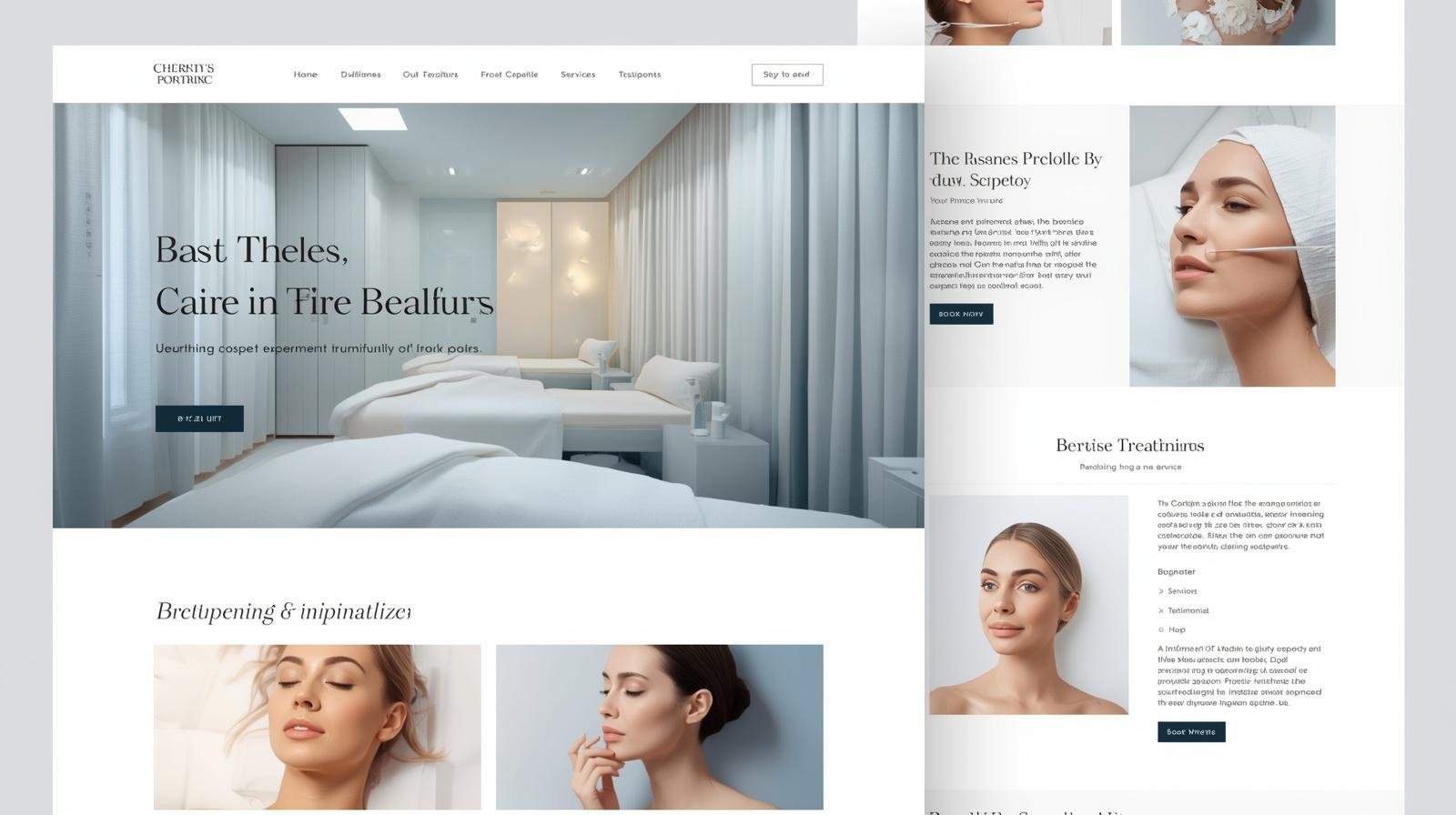
An aesthetic clinic website design project in 2026 typically ranges from $5,000 to $25,000+ depending on strategy, conversion planning, content architecture, SEO requirements, integrations, and custom functionality. The most successful clinics no longer view their website as a digital brochure. They view it as a patient acquisition system designed to build trust, increase consultation requests, and support long-term business growth.
| Website Tier | Investment | Core Architecture | Built-in Conversion Tech | Major Growth Cap |
|---|---|---|---|---|
| DIY Builder | $500 – $2,000 | Monolithic, shared hosting, generic templates | Standard email form blocks | Rigid layout blocks; zero page-speed control |
| Template Agency | $2,000 – $5,000 | Heavily bloated pre-built commercial themes | Third-party plugin overlays | Blind tracking setups; poor custom API flexibility |
| Custom Clinic Site | $5,000 – $12,000 | Clean database architecture, custom theme layout | Asynchronous forms, native API calendar sync | Limited localized compliance or multi-currency handling |
| Premium Conversion Platform | $12,000 – $25,000+ | Headless CMS options or tailored high-speed frameworks | Multi-variant CTAs, unified CRM/EHR pipelines | High upfront strategic planning phase |
| Enterprise Platform | $25,000 – $75,000+ | Multi-tenant engine, international CDNs | Dynamic localization, localized currency engines | Demands continuous internal management |
A consultation-generating website requires significantly more planning than a brochure website.
Trust signals influence patient decisions long before pricing discussions begin.
A decade ago, clinic websites existed primarily to provide contact information, treatment descriptions, and basic business details. The expectations placed on clinic websites today are dramatically different.
Patients now evaluate clinics online with the same scrutiny they apply to practitioners themselves. Whether someone is researching injectable treatments in Manhattan, comparing skin rejuvenation providers in London, or exploring advanced cosmetic procedures in Sydney, the website often becomes the first consultation experience.
Modern patients compare:
A website must now function as a marketing asset, educational platform, trust-building tool, and conversion engine simultaneously.
That complexity directly influences development costs.
One reason pricing conversations often become confusing is because clinic owners compare websites based on appearance rather than business function.
At KG Web Designer, we evaluate websites using what we call the 2026 Digital Patient Pipeline Framework.
This framework focuses on five layers that directly influence consultation generation.
| Layer | Purpose | Business Impact |
|---|---|---|
| Discovery Layer | SEO, local visibility, AI search presence | Generates qualified traffic |
| Trust Layer | Reviews, credentials, expertise positioning | Reduces patient hesitation |
| Education Layer | Service content and treatment education | Improves confidence |
| Conversion Layer | Booking pathways and consultation requests | Generates leads |
| Retention Layer | Follow-up engagement and patient nurturing | Supports long-term growth |
Many low-cost websites focus heavily on visual design while neglecting the layers responsible for patient acquisition.
The result is a website that looks attractive but struggles to produce measurable business outcomes.
If your treatments are premium but your enquiries are price-sensitive, your website may be creating the wrong first impression. A refined clinic website can help position your brand for higher-value consultations.
Explore Aesthetic Clinic Website Design →Website pricing is rarely determined by colors, fonts, or visual styling alone.
The most significant cost drivers are usually strategic planning, custom functionality, conversion architecture, content structure, and technical implementation.
For example, a booking system may appear straightforward from the outside. However, premium clinics often require automated consultation workflows, calendar synchronization, reminder systems, CRM integrations, mobile optimization, and deposit collection capabilities.
Similarly, treatment galleries are no longer simple image collections.
Modern patient journeys increasingly depend on:
These elements require planning, development expertise, and ongoing optimization.
Many clinic owners evaluate websites based on visible features while overlooking the invisible systems responsible for performance.
A premium website may include:
These features are rarely visible to patients.
However, they directly influence consultation volume, operational efficiency, and long-term marketing performance.
A website that loads faster, tracks conversions accurately, and supports seamless booking experiences often creates a measurable competitive advantage.
One common mistake we notice is clinics budgeting primarily for website design while underestimating the value of patient acquisition infrastructure.
A website that generates even a small increase in qualified consultations each month can produce substantially greater long-term value than a cheaper alternative that fails to convert visitors effectively.
Viewed through that lens, pricing discussions become less about cost and more about business outcomes.
Founder, KG Web Designer • 18+ Years of Website Design & Growth Marketing
“After more than 18 years designing websites for clinics, healthcare providers, and professional service businesses, I have found that most pricing conversations begin with the wrong question.”
Many clinic owners ask:
A more useful question is:
A website designed to strengthen authority, support SEO growth, improve patient confidence, and increase consultation requests requires a completely different level of planning than a website built simply to establish an online presence.
The clinics generating stronger consultation pipelines are rarely the ones choosing the cheapest solution. They are typically the ones investing in trust architecture, patient psychology, conversion strategy, and long-term growth infrastructure.
That strategic difference is often reflected in pricing.
Get a free website audit and discover the trust gaps, conversion bottlenecks, and growth opportunities that may be limiting consultation requests.
Book Free Website Audit →Based on website audits we conducted across clinics, healthcare businesses, and premium service providers, one pattern appears consistently.
The primary issue is rarely traffic.
The primary issue is trust.
Visitors arrive on the website, browse treatments, review credentials, and explore practitioner profiles. Then they leave without taking action.
In many cases, the missing element is not visibility. It is confidence.
Strengthening trust architecture, consultation pathways, and patient education frequently improves performance without increasing advertising spend.
The largest investments in premium clinic websites are usually driven by business functionality rather than visual design.
Most clinic owners assume costs increase because of custom layouts or branding requirements. In reality, the most significant pricing factors often involve systems that improve patient acquisition, automate operations, and strengthen conversion performance.
For example, a consultation booking system may need to connect with calendars, automate reminders, collect deposits, trigger follow-up workflows, and integrate with CRM platforms. Each layer adds complexity but also improves efficiency and patient experience.
| Feature | Business Purpose | Investment Impact |
|---|---|---|
| Conversion Strategy Planning | Improves inquiry generation | High |
| Custom Branding | Strengthens market positioning | Moderate |
| Advanced SEO Architecture | Improves visibility | Moderate |
| CRM Integration | Improves lead management | Moderate |
| Automated Consultation Workflows | Improves operational efficiency | High |
| Multi-Location Functionality | Supports scalability | High |
| Interactive Treatment Finders | Improves engagement | High |
| Advanced Analytics & Attribution | Improves decision-making | Moderate |
| Multi-Currency Deposits | Supports international patients | High |
| EHR / Patient System Integration | Streamlines patient workflows | High |
The most expensive part of a website is rarely the design itself.
It is the strategy and infrastructure required to support growth.

Many clinic owners compare proposals by reviewing homepage designs.
Patients never evaluate websites that way.
Patients evaluate confidence.
A template website may look attractive initially, but premium clinics often require experiences that are tailored to their specific treatments, positioning, and patient journey.
| Website Component | Template Website | Premium Conversion Platform |
|---|---|---|
| Service Pages | Generic descriptions | Outcome-focused patient journeys |
| Practitioner Profiles | Basic biographies | Authority-building expertise positioning |
| Booking Experience | Standard forms | Optimized consultation pathways |
| Mobile Experience | Responsive | Mobile-first architecture |
| SEO Structure | Basic setup | Strategic visibility framework |
| Analytics | Limited tracking | Advanced attribution and conversion tracking |
| Competitive Positioning | Generic | Market-specific differentiation |
Patients may never see the technical work behind a premium website.
They experience the results through greater clarity, stronger trust, and easier decision-making.
Many clinics spend substantial amounts on professional photography while underinvesting in messaging, trust-building content, and consultation pathways.
Photography absolutely matters.
However, patients rarely request consultations because images look attractive.
They request consultations because uncertainty has been reduced.
The strongest websites answer critical questions before patients need to ask them.
Premium clinics increasingly operate in a global environment where patient expectations extend beyond visual design.
Privacy, compliance, and trust have become critical business considerations.
A clinic serving patients in New York, London, Sydney, Dubai, Singapore, or Toronto may face very different regulatory expectations.
| Market | Key Consideration |
|---|---|
| United States | HIPAA-conscious patient communication workflows |
| United Kingdom | GDPR compliance and transparent consent management |
| Australia | Privacy Act and healthcare advertising considerations |
| Singapore | PDPA compliance requirements |
| UAE | Multilingual patient experiences and localization |
| Canada | PIPEDA privacy management |
In highly regulated markets, compliance is more than a legal requirement.
It is a trust signal.
A London clinic operating without transparent GDPR consent management, a Singapore clinic collecting inquiries through non-PDPA-compliant forms, or a U.S. clinic using unsecured patient communication workflows risks more than penalties.
These oversights can immediately reduce confidence among prospective patients evaluating the professionalism of the practice.
One concept we frequently discuss with clinic owners is what we call the Consultation Confidence Gap.
This represents the distance between patient interest and patient action.
Many visitors who leave a website without contacting the clinic are not rejecting the service.
They are postponing a decision because uncertainty remains.
Questions such as:
Often remain unanswered.
The larger this confidence gap becomes, the lower consultation conversion rates tend to be.
High-end clients notice design quality, photography, trust signals, and booking flow within seconds. Let’s identify what your current website is communicating before patients ever contact you.
If you answer “No” to more than three of the questions below, your website may be limiting consultation requests.
This simple assessment often reveals opportunities that are invisible during day-to-day operations.

Imagine two aesthetic clinics operating in comparable markets.
Both offer similar treatments. Both have qualified practitioners. Both invest in marketing.
Clinic A uses a template-based website focused primarily on design.
Clinic B invests in a conversion-focused platform built around trust architecture, patient education, and consultation optimization.
Six months later, traffic levels remain relatively similar.
Consultation volume does not.
Clinic B consistently generates more inquiries because visitors feel more confident moving forward.
The difference is not visibility.
The difference is confidence.
At KG Web Designer, we reviewed a premium clinic website that had invested heavily in branding and marketing.
Traffic numbers looked healthy.
Visitors were exploring multiple service pages.
Yet consultation requests remained inconsistent.
The website provided information but failed to guide decision-making.
Practitioner expertise was difficult to find.
Trust signals appeared too late in the journey.
Consultation pathways contained unnecessary friction.
The website was restructured around patient psychology.
We improved:
Engagement improved because visitors found answers faster and gained confidence earlier in the process.
The lesson was clear.
Patients rarely convert because a website looks impressive.
They convert because they trust what they see.
Many clinics assume website performance depends primarily on visual design.
In reality, structure often plays a larger role.
The way trust signals are presented, how information is organized, and how consultation pathways are built frequently determine whether visitors become inquiries.
Our detailed guide on why some aesthetic clinic websites convert better and how to structure yours explores these conversion principles in greater depth.
Before increasing advertising budgets, evaluate whether your current website is limiting consultation requests.
Review:
Many clinics discover their biggest growth opportunities already exist inside their current website.
The highest-performing clinic websites are rarely the most visually complex.
They are often the easiest to understand.
Patients value clarity more than creativity.
When navigation becomes simpler, consultation pathways become clearer, and trust signals become more visible, conversion performance often improves.
Complexity impresses designers.
Clarity converts patients.
Premium treatment providers face unique challenges when communicating expertise online.
Patients want evidence of skill, safety, and expected outcomes before requesting consultations.
Our guide on website design strategies for dermatologists offering premium treatments explains how specialist providers build authority digitally while supporting stronger patient confidence and inquiry generation.
One of the biggest misconceptions in the aesthetics industry is that website pricing should be evaluated the same way clinics compare software subscriptions, photography packages, or marketing services.
Websites are not commodities.
Two projects may have similar page counts and visual designs yet produce completely different business outcomes.
The difference usually comes down to strategy.
A lower-cost website may provide pages, images, and contact forms.
A premium website often includes conversion planning, SEO architecture, patient journey mapping, consultation optimization, trust-building systems, analytics, and future scalability.
The challenge is that these elements are largely invisible during the proposal stage.
Many clinic owners therefore compare deliverables instead of comparing business impact.
That approach frequently leads to underinvestment in the very systems responsible for patient acquisition.
When clinics evaluate website investment solely through upfront pricing, they often overlook the financial consequences of poor performance.
A website that loses even a few qualified consultation opportunities every month can quietly create substantial revenue leakage over time.
Consider the cumulative impact of:
These losses rarely appear on financial statements.
However, they directly influence growth.
Many clinics eventually redesign websites not because the design looks outdated, but because the original platform was never built to support long-term patient acquisition.
Whether you operate a med spa, cosmetic clinic, wellness center, or luxury aesthetics practice, your website increasingly influences how patients evaluate your business.
Patients often form opinions long before they speak to your team.
They evaluate:
A website that communicates these qualities effectively creates a competitive advantage.
A website that creates uncertainty does the opposite.
This is one reason aesthetic clinic website development services have become more strategic in recent years.
Business owners are no longer investing in websites simply to establish an online presence.
They are investing in systems that support patient acquisition, brand positioning, and sustainable growth.
The strongest clinic websites reduce uncertainty before patients request consultations.
Trust-building architecture often influences conversion rates more than visual design alone.
After reviewing aesthetic clinic websites across the United States, United Kingdom, Australia, Canada, Singapore, and UAE, one pattern appeared repeatedly:
Most clinics focused heavily on treatments. Very few focused on patient decision-making.
Patients rarely request consultations because they understand a procedure. They request consultations because they trust the provider, feel confident about the process, and can clearly see the next step.
Patients evaluate credibility, practitioner expertise, reviews, and safety before they consider booking.
Clear treatment information, simple navigation, and visible consultation CTAs reduce hesitation.
A beautiful website is not enough. The layout must guide patients from interest to confidence.
Patient behavior is becoming increasingly consistent across major international markets.
Whether someone is researching treatments in Manhattan, London, Sydney, Singapore, Dubai, or Toronto, the decision-making process often follows similar patterns.
Patients want:
However, international growth introduces additional requirements.
Modern premium clinics increasingly require:
These features influence both user experience and business credibility.
The clinics investing early in these capabilities often position themselves more effectively for long-term growth.
A website is no longer an isolated marketing asset.
It has become part of the broader patient acquisition ecosystem.
The most successful clinics integrate their websites with:
This level of integration explains why custom med spa website design projects often require a larger investment than template-based alternatives.
The goal is not simply to publish content.
The goal is to create a connected growth platform that supports patient acquisition, operational efficiency, and future scalability.
Service presentation remains one of the most overlooked conversion factors in aesthetics.
Patients often decide whether to request a consultation based on how clearly services are explained, how outcomes are communicated, and how easy the next step feels.
Our detailed guide on how to present aesthetic services to increase consultation requests explores the structural decisions that influence patient confidence and inquiry generation.
An effective aesthetic clinic website design project involves far more than creating an attractive online presence.
The highest-performing websites combine patient psychology, trust-building architecture, conversion strategy, SEO foundations, and operational efficiency into a single system designed to support business growth.
Across website audits, strategy reviews, and client projects, we repeatedly observe the same pattern.
The clinics generating stronger consultation pipelines are not necessarily the ones spending the most on advertising.
They are often the ones making it easiest for patients to trust them.
As competition continues increasing across premium aesthetics markets, websites will play an even larger role in patient acquisition.
Patients evaluate expertise, professionalism, safety, convenience, and credibility long before contacting a clinic.
A website that supports those evaluations effectively becomes a measurable business asset.
Available Across US, UK & AU Time Zones
Fully Remote
No Commitment Required
An Aesthetic Clinic Website Audit provides a clear diagnostic of what may be helping or limiting your website’s performance.
During the audit, we will identify:
You will leave with a clearer understanding of where opportunities are being lost and what improvements can have the greatest impact.
If your clinic website feels outdated, crowded, or disconnected from your premium services, you may be losing high-value consultations before patients ever call. Let’s turn your website into a luxury trust-building experience.

Most professionally developed clinic websites range from approximately $5,000 to $25,000+ depending on branding requirements, SEO planning, content architecture, integrations, consultation workflows, and custom functionality. Enterprise-level projects may require larger investments.
Proposals often include very different levels of strategic planning. Some providers focus primarily on design and development, while others include SEO architecture, conversion optimization, analytics, consultation pathways, and long-term growth planning.
For clinics focused on growth, differentiation, and consultation generation, a custom website often provides greater long-term value. Custom solutions allow businesses to create experiences tailored to their patients, treatments, and competitive positioning.
Most custom projects require approximately 6 to 16 weeks depending on content requirements, integrations, approvals, branding needs, and overall project complexity.
Yes. Many clinics already receive sufficient traffic but struggle with conversion. Improving trust signals, service presentation, consultation visibility, and mobile usability often increases inquiry volume without additional advertising spend.
The most influential features typically include practitioner authority positioning, consultation-focused CTAs, patient education content, trust architecture, mobile-first experiences, SEO foundations, and streamlined inquiry pathways.
Yes. KG Web Designer works fully remotely with clinics across the United States, United Kingdom, Australia, Canada, Singapore, UAE, and other international markets. Projects are structured around clear communication, strategic planning, and measurable business outcomes.