
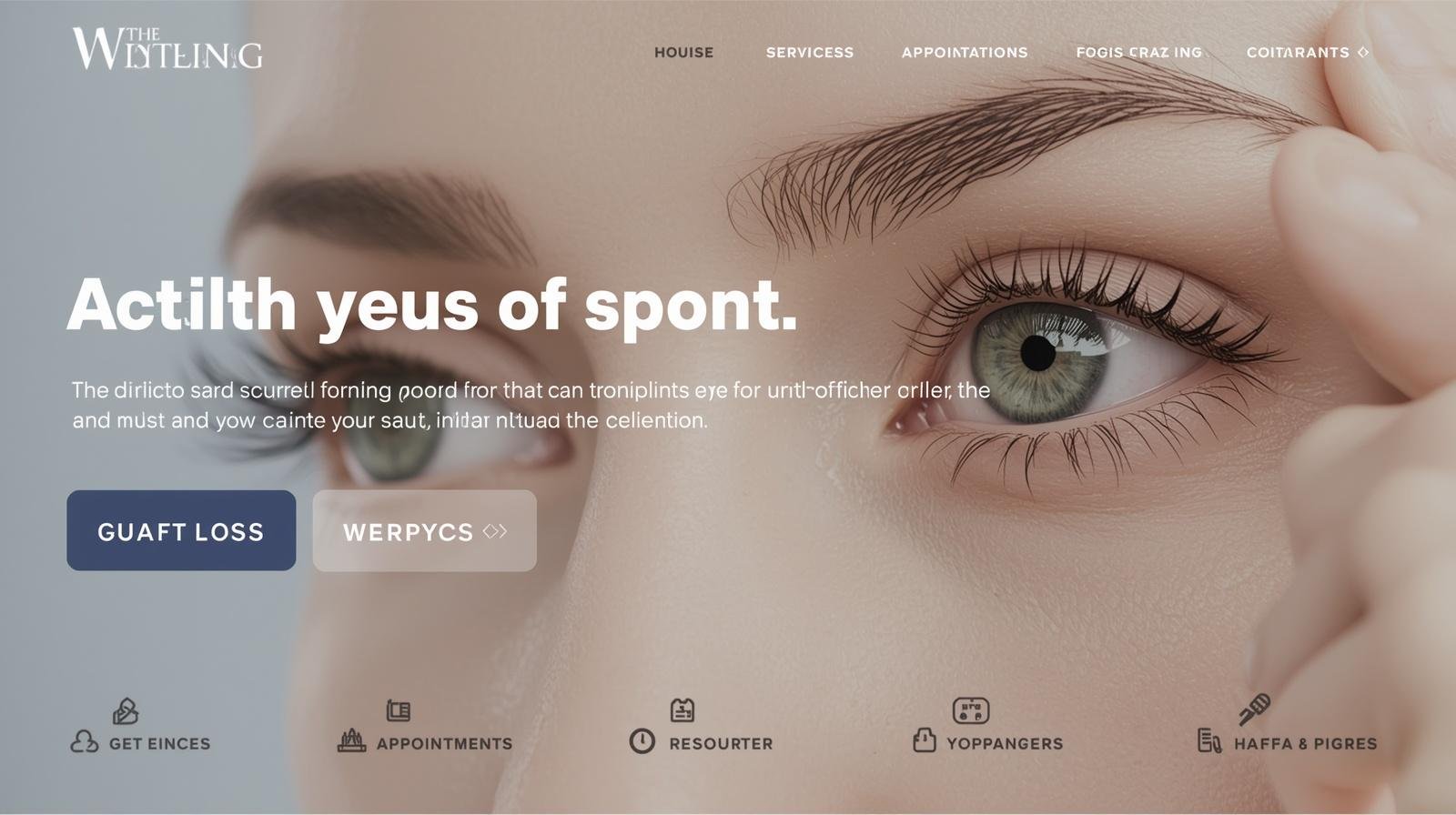
The highest-converting eye clinic websites showcase services through clear treatment segmentation, trust-focused UX, patient-centered messaging, mobile-first booking systems, and strong doctor credibility. Modern patients evaluate professionalism, expertise, accessibility, and convenience within seconds before deciding whether to book an appointment.
Most eye clinic websites lose patients because services are difficult to understand and trust signals are weak.
Patients leave when:
The strongest eye clinics in 2026 use conversion-focused UX, accessibility standards, financial transparency, and patient-centered content strategy to increase appointment bookings and improve patient trust.
A patient searching for LASIK in New York no longer compares clinics only by reputation.
They compare digital experiences first.
A parent in London researching pediatric eye care expects immediate clarity and reassurance.
A professional in Sydney looking for dry eye treatment wants fast answers, easy booking, and visible expertise before contacting a clinic.
That shift has transformed modern eye care website design completely.
Patients now expect:
before they ever schedule a consultation.
Most clinics underestimate how heavily website structure influences appointment decisions.
And that directly affects patient acquisition.
Many eye clinic websites still function like static informational brochures.
That approach no longer converts effectively.
Patients today evaluate healthcare providers rapidly.
When visitors land on a clinic website and immediately encounter:
trust weakens instantly.
This becomes especially damaging in healthcare because patients are emotionally evaluating safety and professionalism before they are evaluating medical details.
A weak digital experience subconsciously creates concerns around:
even if the clinic itself delivers excellent care.
In my experience designing healthcare websites, the highest-performing clinics are the ones that reduce uncertainty strategically.
Patients want clarity before commitment.
That distinction changes appointment conversion rates dramatically.

If your website isn’t converting visitors into appointments, the problem is usually trust, clarity, and booking flow. Discover how a conversion-focused optometrist website can increase patient enquiries.
Most clinic owners think treatment pages exist mainly for SEO rankings.
That is incomplete thinking.
Service presentation directly affects:
This is where showcase eye care services on website strategies become financially important.
A high-performing eye clinic website acts like:
before the patient even calls the clinic.
That reduces hesitation significantly.
One of the biggest mistakes eye clinics make is overwhelming visitors with technical language too early.
Patients rarely search using clinical terminology.
They search based on:
Strong clinics organize services around patient intent first.
For example:
perform better psychologically than highly clinical navigation structures.
This is where eye clinic website content strategy becomes essential for both SEO and patient conversion.
Patients should feel:
“This clinic understands what I’m experiencing.”
before they ever think about booking.
Patients evaluate healthcare websites emotionally before logically.
That means trust forms visually first.
Within seconds, patients subconsciously assess:
based entirely on website structure.
Strong eye clinic UX reduces uncertainty progressively through:
Most healthcare websites fail because they communicate information without communicating reassurance.
And reassurance drives appointment bookings.

Patients should never struggle to understand what services a clinic offers.
High-performing clinics organize services by:
instead of internal clinical terminology.
This improves:
substantially.
Patients want to know who they are trusting with their vision.
Strong clinics prominently showcase:
This improves patient confidence immediately.
Healthcare browsing behavior has shifted heavily toward mobile devices.
Patients frequently research clinics:
Weak mobile UX increases drop-offs immediately.
This is why ophthalmology website design best practices now prioritize:
Mobile UX now directly affects appointment volume.
This is one of the biggest missed opportunities in modern healthcare UX.
An eye clinic website that is difficult for visually impaired users to navigate instantly damages trust.
High-performing clinics now prioritize:
Accessibility is no longer optional.
It directly affects:
For eye clinics specifically, accessibility reflects credibility.
If patients with low vision struggle to use your website, the clinic experience immediately feels inconsistent.
Patients should never feel friction while trying to schedule appointments.
Many clinics unintentionally reduce conversions through:
Strong healthcare UX simplifies:
because lower friction increases patient action.
Generic healthcare stock photography weakens credibility instantly.
Patients trust:
far more than staged visuals.
This is where website design for eye care clinics becomes strategically important.
Patients emotionally picture themselves inside the experience long before they book.
One of the biggest patient hesitations in 2026 involves uncertainty around pricing and insurance.
High-converting eye clinics now include:
This reduces hesitation dramatically.
Patients feel more comfortable booking consultations when financial uncertainty decreases.
Patients want expertise without intimidation.
Strong service pages explain:
using patient-friendly language.
Too little information weakens trust.
Too much clinical complexity increases hesitation.
The balance matters enormously.
If your current website is not converting visitors into appointments, it’s time to fix the experience. I help optometrists and eye clinics build websites that drive real patient enquiries.
Modern healthcare websites are no longer static information hubs.
They are patient engagement systems.
High-performing clinics now use:
to improve engagement and lead generation.
This is where improve patient engagement on eye clinic website strategies create measurable business impact.
Many high-converting clinics now use:
to capture patient interest before visitors are fully ready to book.
Interactive engagement increases:
significantly.

A London-based eye clinic approached us because mobile traffic was growing, but appointment conversions remained inconsistent.
The issue was not traffic.
It was user friction.
Their previous website:
We restructured the Dry Eye treatment landing page around:
Within 30 days:
The medical services never changed.
The patient experience did.
“Patients decide whether a clinic feels trustworthy before they ever speak to a doctor. Website structure influences emotional trust far earlier than most clinics realize.”
— Kanika Gupta, KG Web Designer
Most clinics measure website success incorrectly.
Traffic alone means very little.
What matters is how efficiently service pages convert visitors into appointments.
We evaluate this using the Conversion Efficiency Ratio:

A clinic generating:
usually has a UX and trust-positioning problem, not an SEO problem.
Patients compare clinics aggressively online now.
That means your clinic is competing digitally long before consultations happen.
Patients evaluate:
before making appointments.
This is why strong healthcare website design now directly affects:
Digital trust positioning now shapes healthcare conversion behavior significantly.
Most underperforming eye clinic websites look like:
High-converting clinics use:
Patients should never feel confused while navigating an eye clinic website.
Clarity creates trust.
Trust drives bookings.
Modern patients are highly skeptical online.
That means clinics must actively reduce hesitation throughout the browsing journey.
Our recent guide on trust-focused optometrist websites explains how healthcare UX influences appointment confidence and patient psychology.
This becomes especially important for clinics offering:
where trust directly affects conversion behavior.
Many clinics lose patients because their website structure creates unnecessary friction.
Treatment discovery becomes difficult.
Doctor expertise remains hidden.
Booking systems feel overwhelming.
Our detailed guide on structuring eye clinic websites explains how strategic UX improves patient conversion and appointment flow simultaneously.
The clinics generating the strongest appointment inquiries are rarely the ones with the most traffic.
They are the ones with the clearest patient experience.
We work fully remotely with eye clinics and healthcare businesses across:
helping clinics improve:
through premium healthcare website experiences designed around modern patient psychology.
Modern patients judge healthcare providers digitally before they ever visit physically.
That means your website directly influences:
That is why strong eye care website design is no longer optional.
It is now one of the most important patient acquisition systems your clinic owns.
The highest-performing eye clinics in 2026 do not simply provide excellent treatment.
They strategically communicate reassurance, expertise, accessibility, and trust throughout every stage of the online patient journey.
If your clinic website generates traffic but struggles with appointment quality, the issue may not be your services.
It may be how those services are being presented digitally.
We help eye clinics create conversion-focused healthcare websites that combine:
Available across US, UK, and AU time zones. Fully remote. No commitment required.
If your website is attracting visitors but not converting them into leads or bookings, the problem is usually in how your services are presented and how users experience your site. Let’s identify what’s holding it back.

Most eye clinic websites fail because they focus too heavily on information instead of patient trust. Weak UX, confusing service pages, poor mobile usability, and difficult booking systems create hesitation before patients contact the clinic.
High-performing eye clinic websites combine:
These elements reduce patient hesitation and improve consultation inquiries significantly.
Accessibility is critical because many eye clinic patients already experience vision difficulties. WCAG-compliant layouts improve usability, strengthen patient trust, support SEO performance, and reduce legal risk simultaneously.
Patients often judge professionalism digitally before scheduling appointments. Strong UX creates emotional reassurance through:
This directly improves healthcare conversion rates.
Yes. We work fully remotely with eye clinics and healthcare businesses across the US, UK, Australia, Canada, Singapore, and UAE, helping clinics improve appointment bookings, patient trust, SEO visibility, and conversion-focused healthcare UX through premium website strategy.