
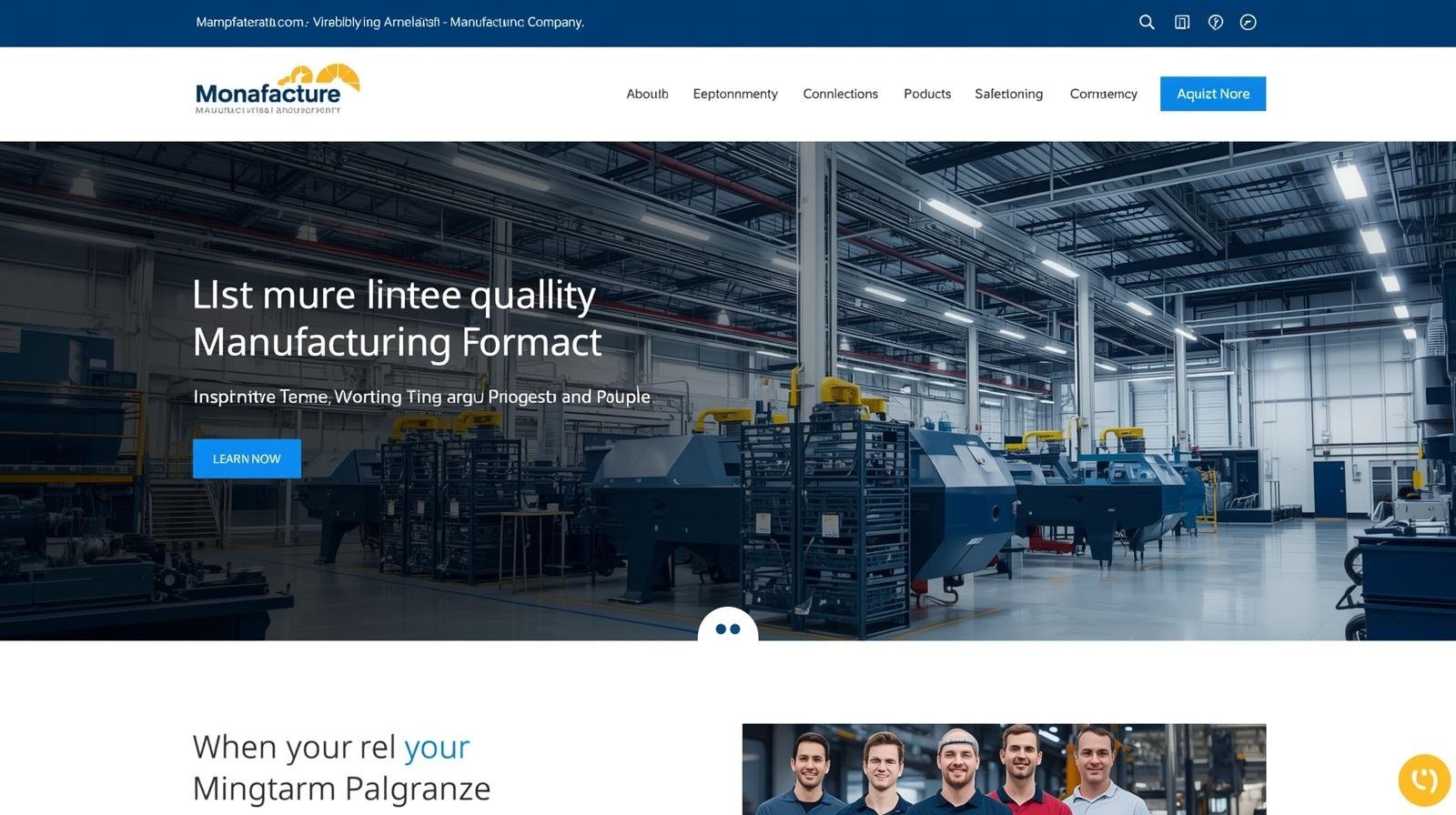
May 13, 2026

Why Most Manufacturing Company Websites Fail to Generate B2B Leads (And How to Fix It in 2026)

Quick Answer

Most manufacturing websites fail because they focus too heavily on company information and not enough on buyer psychology, technical trust, operational clarity, and conversion-focused UX. Modern B2B buyers expect industrial websites to communicate reliability, specialization, certifications, and production capability within seconds. Without that trust structure, qualified leads disappear before inquiries happen.

TL;DR

Most manufacturing websites are outdated digital brochures.

They fail because they:

The highest-performing manufacturing companies in 2026 use strategic UX, trust-focused positioning, technical clarity, and conversion psychology to generate more RFQs and overseas B2B inquiries.

Key Takeaways

Manufacturing businesses continue investing heavily in:

But many still rely on websites that quietly damage lead generation every day.

A procurement manager in New York lands on your site.

A distributor in London compares your company against several competitors.

An industrial buyer in Sydney reviews your capabilities before submitting an RFQ.

The question is no longer:
“Do you have a website?”

The real question is:
“Does your website create enough operational trust to generate serious B2B inquiries?”

This is why Manufacturing Company Websites have become one of the biggest competitive advantages in industrial B2B growth.

Modern buyers evaluate:

before making contact.

This is especially true in sectors like CNC machining, industrial automation, aerospace components, medical device manufacturing, and precision engineering where operational trust directly influences supplier selection.

And your website shapes that perception immediately.

Is Your Manufacturing Website Generating Enough B2B Enquiries?

If your website is not bringing RFQs, dealer enquiries, distributor leads, or export buyers, it may need a conversion-focused redesign.

Explore Manufacturing Website Design Services

Why Most Manufacturing Websites Quietly Fail

Most industrial websites were built to “exist,” not to convert.

That creates major problems.

Many manufacturing businesses still rely on:

The result?

Qualified buyers leave before making contact.

This becomes extremely damaging in manufacturing because B2B buyers are naturally risk-sensitive.

A weak website subconsciously creates concerns around:

even if the manufacturing company itself is highly capable.

In my experience working with businesses targeting international B2B markets, the biggest issue is rarely manufacturing quality.

The deeper issue is usually trust positioning.

Most manufacturing websites communicate history instead of operational confidence.

Buyers care less about:

and more about:

That distinction changes conversion quality dramatically.

website design for manufacturing companies

The Real Financial Cost of Weak Manufacturing Websites

Weak industrial websites reduce:

while increasing:

This is where website design for manufacturing companies becomes financially important.

A high-performing industrial website functions like:

before your sales team ever joins the conversation.

That shortens sales cycles significantly.

Why B2B Manufacturing Buyers Evaluate Websites Differently

Industrial buyers are not casual consumers.

They are evaluating operational risk.

A procurement team reviewing suppliers wants immediate reassurance around:

That means your website must answer:
“Can this company deliver professionally at scale?”

within seconds.

Most manufacturing websites fail because they overwhelm visitors with:

instead of guiding buyers strategically.

Strong manufacturing UX reduces uncertainty progressively.

And reduced uncertainty increases inquiries.

The 7 Biggest Reasons Manufacturing Websites Fail to Generate Leads

1. The Messaging Is Too Generic

Most industrial websites sound interchangeable.

They rely heavily on phrases like:

None of these create differentiation.

Strong industrial websites communicate:

clearly and specifically.

This is why manufacturing web design now depends heavily on positioning strategy, not just aesthetics.

2. Buyers Cannot Understand the Capability Quickly

B2B visitors scan industrial websites rapidly.

If buyers cannot quickly understand:

trust weakens immediately.

Strong manufacturing UX simplifies:

This improves lead quality dramatically.

3. The Website Feels Operationally Outdated

An outdated website creates operational doubt subconsciously.

Buyers often associate weak digital experiences with:

This becomes even more important for overseas buyers comparing suppliers internationally.

Professional digital positioning now directly influences industrial trust.

4. Mobile UX Is Poor

Many industrial businesses still underestimate mobile browsing behavior.

But procurement teams frequently review suppliers:

Weak mobile UX creates immediate friction.

This is where website design for manufacturers directly affects inquiry quality.

Strong mobile UX improves:

substantially.

5. Trust Signals Are Hidden

Manufacturing buyers want proof quickly.

Strong industrial websites prominently showcase:

Most manufacturing websites bury these trust signals deep inside the navigation.

That weakens confidence immediately.

Credibility should appear above the fold.

Not hidden.

6. RFQ Systems Create Friction

Many industrial websites unintentionally discourage inquiries.

Common problems include:

Strong industrial UX simplifies:

because lower friction increases conversions.

7. The Website Talks About the Company Instead of the Buyer

Many manufacturing websites focus excessively on:

instead of buyer outcomes.

Industrial buyers want to know:

That shift from company-focused messaging to buyer-focused positioning changes inquiry quality significantly.

Need a Website That Brings RFQs & Industrial Leads?

KG Web Designer creates manufacturing websites designed for B2B trust, product showcasing, RFQ submissions, dealer enquiries, and export-focused lead generation.

See How We Help Manufacturers

Is Your Manufacturing Website Quietly Losing B2B Leads?

If your website:

you may already be losing qualified buyers before inquiries happen.

We help manufacturing businesses identify the exact UX, trust, and positioning problems reducing industrial conversions.

website design for manufacturers

What High-Converting Manufacturing Websites Do Differently

The strongest industrial websites are structured around:

instead of simply looking “modern.”

This is where manufacturing web design services create measurable business impact.

High-performing manufacturing websites prioritize:

throughout the entire browsing experience.

Strong industrial websites also avoid generic stock imagery.

Instead, they use:

Industrial buyers trust operational authenticity far more than polished marketing visuals.

Real operational imagery increases credibility significantly.

The 2026 Technical Checklist for High-Converting Manufacturing Websites

Modern manufacturing websites are now evaluated like operational systems.

That means industrial websites must support both:

The strongest manufacturing websites in 2026 typically include:

Website ElementWhy It Matters Financially
Load Speeds Under 2 SecondsFaster websites reduce buyer drop-off
Interactive Capability PagesBuyers understand services faster
CAD File or Spec Download AreasEngineers access information quickly
Industry-Specific Landing PagesImproves SEO and inquiry relevance
Tiered RFQ FormsFilters higher-quality inquiries
Mobile-Optimized NavigationSupports procurement browsing behavior
Certification Visibility Above the FoldBuilds trust immediately
Structured Product TaxonomySimplifies large industrial catalogs

Many manufacturing websites still operate like static brochures.

Modern industrial buyers expect websites to function like operational sales systems.

That difference directly impacts lead generation.

Real Client-Style Insight: When UX Changed, Lead Quality Improved

A manufacturing company targeting overseas distributors approached us because website traffic looked healthy, but inquiry quality remained inconsistent.

The issue was not visibility.

It was perception.

Their previous website suffered from:

We restructured the experience around:

Within months:

The manufacturing capability itself never changed.

The perception did.

And perception directly affects industrial conversion rates.

“Most manufacturing companies assume their website problem is traffic. In reality, the deeper issue is usually trust positioning. Buyers often decide whether a supplier feels operationally reliable within seconds of landing on the site.”

— Kanika Gupta, Lead Strategist at KG Web Designer

Why Technical Clarity Matters More in 2026

Modern B2B buyers expect industrial websites to function like operational presentations.

That means technical clarity matters enormously.

Strong manufacturing websites clearly communicate:

without overwhelming visitors.

This balance is critical.

Too little information weakens trust.

Too much technical clutter creates friction.

This is why strategic UX matters heavily in industrial sectors.

Manufacturing Buyers Expect Better Digital Experiences Now

The industrial sector has changed dramatically.

Today’s buyers compare manufacturing suppliers globally.

That means a manufacturer in Chicago may compete directly against:

Digital positioning now heavily influences supplier evaluation.

This is why manufacturing company website design has become a strategic growth asset instead of a branding accessory.

Why Generic Templates Fail Manufacturing Companies

Industrial businesses have highly specialized buyer journeys.

Generic templates rarely support:

This is why custom strategic UX matters heavily.

Strong industrial websites are structured around:

not generic design trends.

Businesses Looking for Broader Corporate Website Strategy

Many manufacturing companies eventually realize the issue is not only the homepage.

It is the overall digital positioning strategy.

Our broader corporate website solutions explore how conversion-focused UX, strategic content hierarchy, and trust-based positioning improve lead generation across industrial and B2B sectors.

This becomes especially important for manufacturers targeting enterprise buyers and overseas partnerships.

Why Overseas Buyers Need Stronger Trust Signals

International buyers naturally evaluate suppliers more cautiously.

That means overseas trust depends heavily on:

For global procurement, your website should clearly communicate:

A manufacturing company targeting aerospace procurement in the US or medical device buyers in the UK must reassure visitors operationally before RFQs happen.

This becomes especially important in industries like:

where reliability directly affects supplier selection.

Strong industrial websites reduce uncertainty before conversations begin.

Industrial Websites Must Support Search Visibility Too

Modern manufacturing websites must perform effectively for:

This means strong SEO structure matters heavily.

Modern industrial websites prioritize:

Modern B2B buyers increasingly discover manufacturing suppliers through search-driven research before initiating conversations.

Conclusion: Manufacturing Websites Should Build Trust Before RFQs

Modern B2B buyers expect more than a digital brochure.

They expect operational confidence.

That is why Manufacturing Company Websites directly influence:

The strongest manufacturing websites do not simply “look professional.”

They strategically reduce buyer hesitation and position the business as a reliable manufacturing partner before conversations even begin.

Ready to Improve Your Manufacturing Website Lead Generation?

If your manufacturing business is generating traffic but struggling with qualified inquiries, the issue may not be production capability.

It may be how those capabilities are communicated digitally.

We help manufacturing companies create conversion-focused websites that combine:

Available across US, UK, and AU time zones. Fully remote. No commitment required.

Book a 30-Minute Strategy Call

Or contact directly:

Contact Kanika Gupta

FAQs

Why do most manufacturing websites fail to generate B2B leads?

Most manufacturing websites fail because they focus too heavily on company information instead of buyer trust. Weak UX, outdated design, poor mobile usability, and unclear capability positioning create hesitation before inquiries happen.

What makes a manufacturing website high-converting?

A high-performing manufacturing website combines:

These elements improve buyer confidence and increase inquiry quality significantly.

Why is UX important for manufacturing companies?

UX affects how industrial buyers perceive operational professionalism. Strong UX reduces friction, simplifies technical communication, improves trust, and supports stronger B2B conversion outcomes.

How does website design affect overseas manufacturing inquiries?

International buyers evaluate supplier reliability carefully before making inquiries. A professionally structured website improves communication confidence, operational trust, and overseas buyer reassurance significantly.

Do manufacturing companies still need modern websites if referrals generate business?

Yes. Even referral-based buyers usually research manufacturing suppliers online before making contact. A weak website can reduce trust and negatively affect conversion opportunities even when referrals already exist.

Let Your Website Bring More Manufacturing Enquiries

From product catalog pages to RFQ forms and trust-building layouts, we design manufacturing websites that support real business growth.

View Manufacturing Website Services