
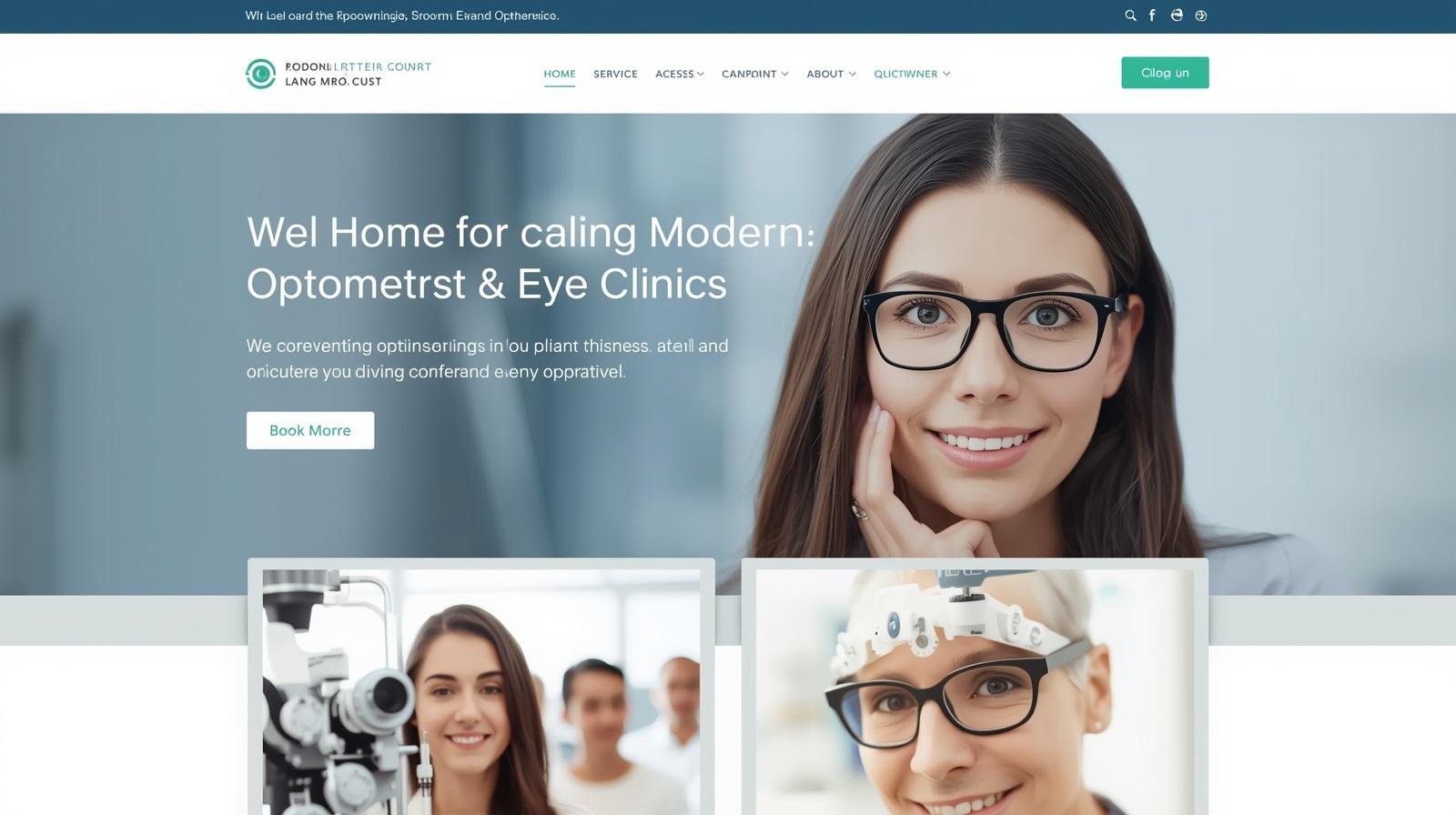
In 2026, your website is no longer a digital brochure-it’s your most productive employee.
Yet most optometry websites behave like a leaky bucket.
They invest in SEO, ads, and local visibility… but lose patients at the final step.
Visitors land on the site-but never book.
Not because they aren’t interested.
But because the website fails to guide them.
In competitive markets like the US, UK, and Australia, patients decide within seconds whether they trust your clinic.
If your website doesn’t build confidence and offer a clear next step immediately, they leave.
This is where optometry website design services shift from design to revenue infrastructure.
The difference isn’t how your website looks-it’s how it performs.
The problem isn’t traffic-it’s structure.
Most clinic websites are built like brochures instead of booking systems.
They:
The result: missed patient opportunities.
To understand this deeper, explore our blog Why modern eye clinics need conversion focused website design.
When clinics invest in optometrist website design services, they often expect visual upgrades.
But design alone doesn’t increase bookings.
A high-performing website should deliver:
Guided Flow: Every page leads toward booking
Outcome Messaging: Focus on results, not services
Fast Booking: Minimal friction, maximum conversions
Visible Trust: Reviews and credentials near CTAs
Search Visibility: Built for local SEO
To move beyond generic websites, high-performing clinics rely on foundational technical pillars.
Speed directly impacts revenue.
A delay of just one second can reduce conversions significantly-especially in healthcare where urgency matters.
Fast Load Time: Keeps patients engaged and reduces bounce rate
Optimized Images & Code: Ensures quick access across devices
Patient trust depends on data security.
Your website must include:
Compliance-Driven UX: Builds credibility with overseas patients.
There’s a difference.
Responsive = adjusts layout
Mobile-first = designed for mobile behavior
Thumb-Zone Navigation: Makes booking easy with one-hand use
Age-Adaptive UX: Simple layouts for elderly users, faster flows for younger patients
Clear CTAs: Always visible
Logical Flow: Reduces confusion
Location Optimization: Targets city-based searches
EHR + CRM Integration: Seamless backend workflows
Social Proof Placement: Positioned near booking points
A high-performing eye clinic website design services strategy is not built around aesthetics-it’s built around how patients think, evaluate, and decide.
Most clinic websites fail because they treat all pages equally.
High-converting websites, on the other hand, are structured like a guided patient journey-where every section has a clear purpose: move the visitor one step closer to booking.
In my experience designing 400+ websites, the biggest difference between an average clinic website and a high-performing one is not design-it’s structure and intent alignment.

From appointment booking to patient-friendly UX and mobile optimization — I design websites specifically for eye care professionals to increase visibility and patient enquiries.
Your homepage has one job:
Answer “Am I in the right place?” within 5 seconds
A high-converting homepage includes:
Why this matters: Patients don’t explore-they decide quickly. If clarity is missing, they exit.
Most clinics list services like:
But patients don’t search like that.
They search based on problems:
A high-performing website restructures service pages into:
Condition-based landing pages
Each page should:
SEO + Conversion benefit: You rank for high-intent keywords AND convert better.
This is where most clinics lose patients.
Typical problems:
A high-converting booking system:
Key Insight: Every additional step reduces conversion rate.
Even changing a CTA from:
❌ “Contact Us”
to
✅ “See Available Times”
…can significantly increase bookings.

Most clinics make a mistake:
They isolate trust signals on a “Reviews” page
High-converting websites distribute trust strategically:
Effective trust signals include:
Why this matters: Patients don’t trust instantly-they need continuous reassurance.
Explore our blog Optometry Website Design Trends for Modern Vision Clinics that drive more patient booking.
Over 60–70% of users visit clinic websites via mobile.
But most sites are still desktop-first.
A high-converting website is:
Designed for thumbs, not cursors
This includes:
Advanced UX Insight: Older patients need larger tap areas, while younger users expect speed and minimal steps.
A high-performing website aligns with the 3-stage decision process:
Each page must guide the user through this flow.
For example:
This is known as Patient Journey Mapping.
Beyond structure, small elements significantly impact performance:
These are called micro-conversions-and they compound results.
Speed is not just technical-it’s psychological.
If your website takes more than 2–3 seconds to load:
Patients assume your service may also be slow.
High-converting websites:
Result: Faster load = higher trust + better conversions.
A high-converting eye clinic website is not a collection of pages.
It’s a structured decision-making system
When done right, it:
And that’s what truly defines effective eye clinic website design services.
| Standard Website | Conversion-Focused Website |
|---|---|
| Informational | Booking-driven |
| Generic messaging | Patient-focused |
| Hidden CTAs | Clear actions |
| Slow UX | Optimized mobile |
Understanding how patients think is critical.
Patients search symptoms:
Educational content attracts early-stage traffic.
Patients evaluate:
Trust Layer: “Meet the Team” pages and testimonials matter here.
Patients are ready-but hesitant.
Sticky CTA: “Book Now” must always be visible
Simple Booking: Reduces hesitation
In my experience designing 400+ websites, the biggest drop-off happens at this stage due to friction.
👉 Get actionable insights to improve your bookings.
Book a Free 30-Minute Strategy Call →
A high-performing professional website design for optometrists integrates systems and strategy.
This is where vision clinic website design services must adapt regionally.
| Tier | Ideal For | Investment (USD) | Ongoing |
|---|---|---|---|
| Basic | New clinics | $1,500–$3,000 USD | Minimal |
| Professional | Growing clinics | $4,000–$9,000 USD | SEO + updates |
| High-Performance | Multi-location clinics | $9,000–$18,000 USD | CRO + SEO |
Quotes available in GBP (£) and AUD ($).
Analyze performance, bounce rate, and gaps
Build conversion-focused structure
Align branding with medical trust (blue/green palettes)
Integrate systems (MaximEyes, Optix)
Across multiple devices
Monitor performance for 30 days
UK/AU clients receive updates by 9 AM their time
For more services explore our Health and Wellness Websites.
CTA improved
Booking simplified
Trust signals repositioned
$1,500–$18,000 USD depending on complexity.
Yes, full ownership is transferred.
Through secure database migration handled during development.
No-301 redirects ensure rankings are preserved.
Custom sites offer better performance and scalability.
Every 3–6 months for optimal SEO.
A website is not a cost.
It’s a revenue system.
When investing in optometry website design services, expect:
“We saw a noticeable increase in online bookings within the first month. The process was seamless across time zones.”
— Dr. Emily Carter, London Vision Clinic (UK)

Professional medical websites for doctors, clinics, and healthcare practices designed to build trust, simplify patient enquiries, and support appointment bookings.
Modern dental clinic websites with treatment pages, online appointment features, location-focused SEO, and a clean design that helps attract more local patients.
High-converting websites for skin clinics and aesthetic practices that highlight services, showcase expertise, and turn visitors into consultation enquiries.