
Most optometry websites look professional—but fail where it matters most: getting patients to book appointments.
They include:
But they lack conversion structure.
When a patient lands on your site, they are making a fast decision:
If your website doesn’t answer these immediately, they leave.
In my experience working with healthcare websites, the biggest issue is not poor design—it’s lack of clarity and direction.
👉 A website that looks good but doesn’t guide action will always underperform.
In competitive markets like the US, UK, and Australia, expectations are higher than ever.
A modern optometry website design must:
👉 Your website must function as a patient acquisition system, not just a brochure.
High-performing websites are not built randomly—they follow a structure aligned with patient behavior.
They:
👉 They simplify decision-making instead of overwhelming users.
For a deeper look at how UX directly impacts appointment numbers, read: How Optometrists Can Increase Patient Bookings With Website UX.
Your homepage must instantly answer:
❌ “Welcome to our clinic”
✅ “Advanced eye exams and vision care—book your appointment in minutes”
👉 The first few seconds determine engagement.
Patients expect convenience.
High-performing websites include:
👉 Simplifying booking directly increases conversions.
Most patients search on mobile.
Your website must:
👉 Poor mobile UX = lost patients.
Healthcare decisions are trust-driven.
Patients don’t just ask “What do you offer?”
They ask: “Can I trust you with my vision?”
Your website must actively reduce uncertainty.
Include:
👉 But the highest-converting trust signal is:
Video testimonials from real patients describing their experience or improved vision clarity
Why?
👉 A 30–60 second video often outperforms multiple text reviews.
Placement matters.
👉 Trust signals should appear:
Patients want clarity—not generic descriptions.
Each service page should explain:
👉 This aligns with optometry website design best practices and improves conversions.
Patients search with intent:
Your website should include:
👉 SEO brings traffic—UX converts it.
Learn the exact strategy eye clinics use: How Eye Clinics Can Rank #1 on Google SERP.
Healthcare websites must feel:
Avoid clutter and overdesign.
👉 Simplicity builds confidence.
For US, UK, and AU clinics, compliance is critical.
Your website must support:
👉 This improves usability and protects your clinic.
See the full compliance checklist: Patient Accessibility Standards for Eye Clinic Websites (WCAG 2.1).
Patients research before booking.
Include:
👉 This positions your clinic as a trusted authority.
Speed impacts both SEO and bookings.
Even small delays reduce conversions.
👉 Fast websites win more patients.

Most optometry websites look professional — but quietly lose patients every day. In a free 30-min call, I’ll review your current website and show you exactly what’s costing you bookings and how to fix it.
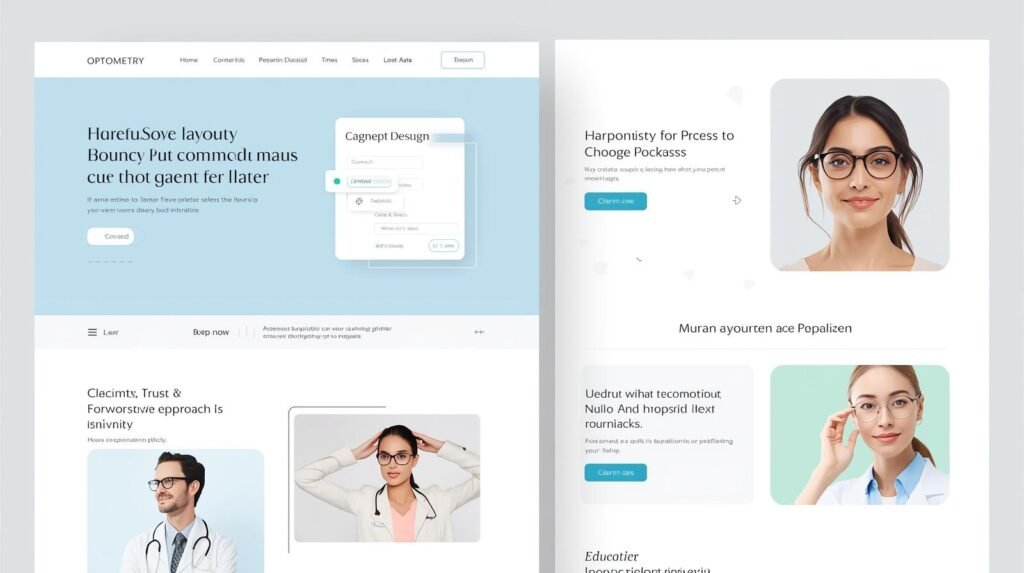
One of the biggest optometrist website design trends in 2026 is AI integration.
Modern websites include:
Patients can:
👉 This improves both user experience and efficiency.
Modern optometry websites integrate with systems like:
👉 This enables seamless appointment syncing and patient management.
| Factor | Generic Website | Conversion-Focused Website |
|---|---|---|
| Messaging | Generic | Patient-focused |
| Booking | Basic | Instant |
| Trust Signals | Limited | Strategic |
| UX | Standard | Optimized |
| Conversion | Low | High |
👉 The difference is strategy—not design.
See a real before and after example: Before & After: Optometry Website Redesign Strategy.
DIY tools often lead to:
A professional website designer for optometrists focuses on:
👉 This directly impacts bookings.
One of the most common questions clinic owners have—especially when hiring internationally—is:
👉 “What should I realistically expect to invest?”
For optometry and vision clinics targeting US, UK, and Australian markets, pricing typically falls into three tiers:
These are usually:
They may work for:
👉 But they often lack conversion strategy and scalability.
This is where most growing clinics invest.
Includes:
👉 These websites are designed to increase patient bookings—not just look good.
Built for clinics focused on growth and competitive markets.
Includes:
👉 These websites function as full patient acquisition systems.
Want a complete cost breakdown with ROI analysis? Read: 9 Things Eye Clinics Must Check Before Hiring a Website Designer.
If your clinic generates high-value patients, your website is not a cost—it’s a growth asset.
👉 Even a small increase in bookings can quickly recover your investment.
Most clinics don’t lose patients because of poor services.
👉 They lose them because their website doesn’t build trust or make booking easy.
And that’s what the right investment solves.
Many clinic owners worry about working with overseas designers.
In reality, it often speeds things up.
Work continues across time zones.
👉 Updates are implemented overnight—progress is continuous.
👉 Clear, predictable workflow.
Websites follow:
Sites are hosted on:
👉 Fast performance for local patients.
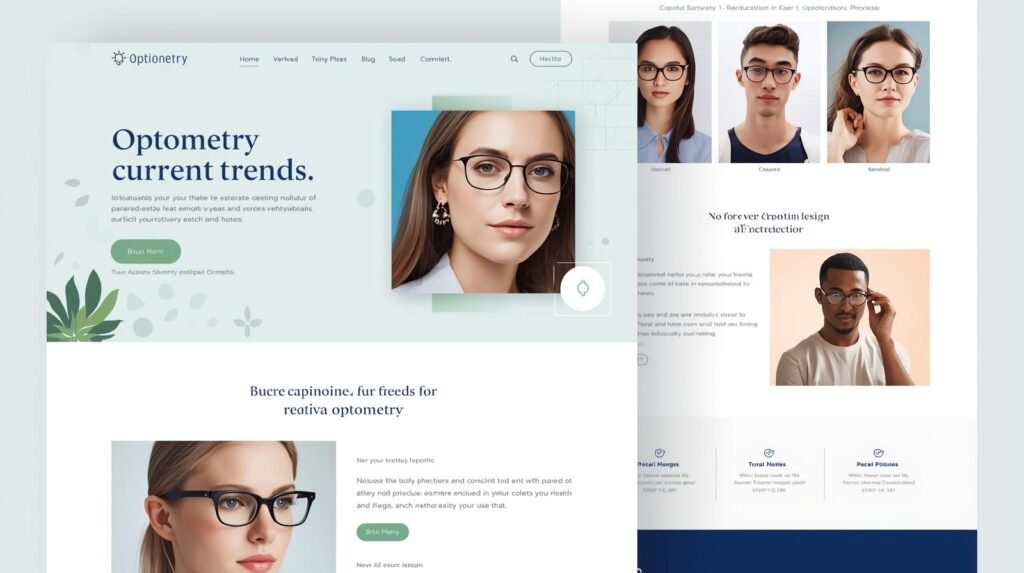
Not all websites perform the same—especially in healthcare. A generic design approach might look acceptable on the surface, but it often fails to address how patients actually search, evaluate, and book services online. This is why industry-specific design plays a critical role in conversion and long-term growth.
If you’re looking to build a website that aligns with how modern patients behave, it’s important to start with a strong foundation. Our healthcare-focused design approach is built specifically for clinics that want to improve patient acquisition, streamline booking, and create a trustworthy online presence. You can explore how this works in detail.
When it comes to optometry specifically, the requirements go even deeper. Vision clinics need websites that not only look professional but also clearly communicate services like eye exams, contact lens fittings, and specialized treatments—while making it extremely easy for patients to book appointments. A dedicated optometry-focused approach ensures that your website reflects both medical credibility and patient convenience. Learn more about optometrist-specific website design.
Additionally, many vision clinics offer broader medical or diagnostic services that overlap with general healthcare. In such cases, your website must balance clinical authority with usability, ensuring patients can easily navigate between services and understand what you offer. A structured medical clinic design approach helps achieve this by organizing information clearly and guiding users toward action. See how medical clinic website design is handled.
👉 The key takeaway is simple: when your website is designed specifically for your industry, it doesn’t just look better—it performs better, builds trust faster, and converts more visitors into patients
A strong website:
👉 It becomes your most valuable asset.
They focus on improving UX, trust, and bookings.
Because patients decide quickly whether to trust your clinic.
Booking, mobile UX, trust signals, and clear services.
3–6 weeks typically.
Yes—better UX increases conversions.
Most optometry websites are built to share information.
They list services, introduce the doctor, and provide contact details.
But here’s the reality:
👉 Patients don’t visit your website to learn about you
👉 They visit your website to decide whether to book with you
And that decision happens fast.
In just a few seconds, a patient forms an impression of your clinic:
If your website doesn’t answer these instantly, they leave—and book with a competitor.
Before a patient calls your clinic, they visit your website.
This means your website is:
And unlike your front desk staff, your website is working 24/7.
👉 Every visitor is a potential patient—and every second matters.
Most clinics unknowingly operate with an informational website.
These websites:
But high-performing clinics use conversion-focused websites.
These websites:
👉 They don’t just present information—they drive action.
When your website is designed strategically, everything improves:
And most importantly:
👉 You stop losing patients to competitors with better websites.
An ineffective website doesn’t just “sit there.”
It actively costs you:
Even if you’re running ads or getting traffic:
👉 If your website doesn’t convert, you’re losing revenue every day.
The most successful clinics don’t ask:
👉 “Does my website look good?”
They ask:
👉 “Is my website consistently bringing in new patients?”
That shift—from design to performance—is what drives growth.
Your Health, Beauty and Wellness website is not just a digital presence.
👉 It’s your patient acquisition system
And in competitive markets, the clinics that win are not the ones with the best services—
👉 They’re the ones that communicate, build trust, and convert better online
If your current website isn’t generating consistent appointments, there are usually hidden issues holding it back.
Book a free 20-minute website audit →
https://calendly.com/kanika-kgwebdesigner/30min
👉 I’ll identify the top 3 “booking leaks” on your site and show you exactly how to fix them.
No pitch. Just actionable insights.
I’ve designed websites for eye clinics across the US, UK, and Australia — HIPAA-aware, WCAG-compliant, and built around one goal: more patient bookings. Let’s talk about what your clinic needs.