
Visual-first web design helps eye clinics increase appointments by guiding patients visually toward trust and action instead of requiring them to read and decide. In eye care, where confidence and clarity are critical, patients book more readily when services, reassurance, and booking options are visually obvious within seconds.
Many eye clinics in 2026 are visible online—but still struggling to convert visitors into booked patients.
You may recognise these signs:
The issue is not clinical expertise.
It’s not even marketing reach.
The real issue is how patients experience the website.
Eye care is a visually driven medical field. Yet many clinic websites still rely on:
In 2026, patients don’t “read” clinic websites.
They scan, feel, and decide visually.
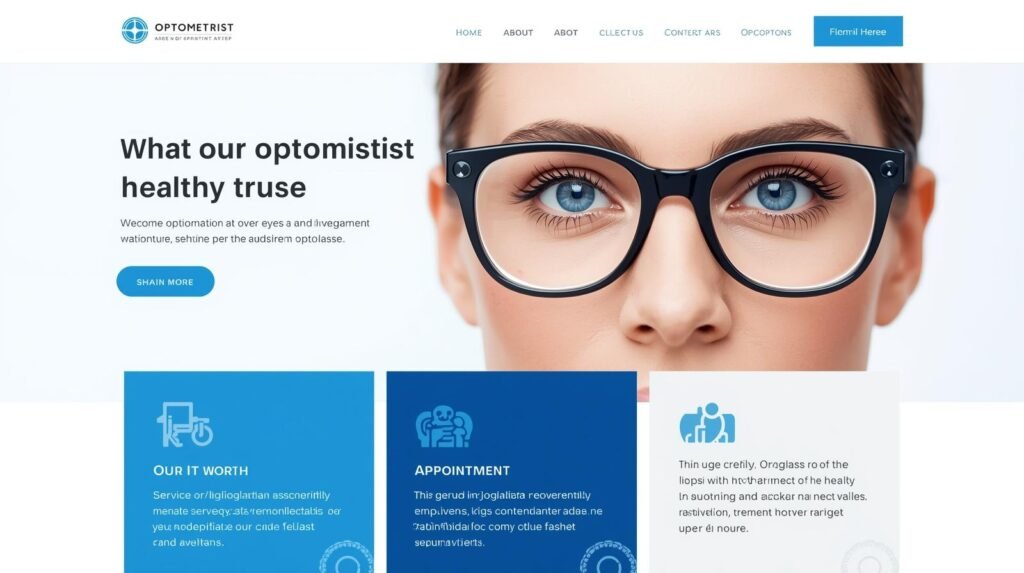
Patients trust what looks clear, calm, and professionally visual—especially in eye care.
When someone searches for an optometrist, they are often:
This makes visual reassurance more powerful than written explanation.
That’s why successful optometrist website design in 2026 focuses on:
Patients don’t want to understand your clinic first.
They want to feel safe choosing it.
From integrated booking systems to visual-first medical UX, I build websites that turn browsers into patients. Let’s make your clinic the top choice in your region with a future-ready digital presence.
Visual-first UX prioritises how information is perceived before it is read.
This does not mean flashy graphics or heavy imagery.
Visual-first design includes:
This approach is now being adopted across visual-first UX for medical practices, especially in eye care where trust is sensory-driven.
| Area | Traditional Clinic Website | Visual-First Eye Clinic Website |
| Homepage layout | Text-heavy paragraphs | Service-focused visual sections |
| Decision path | Unclear, scattered | Guided, single-scroll journey |
| Booking visibility | Buried below content | Primary, persistent CTA |
| Patient confidence | Requires reading | Built instantly through visuals |
| Conversion rate | Low to moderate | Significantly higher |
Clinics using visual-first layouts consistently report stronger engagement and faster booking decisions.
“Having worked with clinics globally for over 18+ years, I’ve seen that a modern optometrist’s website must solve for ‘Anxiety of Choice’ within the first 3 seconds. In 2026, we achieve this by moving the ‘Book Eye Test’ button from a hidden footer to a persistent, visual-first anchor that guides the patient toward care.”
— Kanika Gupta, Lead Web Designer
By removing friction and making booking visually obvious at every stage.
Eye clinics succeeding in 2026 redesign their websites around patient intent, not internal structure.
Key changes include:
When patients can see the journey, they are more likely to complete it. Clinics adopting visual-first layouts commonly report measurable improvements in booking completion, reduced bounce rates, and fewer pre-visit clarification calls.
This is where patient booking systems for eye doctors integrated directly into the visual layout make a measurable difference.
Booking systems convert better when they are designed visually, not technically.
Many clinics technically “have” online booking—but:
High-performing eye clinics treat booking as part of the visual journey:
This is one of the biggest contributors to appointment growth.
Visual UX converts users; SEO brings the right users in.
A common mistake clinics make is treating design and SEO separately.
The most effective eye clinic digital marketing strategy in 2026 aligns:
This includes:
Clinics ranking well for searches like “best website for optometrists 2026” are those combining SEO clarity with visual confidence.
Patients searching for eye care often want reassurance about:
This is especially true for optical store website design India, where patients expect both modern design and local credibility.
Clinics that visually display:
…build trust faster than those relying on stock templates.
(While many clinics operate globally online, strong local visual cues still matter.)
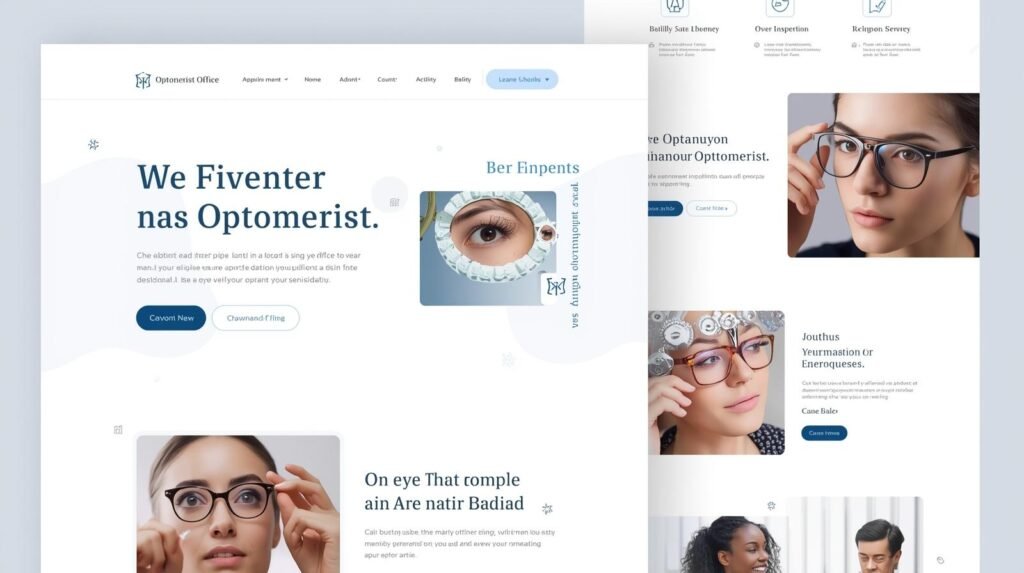
Patients judge credibility visually before reading reviews.
While testimonials still help, visual design now does the first round of trust-building.
Patients subconsciously evaluate:
In eye care, where precision matters, sloppy or cluttered websites directly reduce confidence.
The best optometrist websites feel effortless because they remove uncertainty, reduce cognitive load, and guide patients visually toward the next step without making them think.
Patients visiting an eye clinic website are rarely relaxed.
They may be worried about their vision, under time pressure, or comparing multiple clinics quickly.
An effortless experience calms that mental state instead of adding to it.
High-performing optometrist website design doesn’t overwhelm patients with choices.
Instead of asking patients to decide:
The website quietly decides for them by highlighting:
Patients feel guided, not controlled.
Effortless websites rely on visual cues, not instructions.
Patients instinctively understand:
This is achieved through:
When hierarchy is clear, patients don’t need to read everything to move forward.
In eye care, complexity creates doubt.
The most trusted websites appear:
Not “busy” or flashy.
This simplicity sends a subtle message:
“If our website is clear and organised, our clinical process will be too.”
That confidence is often stronger than testimonials or claims.
Effortless doesn’t mean minimal information.
It means information appears at the right time.
Top optometrist websites show:
This anticipatory design reduces hesitation and abandonment.
In 2026, most eye clinic website visits happen on mobile.
Effortless mobile design means:
If a patient has to struggle on mobile, trust breaks immediately.
Patients rarely say:
“This website is well designed.”
They say:
“That was easy.”
That reaction is the goal.
The best optometrist websites fade into the background and let patients move naturally from concern to action.
Comparison: Text-Led vs Visual-Led Eye Clinic Pages
| Element | Text-Led Page | Visual-Led Page |
| Patient behaviour | Reads, hesitates | Scans, acts |
| Engagement time | Short | Longer |
| Booking interaction | Delayed | Immediate |
| User confidence | Gradual | Instant |
| Mobile experience | Poor | Strong |
Visual-led pages consistently outperform on mobile, where most eye clinic searches now occur.
Better website experience reduces ad waste and improves ROI.
Clinics investing in visual-first optometrist website design report:
This means marketing spends less time “compensating” for weak websites.
This helps AI and Google classify the page correctly.
Many clinics assume visual-first means:
In reality, visual-first means:
The goal is not to impress—it’s to reassure.
Eye clinics that redesign visually don’t just see short-term appointment growth.
Over time, they benefit from:
In 2026, reputation is built digitally before it’s built clinically.
Eye care relies heavily on visual trust. Patients judge clarity, precision, and professionalism visually before reading details.
No. Visual-first UX converts users, but SEO ensures the right users arrive in the first place.
Yes. Integrated patient booking systems for eye doctors significantly reduce drop-offs and missed calls.
Absolutely. Visual clarity benefits small clinics even more by helping them appear organised and professional instantly.
Structure should be long-term, but visuals and content should be reviewed annually to match patient expectations.
If your clinic receives website traffic but appointment growth has plateaued, the issue is rarely marketing spend—it’s how your website guides patient decisions.
This is where working with a specialist in eye clinic and optometrist website design becomes critical. Visual-first design requires deep understanding of patient behaviour, medical trust signals, booking flow, and SEO working together—not generic templates.
This turns the article into a service-support asset without selling.
Visual-first design is critical for both eye care and aesthetic treatments. I apply these same high-conversion principles to Aesthetic Clinic Digital Systems, ensuring your results-driven brand earns instant patient trust.
In 2026, eye clinics are not competing only on medical skill.
They are competing on how confidently patients choose them online.
Visual-first web design is no longer a trend—it’s a conversion strategy.
Clinics that adopt it don’t just look better.
They book more patients, with less effort.
Don’t let a “pretty but passive” website cost you patient bookings. Let’s build a trust-access system that works.
View Optometry Design Services Get a Custom Quote